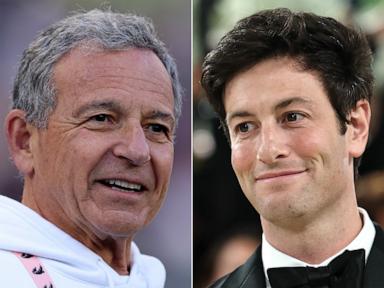
The media is wet with anticipation over a fantasy pairing that belongs in a late-night pitch deck rather than a boardroom.
The lazy consensus floating around corporate suites and sports radio is simple: Bob Iger, fresh off managing the twilight of his Disney empire, teaming up with tech-adjacent venture capitalist Josh Kushner to buy the Los Angeles Lakers, would be a masterclass in modern sports ownership. The narrative writes itself. Old media royalty meets new tech money to steer the most glamorous franchise in professional basketball into a golden, synergized future.
It is a complete hallucination.
If you understand how modern sports operations actually make money, you realize this potential ownership ticket is a collision of mismatched incentives. Iger knows how to squeeze intellectual property through a global funnel of theme parks and streaming subscriptions. Kushner knows how to back hyper-growth tech startups with institutional venture capital. Neither of them knows how to run a basketball organization that operates on tribal loyalty, generational ego, and the brutal, zero-sum math of the salary cap.
I've watched corporate executives step into sports franchises thinking they can treat a locker room like a business unit. It never ends well. Sports are not content farms. They are volatile, high-stakes meritocracies where traditional corporate governance goes to die.
Let us dismantle the fantasy piece by piece.
The Disney Playbook Fails on the Hardwood
The primary argument for Iger centers on brand extension. The logic goes that a master storyteller can take the purple and gold and turn it into an omni-channel lifestyle ecosystem.
This ignores the fundamental product. Disney sells escapism wrapped in family-friendly nostalgia. The Los Angeles Lakers sell anxiety, triumph, and raw competition. You cannot manufacture a protagonist in a seven-game playoff series against Denver. You cannot script a torn Achilles or a rookie bust.
When corporate executives try to sanitize sports to protect brand equity, they destroy the very edge that makes sports valuable in the first place. Fans do not want a synergistic content rollout. They want a front office that cares more about Larry O'Brien trophies than quarterly subscriber metrics.
If Iger brings his Hollywood executive mindset to the franchise, expect an obsession with global reach at the expense of roster toughness. Franchises run by career executives tend to overvalue marketability and under-value grit. They fall in love with the jersey sales rather than the defensive rotations.
The Venture Capital Illusion
Then there is the Kushner side of the ledger. Injecting venture capital DNA into a legacy sports franchise sounds forward-thinking until you look at how venture capital treats assets.
Venture capitalists look for hyper-growth, disruption, and eventual liquidity events. A legacy sports team is a multi-generational heirloom, not a Series B software play. You cannot pivot a basketball team when the market shifts. You cannot quietly sunset a bad draft pick in three years and write it off as a learning experience.
The salary cap and luxury tax structures of professional sports are explicitly designed to punish short-term financial maneuvering that ignores basketball reality. If you treat a roster like a venture portfolio, spreading risk across multiple unproven assets, you miss out on the singular superstar focus required to win in the Western Conference.
Furthermore, venture capital relies heavily on data dashboards and predictive analytics. Analytics matter, but basketball remains a game dictated by human ego, locker room politics, and the whims of nineteen-year-old phenoms and thirty-something veterans. You cannot spreadsheet your way past a superstar demanding a trade because he hates the front office culture.
The Ownership Bureaucracy Trap
Imagine a scenario where a high-profile ownership group takes over the franchise, splitting power between a media titan focused on public relations and a tech investor obsessed with operational efficiency.
You instantly create a two-headed monster of decision-making.
In professional sports, speed is everything. When a generational player shakes loose on the trade market, or when a head coach needs to be fired at two in the morning after a dismal road trip, you need decisive, singular authority. You need an owner who can make a gut call without running it past a board of directors, a committee of advisors, and a public relations firm.
Corporate ownership groups love committees. Committees love consensus. Consensus in the NBA gets you stuck in perennial mediocrity, trapped between the luxury tax line and the play-in tournament.
The teams that win championships over the last thirty years share a common trait: a tyrannical, hyper-focused owner or a stable, basketball-first family office that treats the franchise as its primary obsession. The moment ownership becomes a side hustle for high-profile billionaires with global portfolios, the franchise rots from the head down.
The Real Question Nobody is Asking
Instead of asking whether Iger and Kushner have the checkbook to buy the team—spoiler alert, billionaires can always find financing—we should be asking why anyone thinks media and tech outsiders are suddenly qualified to manage a sports culture.
The sports industry suffers from a severe case of credentialism worship. Commentators assume that because someone conquered Hollywood or Silicon Valley, they possess a universal administrative genius that translates directly to a basketball operations department.
It is a delusion.
Running a sports franchise requires an intimate, almost obsessive understanding of talent evaluation, agent negotiations, and the psychological weight of playing under the lights in Los Angeles. It requires thick skin, an acceptance of public humiliation when things go wrong, and a willingness to stay out of the way of people who actually know how to coach and play the game.
Neither Iger nor Kushner has a background in the trenches of talent acquisition. Their entire careers have been built on managing macro-level systems, capital allocation, and brand narratives. None of those skills sink a baseline jumper or stop a fast break.
Stop wishing for corporate saviors to rescue sports teams. The best owners in sports history are the ones who buy the asset, hire ruthless experts, shut their mouths, and write the checks. The moment an ownership group becomes the story, the team is already lost.