Twenty-six human lives extinguished in a single wave of violence. To the international wire services, it registers as another grim dispatch from a neglected frontier zone, quickly buried beneath updates on larger geopolitical flashpoints. Yet this bloodshed in Abyei is not a random spasm of lawlessness. It is a calculated detonation along a fractured fault line where two crippled states intersect, and where local grievances have been weaponized by political stagnation and environmental scarcity.
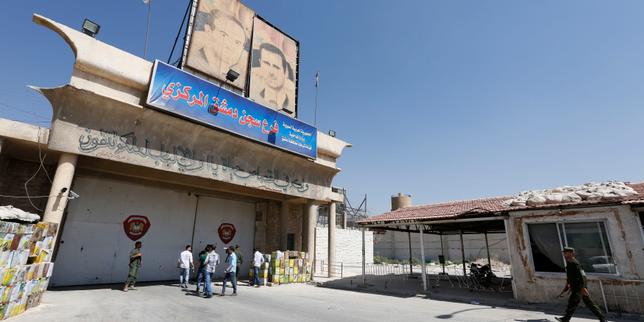
Abyei remains one of the most heavily armed, legally ambiguous territories on the planet. Disputed by both Sudan and South Sudan since the 2005 Comprehensive Peace Agreement that paved the way for Southern secession, the region exists in a permanent state of administrative limbo. Neither Khartoum nor Juba exercises full sovereignty, leaving a vacuum where militias, nomadic pastoralists, and settled farmers collide over scarce resources, land rights, and political survival.
When twenty-six people die in clashes, the casualty count tells only the surface story. The deeper narrative involves a total collapse of security architecture, the cynical manipulation of ethnic identities, and an oil-rich territory left to rot while national elites maneuver for personal enrichment.
The Contested Zone and Historical Roots
To understand why automatic gunfire rings out across the pastures of Abyei, one must trace the cartographic violence of the colonial and post-colonial eras. The territory belongs historically to the Ngok Dinka, an ethnic group closely tied to the broader Dinka communities of South Sudan. However, for generations, the Misseriya, a nomadic Arab pastoralist group from northern Sudan, have driven their cattle through these same lands during the dry season to reach vital water sources and grazing pastures.
This seasonal migration was once managed through traditional community councils, customary laws, and shared grazing agreements. Boundaries were porous, fluid, and negotiated on the ground by elders who understood that survival depended on cooperation.
Independence changed everything. When South Sudan seceded in 2011, Abyei was left dangling between the two new nations. A promised referendum on whether the territory would join the North or the South was repeatedly sabotaged by political maneuvering, security disputes over who counted as a resident voter, and fears of losing control over lucrative crude oil reserves.
Without a definitive legal settlement, customary arrangements decayed. The migration routes turned into corridors of suspicion. Every passing herd of cattle became viewed as an occupying force; every cultivated plot of land was perceived as a permanent theft of nomadic heritage. The absence of a recognized central authority meant that disputes could no longer be arbitrated by courts or tribal elders with enforcement power. Instead, firearms replaced dialogue.
Anatomy of the Latest Bloodshed
The immediate triggers for the recent clashes follow a grimly predictable trajectory. Armed youth factions, often equipped with military-grade weapons acquired through porous borders and proxy networks, clashed in remote villages across the territory. Local authorities report that the violence involved coordinated attacks on settlements, the burning of homes, and the displacement of thousands of civilians who now camp out in open fields with zero humanitarian assistance.
Behind these armed youths stand powerful interests. Local commanders and regional political actors frequently exploit ethnic polarization to secure territory, control smuggling routes, and assert dominance over contested administrative boundaries. In a region awash with surplus weaponry from decades of civil war in Sudan, mobilizing angry young men takes minimal effort.
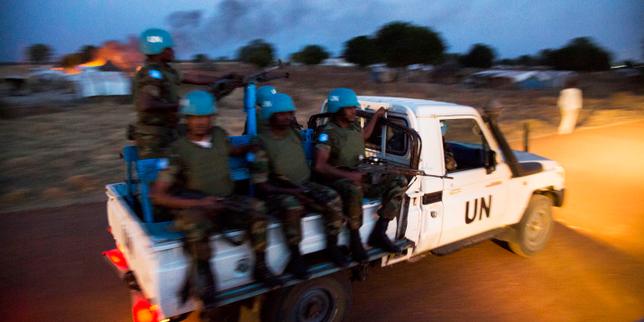
The security vacuum in Abyei is absolute. The United Nations Interim Security Force for Abyei maintains a presence with a mandate to protect civilians and monitor the demilitarized zone. Yet peacekeepers face severe operational constraints, logistical nightmares, and diplomatic paralysis. Troops deployed under UN flags often lack the mandate, the intelligence, or the political backing required to proactively dismantle armed militias or secure vast rural expanses. When violence erupts, peacekeepers are frequently forced to hunker down inside heavily fortified bases, watching helplessly as communities burn outside their perimeter walls.
The Economic and Geopolitical Stakes
Why does Abyei remain a powder keg? The answer flows beneath the soil. Crude oil reserves sit beneath the contested plains, serving as a vital financial lifeline for both Khartoum and Juba.
For Sudan, struggling with a catastrophic civil war and economic collapse, every barrel of oil originating from the borderlands is desperately needed to fund military operations and maintain whatever remains of state functionality. For South Sudan, whose economy is almost entirely dependent on petroleum exports piped northward through Sudanese infrastructure, maintaining influence over Abyei is a matter of state survival.
Yet the local population sees almost none of this wealth. The oil infrastructure stands as a silent monument to extraction. Pipelines crisscross grazing lands, spilling toxic waste into local water sources and poisoning the very ecosystem that sustains both farmers and herders. The wealth generated by these wells flows directly to bank accounts in foreign capitals or funds the procurement of more weaponry, leaving the residents of Abyei trapped in endemic poverty.
National politicians in both countries have mastered the art of weaponizing the Abyei dispute. Whenever domestic crises threaten their grip on power, leaders in Khartoum and Juba find it convenient to whip up nationalist fervor over the border region, framing territorial concessions as treasonous. The people of Abyei are treated as pawns on a chessboard, sacrificed whenever political expediency demands a distraction from domestic failure.
Failures of Governance on the Ground
International diplomacy regarding Abyei has devolved into an exercise in ritualistic hand-wringing. Special envoys issue sternly worded communiques expressing deep concern, human rights organizations document the steady accumulation of war crimes, and peace conferences are convened in luxury hotels thousands of miles away from the scorched earth of the borderlands.
None of this alters the reality on the ground.
Real governance requires the hard, unglamorous work of establishing local administrative institutions, rebuilding trust between traditional leaders, disarming militias, and creating joint security patrols involving representatives from both communities. It requires holding perpetrators of violence accountable through transparent judicial processes rather than granting blanket amnesties to warlords who command armed constituencies.
Instead, the international community continues to rely on containment strategies. Containment treats symptoms while allowing the underlying infection to spread. As long as impunity reigns and armed groups operate with absolute certainty that no one will hold them to account, twenty-six deaths will not be an aberration. They will be a prelude.
Beyond the Immediate Crisis
The smoke still rises from the burnt-out tukuls across the Abyei plains. Families are burying their dead in shallow graves, wondering when the next raiding party will crest the horizon. International news cycles will move on to the next disaster, leaving this forgotten corner of East Africa to its own devices.
Yet the friction points in Abyei will not vanish simply because the cameras are turned off. Climate pressures are intensifying competition over shrinking water tables and degraded pastures, ensuring that the structural drivers of conflict will only worsen in the coming years.
The question facing the region is no longer whether another outbreak of violence will occur, but how catastrophic it will be when the fragile containment finally shatters completely