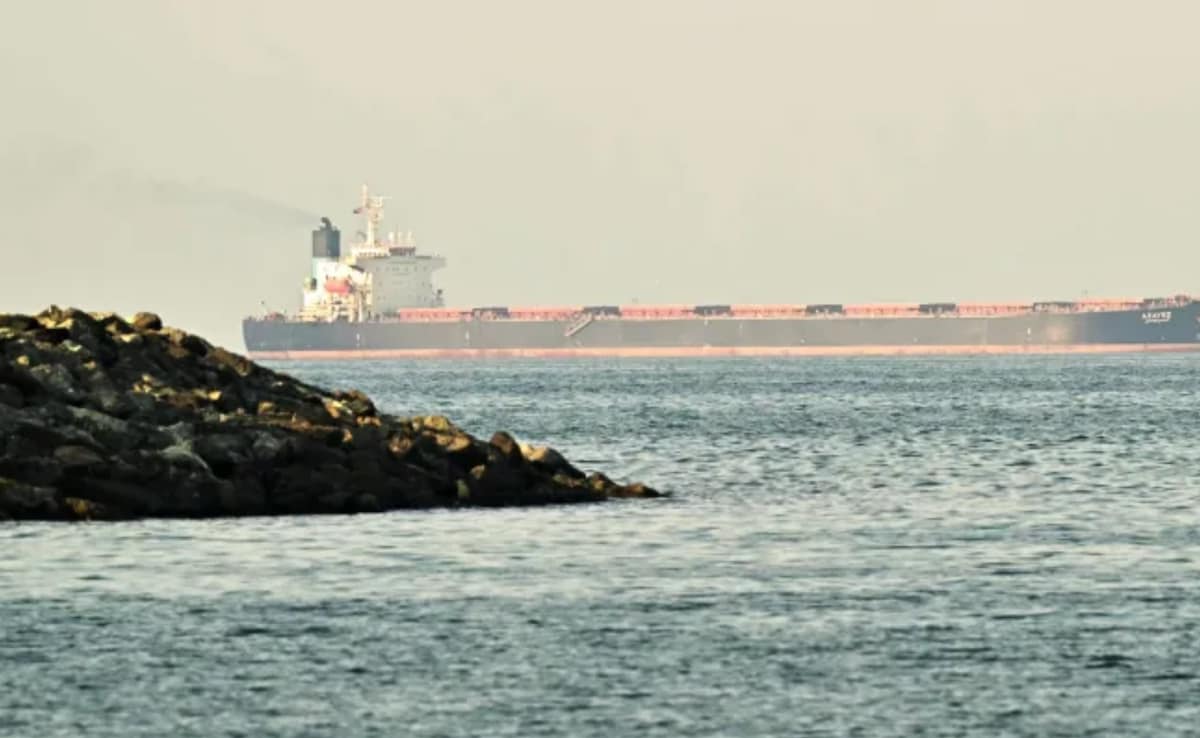
Twenty warnings mean nothing if the strategy behind them is bankrupt. The recent strike on a commercial vessel allegedly breaching a blockade to reach Iran isn't a "security success" or a "necessary escalation." It is a loud, expensive admission that modern naval doctrine is stuck in the 1940s.
The media loves the narrative of the "defiant ship" and the "measured response." It sells. It feels like a high-stakes chess match. In reality, it’s a failure of kinetic diplomacy. We are watching the most powerful navies on Earth play whack-a-mole with rusty bulk carriers and shadow-fleet tankers. If you think a kinetic strike solves the "breach," you aren't looking at the ledger. You're looking at the explosion.
The Warning Fallacy
The "20 warnings" cited by officials are framed as a sign of incredible restraint. That is a tactical misunderstanding of how the high seas work in the 21st century.
In maritime law and insurance reality, a warning is just data. For a ship owner operating under a flag of convenience, a warning is a risk-premium calculation. When a naval power issues nineteen warnings without acting, they aren't being "patient." They are being predictable. They are teaching the adversary exactly where the line is—and then moving it.
I have watched maritime security firms burn through millions trying to predict these escalations. The reality is that "warnings" have become a substitute for a coherent strategy. If you have to tell a captain twenty times to turn around, the deterrent has already failed. The strike that follows isn't a show of force; it’s a desperate attempt to regain the credibility lost during the first nineteen warnings.
Kinetic Solutions for Economic Problems
The ship was headed for Iran. It was allegedly part of a blockade-running effort. The instinct is to blow it up or disable it. This is the "lazy consensus" of the defense establishment.
Why is this wrong? Because it treats the ship as the weapon.
The ship is not the weapon. The logistics network is the weapon. The insurance shell game is the weapon. The dark fleet’s financial architecture is the weapon.
By the time you fire a million-dollar missile at a twenty-million-dollar hull, the cargo has probably been paid for three times over through obfuscated credit swaps. The owners don't care about the ship. They care about the precedent. Now they know the cost of doing business is one hull per every X successful runs. You haven't stopped the trade; you’ve just adjusted the overhead.
The Math of Failure
Let’s look at the actual physics and finance of a blockade strike:
- Cost of Intervention: You deploy a Destroyer or a Frigate. Operating costs: $150,000+ per day.
- Ordnance: A single RIM-162 ESSM or a Harpoon. Cost: $1M to $2M.
- The Target: A vessel that likely should have been scrapped five years ago.
Imagine a scenario where a police department spends $50,000 to stop a $500 car. If they do it once, it’s a statement. If they do it every week, it’s a fiscal disaster. The adversary isn't trying to win a naval battle; they are trying to bankrupt your operational tempo. They are winning by losing ships.
The "Sovereignty" Smokescreen
We hear a lot about "protecting international waters" and "enforcing blockades." These terms are used to sanitize the fact that we are policing the world’s most chaotic marketplace with tools built for World War III.
The status quo says that physical presence equals control. This is a lie. Control in the modern era is digital and financial. If the US and its allies actually wanted to stop ships from reaching Iran, they wouldn't use missiles. They would use the global banking system to turn the ship into a floating ghost before it even left port.
The reason they don't? Because kinetic strikes are visible. They look good on news feeds. De-flagging a vessel or freezing the assets of a shell company in the Marshall Islands is quiet. It’s effective, but it doesn't give a commander a medal.
The Risk of the "Accidental Hero"
When you strike a commercial ship, you create a martyr for the "resistance" economy. Every time a Western power fires on a merchant vessel, it justifies the expansion of the "dark fleet."
The dark fleet—vessels operating outside the oversight of major classification societies—thrives on this friction. They use these strikes to argue that "Western hegemony" makes global shipping unsafe, thereby driving more owners into their unregulated, untraceable arms.
We are literally subsidizing the growth of a shadow maritime economy by providing the conflict they need to justify their existence.
Re-engineering the Blockade
If we want to actually stop the flow of goods to sanctioned entities, we have to stop thinking about ships and start thinking about data.
- Weaponize the Insurance Market: No ship moves without P&I (Protection and Indemnity) insurance. Instead of firing missiles, fire "regulatory sanctions" that make it a felony for any port on Earth to provide services to any entity linked to that ship’s beneficial owner.
- The Digital Blockade: We have the capability to track every bolt and nut on a ship via AIS and satellite imagery. A ship "breaching" a blockade should find its bank accounts empty and its fuel supply lines cut off 2,000 miles before it hits the "warning zone."
- End the Warning Game: If you are going to use force, use it on the first breach. The "twenty warnings" protocol is a signal of indecision. In the maritime world, indecision is an invitation.
The Brutal Reality of Modern Conflict
The strike on that ship wasn't a tactical win. It was a failure of imagination. We are still obsessed with the "Big Navy" dream of high-seas interceptions while the real war is being fought in the ledgers of commodity traders and the servers of global shipping hubs.
The adversary doesn't care if you sink a ship. They have more ships. They don't have more time, and they don't have more access to the global financial grid—unless we're too busy loading launchers to notice them slipping through the cracks.
Stop celebrating the hit. Start questioning why the ship was allowed to get within a thousand miles of the "warning" zone in the first place. If the only tool you have is a $2 billion destroyer, every merchant ship looks like a target. And that is exactly what the people you are trying to stop want you to think.
The ocean is big, but the global financial system is a bottleneck. We are shooting at the ocean.
Turn off the missiles. Turn off the money.


