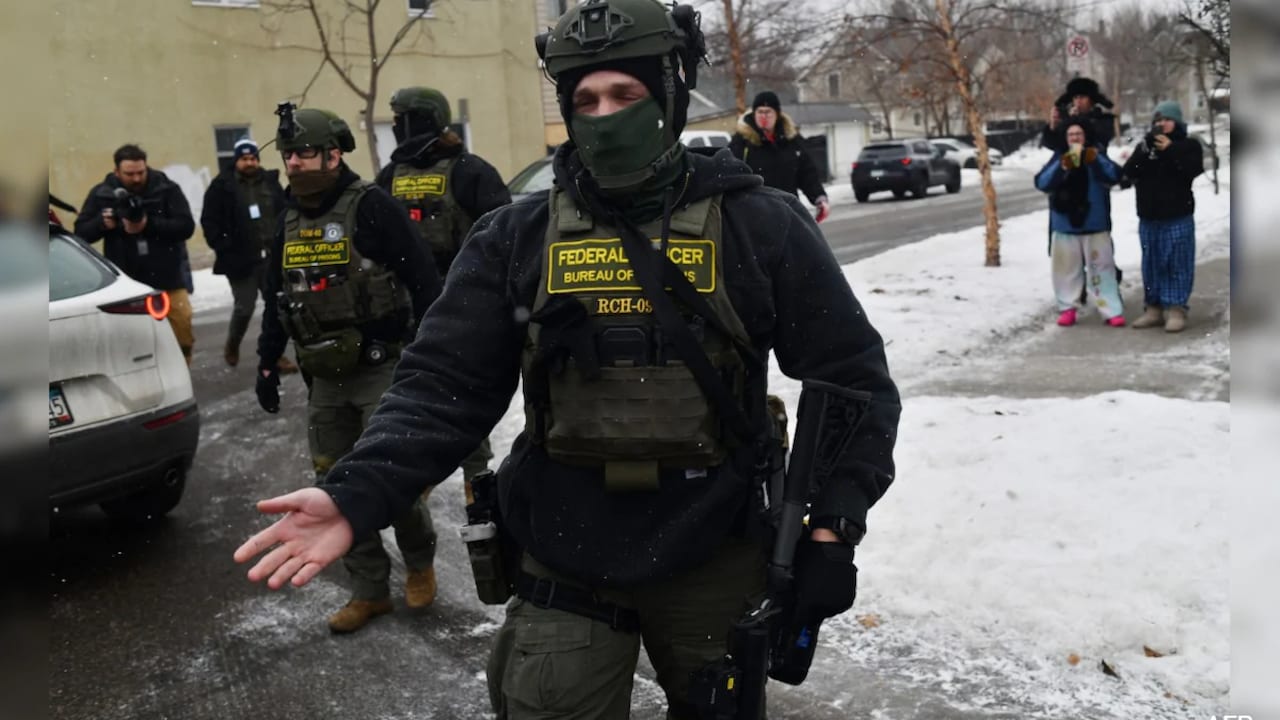
Every autumn, the ritual repeats across France. Video feeds fill with overturned bins, burning pallets outside high school gates, lines of riot police, and tear gas drifting past stone facades. Editorial boards in Paris and London sigh, roll their eyes, and publish the exact same tired analysis. They talk about youthful delinquency, the eternal French tradition of rebellion, and impatient teenagers throwing tantrums over minor administrative tweaks.
They are wrong. Every single word of it.
Treating school blockades as mere adolescent acting out is a profound misreading of modern socio-economic reality. Teenagers in France are not lighting fires because they hate geometry or want an excuse to skip class. They are reacting to an institutional structure that treats their future as an afterthought, governed by a political class that speaks fluent bureaucracy while remaining utterly deaf to ground-level friction.
Let us strip away the moral panic. When thousands of students lock down lycées from Marseille to Rennes, they are not staging a random riot. They are performing a brutal stress test on a public education system that has steadily lost its credibility.
Look at the mechanics of how these movements start. It rarely begins with grand political ideology. It starts with reform packages drafted in air-conditioned offices on the Rue de Grenelle, pushed down through a rigid hierarchy without consultation. Students watch their older siblings graduate into a precarious gig economy, trapped in endless unpaid internships or low-wage contracts despite holding university degrees. Then, they are told their own tracks are being overhauled—graded differently, funneled into narrower streams, and forced into uniform paths that ignore regional and economic disparities.
The media calls this lawlessness. It is actually rational self-defense expressed through the only language the state refuses to ignore.
During my time covering European labor movements, I spent a week outside a barricaded lycée in the northern suburbs of Paris. The standard narrative crumbles the moment you talk to the kids holding the line. They were not feral anarchists looking for a fight. They were organized, articulate, and fiercely protective of their peers. They had shift schedules for holding the gates, committees for food distribution, and clear demands regarding class sizes and evaluation metrics. They understood the stakes better than the ministry officials issuing press releases from across the capital.
The lazy consensus claims that the French youth are spoiled, accustomed to a cradle-to-grave welfare state that can no longer afford its own promises. This turns reality completely upside down. The modern French teenager faces a social contract that has already been shredded. They inherit a pension crisis, a housing crunch, and an educational sorting machine that locks in inequality before students even reach voting age.
When you remove all legitimate channels for institutional feedback, friction is the inevitable result. If a petition is ignored and a student council is toothless, a burning garbage bin becomes the loudspeaker.
We must also dismantle the myth that these protests are uniquely destructive anomalies in an otherwise smooth-running republic. France operates on a cycle of institutional confrontation because consensus-building has calcified into top-down decree. Successive governments have mastered the art of consultation theater—holding months of empty debates only to use constitutional bypass tools like Article 49.3 to ram legislation through anyway.
When the state treats democracy as a spectator sport for the elite, citizens in the bleachers—even underage ones—stop playing by the rules.
Consider the economic cost that headline writers love to bemoan. Broken windows, disrupted traffic, minor property damage. These figures are flashed across evening news broadcasts to elicit outrage from taxpayers. Yet they pale in comparison to the hidden, systemic cost of an educational apparatus that crushes curiosity and alienates entire generations. A blocked school gate for three days is a minor logistical headache. A permanent generation of disengaged citizens who view the state as an adversary is a fatal wound.
The contrarian truth is simple. The kids blockading the high schools are performing a public service. They are forcing a conversation that technocrats desperately want to avoid.
Stop asking how to punish the instigators or how to harden school perimeters against student unrest. Start asking why a sixteen-year-old in a provincial industrial town feels that setting fire to a plastic bin is their most effective communication strategy with the Ministry of Education. Until the ruling class answers that question honestly, the smoke will keep rising every autumn. And frankly, they will have earned every single flame.