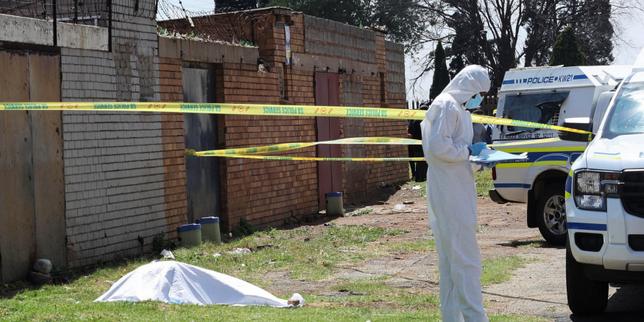
Another grim tally emerges from the East Rand of Johannesburg, and the global commentariat instantly reaches for the pre-scripted playbook. Eleven bodies of women discovered in Ekurhuleni. Immediate headlines decry national shame, invoke the tired specter of toxic masculinity, and demand more speeches from politicians who treat structural decay as a public relations inconvenience.
Everyone nods along. Everyone expresses appropriate horror. And everyone completely misses the mechanical reality of why people are dying in the shadows of Africa's economic hub.
Treating these murders purely as a manifestation of gender-based malice in a vacuum is comforting to editorial boards because it requires zero systemic analysis of physical space, municipal abandonment, and forensic collapse. It allows distant observers to wag a finger at societal attitudes while ignoring the functional machinery of urban anarchy that makes an open field outside Johannesburg a predator's paradise.
Let us discard the lazy consensus. The crisis on the margins of Johannesburg is not merely a cultural glitch; it is the predictable byproduct of failed municipal geography and a criminal justice system that retired years ago.
Every serious discourse must begin with definitions. A femicide wave implies targeted, systemic eradication based on gender identity. But strip away the rhetorical varnish and look at the actual forensic landscapes where these bodies surface. They are dumped in overgrown vacant lots, unlit industrial peripheries, and broken municipal jurisdictions where basic policing does not exist.
When urban planners abandon infrastructure, they inadvertently subsidize serial predation. When streetlights remain broken for a decade, when brush grows ten feet high beside commuter paths, and when police-to-population ratios in townships drop to abysmal depths, the environment itself becomes an accessory to murder.
I have walked these peripheries. I have seen the structural voids where the state vanishes entirely, leaving citizens to navigate a Darwinian vacuum. Blaming broad patriarchal norms while ignoring the complete absence of urban governance is like blaming human nature for drowning while refusing to fix a leaking boat.
The standard media narrative demands that we look at these horrors through a singular moral lens, urging men to "be better" and calling for national summits. It is emotional malpractice. Speeches do not secure a crime scene. Appeals to civic virtue do not fund DNA testing kits or clear out overgrown fields where bodies can be concealed for weeks.
Consider the logistical reality of South African policing. The forensic backlogs are legendary. Detectives juggle caseloads that defy human capacity, operating with a clearance rate for violent crime that would trigger immediate investigations in any functioning jurisdiction. When criminals realize that the probability of forensic detection approaches zero, crime stops being a high-risk endeavor and becomes a low-cost administrative headache for an overwhelmed state.
By framing these killings exclusively as a cultural war between genders, commentators let municipal leaders off the hook. They convert a failure of urban infrastructure and policing into an abstract philosophical debate about human behavior.
If you want to stop the bodies from piling up in Ekurhuleni, stop holding candlelight vigils that result in zero operational changes. Start demanding municipal accountability, functional street lighting, clearing of dense brush along commuter routes, and emergency funding for forensic backlogs that leave evidence rotting in refrigerators.
Culture matters, but geography kills. Until we fix the physical spaces that invite predators to operate with absolute impunity, every new outrage will be met with the same performative grief and the same helpless shrug.
Fix the lights. Clean the brush. Fund the forensics. Everything else is just noise designed to mask institutional failure.