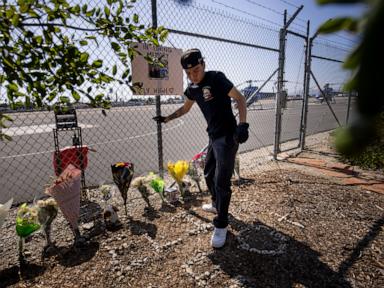
The headlines rolled in with predictable, lazy moralizing. A driver slams into an LA transit bus, flees the scene, and triggers a chaotic police pursuit. Moments later, a news helicopter covering the frantic chase plummets from the sky, killing the pilot and a veteran photojournalist. The narrative writes itself for an audience addicted to simple villains: charge the fleeing motorist with murder for a crash he didn't physically pilot, lock him away, and call it justice.
It is a comforting illusion. It is also an intellectual fraud.
Let us dismantle the comfortable consensus right now. Attaching second-degree murder charges to a driver because a media aircraft chose to buzz the freeway at unsafe altitudes is a dangerous legal acrobatics routine. It substitutes emotional retaliation for systemic accountability. When a public safety apparatus and commercial media operations turn airspace into a chaotic circus for ratings, the blame belongs squarely on the incentives that put those blades in the sky, not just the terrified guy behind the steering wheel of a sedan.
We have built a culture that worships the spectacle of the high-speed chase. We demand our trauma in real-time, broadcast in high-definition directly to our dashboard screens and living rooms. Then, when the inevitable tragedy occurs at the intersection of reckless police tactics and breathless journalistic competition, we pretend to be shocked. We scapegoat the catalyst and ignore the engine.
The Legal Fiction of Proximate Cause
The prosecution wants you to believe in a neat, linear chain of events. Driver runs. Police chase. Media follows. Helicopter crashes. Therefore, driver caused the crash.
Except physics and tort law do not care about your narrative convenience.
Proximate cause requires a direct, foreseeable link between the initial unlawful act and the resulting harm. When a driver bolts from a traffic stop, it is entirely foreseeable that police will pursue him. That is standard procedure. But is it legally foreseeable that a multi-million-dollar news helicopter will aggressively shadow the pursuit, manage its own throttle and rotor dynamics in crowded urban air corridors, and suffer a catastrophic mechanical or pilot-induced failure?
If we accept the logic that every downstream consequence of a police chase is the sole legal responsibility of the fleeing suspect, we open a Pandora's box of absurd liability. By that standard, if a patrol car blows a tire and swerves into a coffee shop during the pursuit, is the suspect on the hook for the spilled espresso? If a civilian pedestrian panics on the sidewalk and trips over a fire hydrant, is that attempted manslaughter for the driver?
Prosecutors love charging murder in these scenarios because it plays well to editorial boards and satisfies the public lust for vengeance. It requires zero nuance. It allows the state to bypass the messy work of examining its own protocols. But stretching felony murder or implied malice homicide to cover secondary aviation disasters sets a chilling precedent. It essentially grants absolute immunity to every other actor in the chain of command—from the newsroom directors demanding live aerial footage to the flight crews pushing safety margins to capture the best angle.
The Ratings Panopticon in the Clouds
Let us talk about the elephant in the newsroom. Nobody wants to admit why that helicopter was overhead in the first place. It wasn't there for public safety. It was there for market share.
Aerial news gathering in Los Angeles is a relic of a bygone broadcasting era, fueled by the morbid fascination of the O.J. Simpson white Bronco era. Local stations maintain fleets of expensive aircraft because spectacle drives ad revenue. When a low-speed or medium-speed pursuit lights up the police scanners, assignment editors do not calculate the risk-to-reward ratio of putting a pilot and camera operator into the congested Los Angeles basin airspace. They calculate the ratings spike.
Think about the operational pressure on those pilots. They are expected to maintain visual contact with a moving vehicle while simultaneously coordinating with ground units, monitoring air traffic control, framing stabilized shots, and listening to a producer screaming in their earsets about framing and pacing. The cockpit is an incubator for cognitive overload.
When a news helicopter goes down during a routine chase coverage, it is rarely an act of God. It is the tragic culmination of a hyper-competitive, desensitized media ecosystem that treats human lives as expendable collateral damage in the pursuit of breaking news metrics. To reduce that systemic failure to a single criminal complaint against a fleeing motorist is intellectually dishonest. It lets the media executives off scot-free while they monetize the very tragedy their business model precipitated.
The Anatomy of Pursuit Policy Failures
We must also look at the law enforcement side of this equation without the usual bootlicking filter. Police departments across the country have spent decades updating their vehicular pursuit policies precisely because high-speed chases in densely populated urban environments are rolling dice with innocent lives.
When is a pursuit worth the collateral damage? When an armed and dangerous violent felon is actively threatening immediate bodily harm to the public, the calculus tilts toward intervention. But when a suspect is fleeing a property crime, a traffic violation, or a minor infraction, a high-speed pursuit often converts a manageable situation into a deadly theater.
In this specific case, the suspect drove into a transit bus, creating an immediate crisis. The decision by law enforcement to pursue is understandable on a human level—cops hate letting people run. But the downstream amplification of the event by a swarm of media aircraft turns a localized police action into a massive public safety hazard.
If police departments want to mitigate these disasters, the solution is not to slap impossible murder charges on fleeing drivers after the fact. The solution is to restrict air support deployment during routine pursuits and to establish hard air-space boundaries that keep commercial media helicopters at a safe, non-interfering distance from active police operations.
Instead of rewriting safety protocols, we get political theater. We get a District Attorney standing at a podium, jaw set, announcing charges designed to win the evening news cycle. It is the ultimate irony: using the mechanisms of the media-industrial complex to punish a driver for a crash caused by the media-industrial complex.
The Uncomfortable Reality of Accountability
I know what the critics will say. They will argue that if the suspect had simply pulled over when ordered, nobody would be dead. They will say that personal responsibility begins the moment you turn the ignition key to flee.
They are right about personal responsibility. The driver made reckless, criminal choices that put himself and others in danger. He deserves to be prosecuted to the full extent of the law for felony evasion, reckless driving, hit-and-run, and any other relevant statute that actually fits his direct actions.
Crucially, stretching the law to fit a murder charge does not make our streets safer. It simply allows a broken system to launder its own institutional failures through the conviction of a convenient scapegoat.
True accountability means holding every link in the chain responsible. It means examining whether news stations should be legally barred from operating aircraft within a certain radius of active police pursuits. It means scrutinizing police command decisions that escalate minor flights into major public spectacles. And it means refusing to accept a lazy legal narrative just because it ties up a messy tragedy with a neat, punitive bow.
The next time a chopper goes down in the name of breaking news, do not look at the guy in handcuffs and pretend justice has been served. Look up at the sky, look into the executive suites of the local broadcast networks, and ask yourself why we keep paying for a front-row seat to the crash.