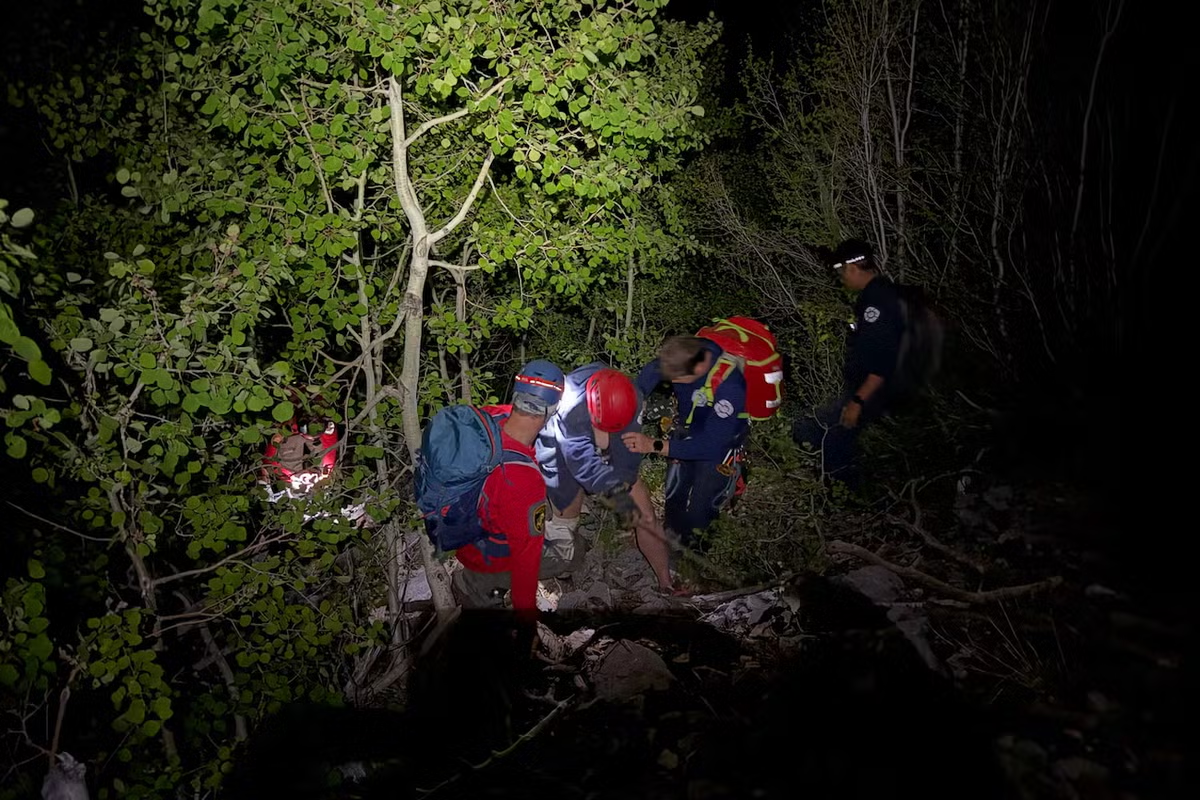
The internet loves a good trainwreck. When a first date in Las Vegas ended with a helicopter rescue crew hauling two dehydrated lovebirds out of the Nevada desert, the media fed the public exactly what it wanted: a cautionary tale about the perils of nature and the sheer unpredictability of outdoor romance.
The consensus was immediate. The desert is a hostile wasteland. The heat is an invisible killer. The date was a tragedy narrowly averted by heroes in flight suits.
It is a comforting narrative. It is also entirely wrong.
The desert did not ruin that date. A complete collapse of personal accountability did. We have become a culture so insulated by concrete, air conditioning, and algorithmic safety nets that we treat basic geography as an active antagonist. When an afternoon stroll turns into a multi-agency rescue operation, the problem isn’t the environment. The problem is a modern delusion that nature owes you a smooth ride just because you’re trying to get laid.
The Romanticization of Risk
We have spent a decade watching influencers pose on the edges of canyons for the perfect grid photo. This has created a dangerous cognitive dissonance. People view the wilderness as a backdrop, a curated set piece designed to validate their lifestyle choices.
When you treat a rugged ecosystem like a VIP lounge, you fail to do the bare minimum. You don't pack water. You don't check the trail map. You wear flip-flops on sandstone.
The Reality Check: Nature does not have a customer service department. It is completely indifferent to your romantic prospects, your outfit, and your lack of preparation.
I have spent twenty years tracking outdoor trends, guiding novices through unforgiving terrain, and watching people make the same arrogant mistakes. The pattern is always identical. It begins with overconfidence born from looking at a screen, and it ends with a satellite messenger SOS flare.
The media frames these incidents as freak accidents. Let’s call them what they actually are: predictable consequences of staggering negligence.
Dismantling the Victimhood of Unpreparedness
Look at the mechanics of a standard desert rescue. It rarely involves an unpredictable act of God. It almost never involves a sudden, freak weather event that defied all meteorological forecasting.
Instead, the anatomy of a failed excursion looks like this:
- The 12:00 PM Start: Hiking during peak solar radiation because waking up early was too inconvenient.
- The Single Fluid Ounce Fallacy: Bringing a single 16-ounce plastic bottle of water for a four-hour trek in 100-degree weather.
- The Cellular Dependency: Relying entirely on a smartphone for navigation, ignoring the reality that canyons block signals and lithium-ion batteries fail in extreme heat.
People ask, "How can we make these trails safer?"
The premise of the question is fundamentally flawed. You cannot make a wilderness area "safe" without destroying the very thing that makes it valuable. Paving Red Rock Canyon or installing water fountains every quarter-mile isn’t conservation; it’s turning the wild into an amusement park for adults who refuse to grow up.
The solution isn't more warning signs. It is a return to social stigma. If you need a search and rescue team because you walked into the desert at noon without water, you shouldn't be celebrated as a survivor. You should be handed the bill for the fuel the helicopter burned.
The Hidden Cost of the Rescue Culture
There is a psychological phenomenon known as risk compensation. When people know a safety net exists, they naturally take higher risks.
Because we have elite, highly trained rescue crews available at the push of a button, amateurs treat extreme environments with the same casual attitude they bring to a suburban mall. They assume that if things go sideways, a taxpayer-funded safety net will drop from the sky to scoop them up.
[High Perceived Safety Net] ➔ [Increased Risk-Taking] ➔ [Avoidable Rescue Operations]
This structural entitlement puts real lives at risk. Every time a crew flies into a canyon to save a couple who underestimated a basic trail, those responders are exposed to genuine hazard. Helicopters crash. High winds cause rotor failure. Ground crews face heatstroke and snakebites.
Your inability to plan is not just an embarrassment; it is a live threat to the people whose job it is to save you from yourself.
How to Exist Outside Without Being a Liability
If you are going to use the outdoors as a setting for your social life, you need to earn the right to be there. It doesn’t require an elite survivalist certification. It requires basic logic.
1. Calculate Your Consumption Accurately
The human body under exertion in arid environments can lose up to 1.5 liters of sweat every single hour. If you are planning a three-hour hike, you need a minimum of one gallon of water per person. Not a shared bottle. Not a sports drink. One gallon. If that sounds like too much weight to carry in your pack, you have no business being on the trail.
2. Ditch the Digital Crutch
Download offline topographic maps before you leave the pavement. Better yet, learn to read a physical piece of paper. If your survival strategy relies on a battery percentage, you are one dropped phone away from becoming a headline.
3. Establish a Hard Turnaround Time
The most dangerous phrase in the hiker’s lexicon is, "Let's just see what's around the next bend."
Set a hard alarm on your watch. When that alarm goes off, you turn around, regardless of how close you think you are to the summit, the view, or the hidden oasis. Emotion ruins logistics.
Stop Romanticizing the Incompetent
We need to stop writing articles that treat these scenarios with soft-focused sympathy. A first date that ends in a desert rescue isn’t a quirky icebreaker for the next relationship. It is an immediate, glaring red flag about a person’s judgment, foresight, and ability to handle basic adult responsibility.
If your partner cannot navigate a well-marked state park without triggering an emergency broadcast response, do not marry them. Do not go on a second date.
The desert isn't malicious. It's just honest. It strips away the curated personas we build in air-conditioned rooms and reveals exactly how prepared a person is to face reality. If you can't handle the heat, stay on the Strip.