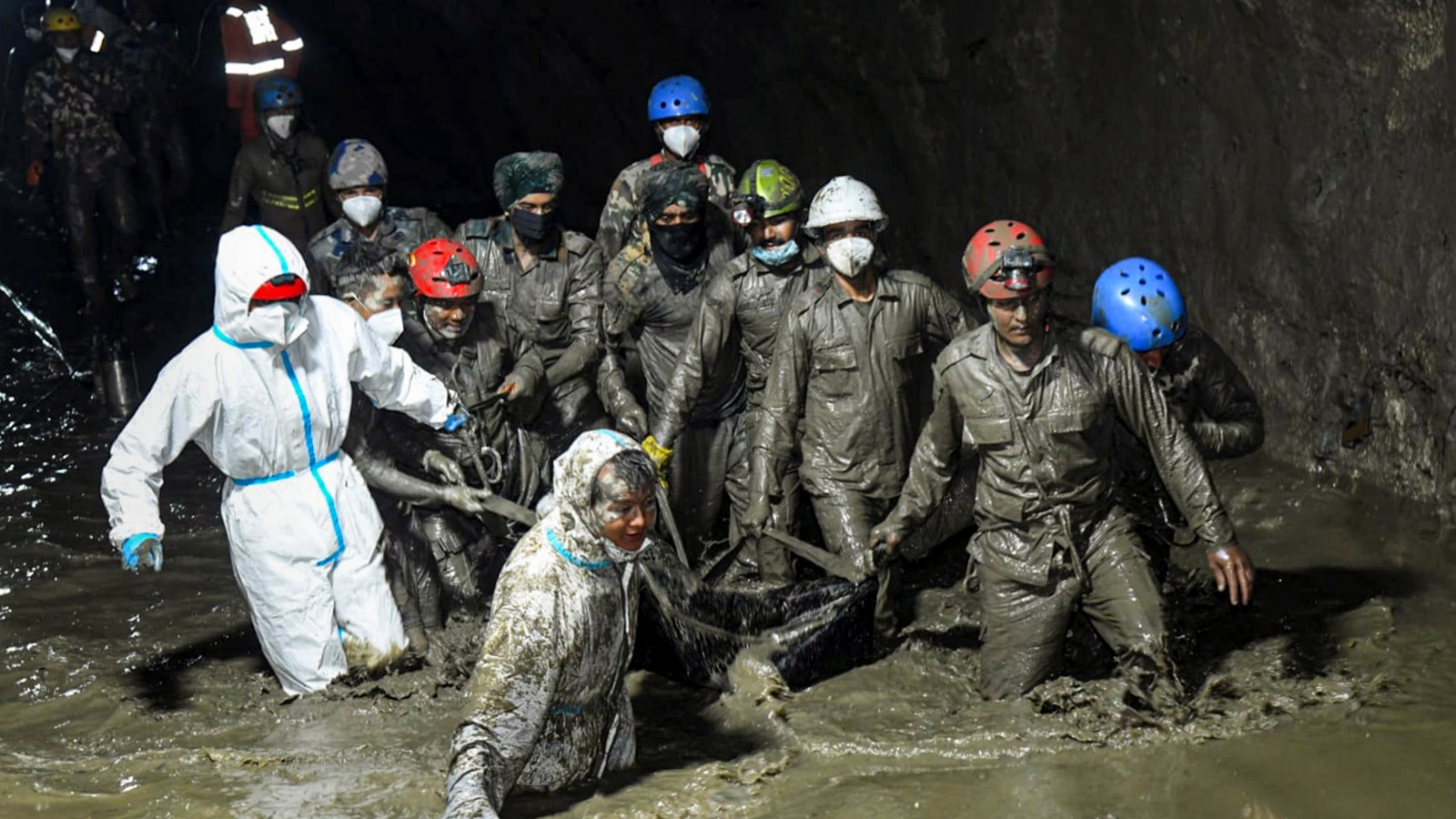
When two point two square kilometers of rock and glacial ice detach from a high-altitude ridge and thunder down a gorge, the media machine defaults to a single, exhausted script. We get the standard tragedy porn. We get drone shots of muddy torrents chewing through bridges. We get solemn finger-pointing at global carbon emissions.
It makes for great television. It also completely misses why people are dying.
Reducing a massive geomorphic failure to a simple headline about warming temperatures is intellectual laziness. It strips away human agency, ignores local engineering malpractice, and absolves the politicians who greenlit dangerous infrastructure projects right in the crosshairs of active fault zones. The mountain did not just decide to collapse because the thermometer ticked up half a degree. Physics is far more specific, and far more incriminating.
Let us look at what actually happened when that massive chunk of the Himalayan face sheared off.
The Comforting Lie of the Freak Accident
The prevailing narrative treats these catastrophic mass movements as unpredictable black swans. They hit the news cycle as sudden anomalies, acts of nature so violent that human preparation was fundamentally impossible. This is a comforting myth. It lets planners and policymakers off the hook.
If a disaster is framed as an unavoidable meteorological curse, nobody has to answer for why roads were blasted into unstable toe-slopes, why villages were permitted to expand onto active alluvial fans, or why monitoring equipment was left unmaintained.
I have walked these valleys. I have watched heavy machinery slice away the base of over-steepened rock walls to carve out poorly planned vehicular routes, all in the name of economic connectivity. When you undercut a thousand-meter vertical wall of fractured metamorphic rock, gravity does not negotiate. It waits for the right trigger—a heavy monsoon pulse, a thermal expansion cycle, or a micro-seismic shift—and then it executes.
Blaming climate change for every rockslide is like blaming global warming when a poorly engineered skyscraper collapses during a modest breeze. The climate is changing, yes. But gravity remains a constant. And human stupidity is accelerating faster than global temperatures.
The Physics of a Rock-Ice Avalanche
To understand why a 2.2 square kilometer slide turns into a devastating flood wave, you have to throw away textbook hydrology. Water is only half the problem. In high-relief terrain, disasters are driven by sediment dynamics and rock-ice avalanche mechanics.
When millions of tons of rock, fractured bedrock, and entrained glacial ice detach, they do not slide gently downhill. They impact valley floors at terminal velocities, transforming kinetic energy into thermal and mechanical energy. This liquefies the interstitial ice and shatters the rock matrix into a hyper-concentrated debris flow.
This is not a river overflowing its banks. This is liquid concrete moving at highway speeds. It acts like a hydraulic bulldozer, gouging out riverbeds, picking up centuries of accumulated moraine deposits, and multiplying its mass tenfold within minutes. The resulting impulse wave crashes into downstream lakes or river channels, creating an artificial dam-break effect that sends a wall of sludge hurtling toward settlements.
Standard early warning systems, typically designed to measure rising water levels via simple stage sensors, are utterly useless against this kind of event. By the time a water-level sensor registers a spike, the debris wave has already pulverized the sensor, the bridge it was attached to, and the village downstream.
Yet, agencies keep deploying the exact same outdated instrumentation, patting themselves on the back for modernizing, while wondering why their alerts arrive five minutes after the impact zone has been erased. We are fighting twenty-first-century geohazards with twentieth-century instruments designed for flatland rivers.
The Economic Engine of Destruction
Look at the political economy behind Himalayan development. Mountain regions are treated as resource frontiers. Hydropower projects, road expansions, and tourism corridors are pushed through without rigorous, independent geotechnical vetting.
Local governance structures are chronically underfunded and overwhelmed. When a developer proposes a new hydroelectric tunnel or a bypass road, environmental impact assessments are routinely treated as bureaucratic speedbumps rather than hard scientific guardrails. Corrupt oversight turns blind eyes to improper blasting techniques. Contractors use high-yield explosives directly adjacent to unstable, frost-shattered rock faces, setting off micro-fractures that take months or years to propagate before the final, catastrophic unzipping occurs.
Consider the thermal regime of high-altitude rock walls. Permafrost degradation does not just mean ice melts uniformly; it means ice acts as a cement within rock joints. When that cement warms or experiences cyclic freeze-thaw pressures, shear strength plummets. When you combine this natural weakening with uncontrolled dynamite blasting for road cuts just hundreds of meters below, you have engineered a geological time bomb.
When the inevitable collapse happens, the corporate entities and state agencies responsible retreat behind the convenient shield of force majeure. Act of God. Climate change did it. Nature is unpredictable.
It is a brilliant rhetorical defense. It costs nothing, requires zero accountability, and guarantees that funding will flow for emergency relief rather than structural reform.
Dismantling the Response Playbook
If we want to stop treating these events as recurring tragedies and start treating them as manageable engineering risks, we need a complete overhaul of how mountain regions are managed.
First, stop building critical infrastructure in active deposition zones. We treat alluvial fans—the very areas built by past debris flows—as prime real estate for settlements and bridges because they are relatively flat compared to the surrounding slopes. This is geological insanity. Living on an active alluvial fan is the equivalent of setting up camp in the middle of a shooting range and complaining when a bullet hits your tent.
Second, deploy ground-based monitoring that looks at rock stress, acoustic emissions, and subsurface movement, rather than just waiting for water levels to rise. High-altitude permafrost degradation and groundwater pore pressure inside rock masses are the real ticking clocks. We have the sensor technology to detect micro-cracking weeks before a failure occurs. What we lack is the political will to mandate their use and evacuate zones before the mountain falls.
Third, hold civil engineers and planning boards legally liable for ignoring geotechnical warnings. If a road cut destabilizes a slope and triggers a valley-wide disaster, the engineers who signed off on the blast design should face criminal negligence charges, not just administrative slaps on the wrist.
The Hard Truth About Upstream Reality
The next time a massive mountain face shears off and scours a valley clean, do not accept the lazy media consensus that points a finger at the sky and mutters about weather patterns.
Look at the road cuts. Look at the unregulated settlement patterns. Look at the developers who saved money on slope stabilization to maximize short-term margins. Look at the regulators who looked the other way.
The mountain does not care about your carbon footprint, your political treaties, or your sympathy. It obeys the laws of physics. Until we align our engineering and our governance with those exact laws, we will keep rebuilding the same vulnerable villages in the exact same lethal paths, waiting for the next catastrophe to validate our excuses.
Stop praying to the weather gods. Start fixing the engineering.