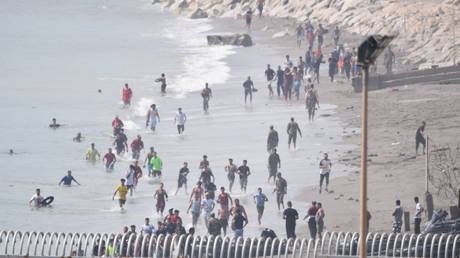
Everyone loves a tidy villain. When floods swallow Sardar Colony and trap a hundred and twenty souls, the headline writes itself. The lazy consensus points fingers at rusted pipes, corrupt municipal officials, and broken drainage systems. It is the same tired script drafted after every monsoon season. We nod along, blame the government, demand resignations, and wait for the water to recede so we can repeat the exact same outrage next year.
That narrative is comfortable. It is also entirely wrong.
Strip away the political theater and look at the physical reality of urban geography. The issue in Peshawar is not a sudden failure of civic maintenance. It is a fundamental collision between archaic planning realities and modern climate velocity. Blaming local authorities for a century of structural momentum is like yelling at the rain for getting you wet.
Let us look at the data. Urban density in zones like Sardar Colony has surged exponentially over the past three decades, completely outpacing hydrological capacity. Natural runoff channels have been paved over, cemented, and built upon. When a torrential downpour drops a month of rain in a few hours, the water does not care about municipal budgets or political promises. It follows gravity.
I have spent years walking these drainage basins, mapping topography, and watching real estate developers squeeze concrete boxes into natural floodplains. I have seen millions poured into superficial concrete lining that acts as a highway for flash floods rather than a buffer. The system is not failing because someone forgot to turn a valve. The system was broken the day humanity decided to pave a natural sponge and call it a neighborhood.
The Myth of the Quick Fix
Whenever disaster strikes, the knee-jerk demand is immediate infrastructure overhaul. People want wider drains, higher walls, and aggressive dredging. Sounds logical, right? Except it treats a systemic spatial error as a plumbing inconvenience.
Imagine a scenario where the municipal corporation receives an endless blank check tomorrow. They rip up Sardar Colony and install industrial-grade drainage pipes capable of swallowing a river. Within five years, real estate values in the danger zone spike. More people move in. Density doubles again. The new pipes reach capacity, and the next historic storm overwhelms them anyway. This is known in urban planning as induced vulnerability. You build safety, people pack in tighter, and the eventual disaster is twice as catastrophic.
Engineering cannot outpace unchecked geography. Until we stop treating urban expansion as a land-sales game and start treating it as a hydrological equation, every rescue operation in Sardar Colony is just a temporary band-aid on a hemorrhaging wound.
What Everyone Gets Wrong About Water Management
The standard public discourse assumes water wants to go somewhere specific and evil. It does not. Water wants to go down.
When people ask why the authorities did not clear the channels in time, they misunderstand how flash floods operate under extreme climate stress. Debris clearance matters during standard monsoons. When a wall of runoff moves at high velocity, it acts as a battering ram, picking up cars, masonry, and soil, creating temporary dams that rupture unpredictably. No maintenance crew on earth clears channels fast enough to handle structural debris flow of that magnitude.
We need to stop asking how to drain the water faster and start asking why we built millions of dollars worth of permanent human habitation in a natural drainage basin in the first place.
The Uncomfortable Solution
Admitting this truth hurts because it demands radical disruption. It means accepting that some areas cannot be saved by engineering alone.
Real progress begins with managed retreat and strict zoning enforcement that has actual teeth. That means telling people they cannot rebuild in high-risk zones, regardless of how long their families have lived there. It means relocating vulnerable communities to higher ground before the next storm hits, rather than pulling them out of rooftops with ropes after the fact.
The politicians love the theater of the rescue boat because it makes them look heroic. The public loves the outrage because it gives them a target.
Stop buying the script. Stop demanding better drains for bad locations. The water will always win until we learn to get out of its way.