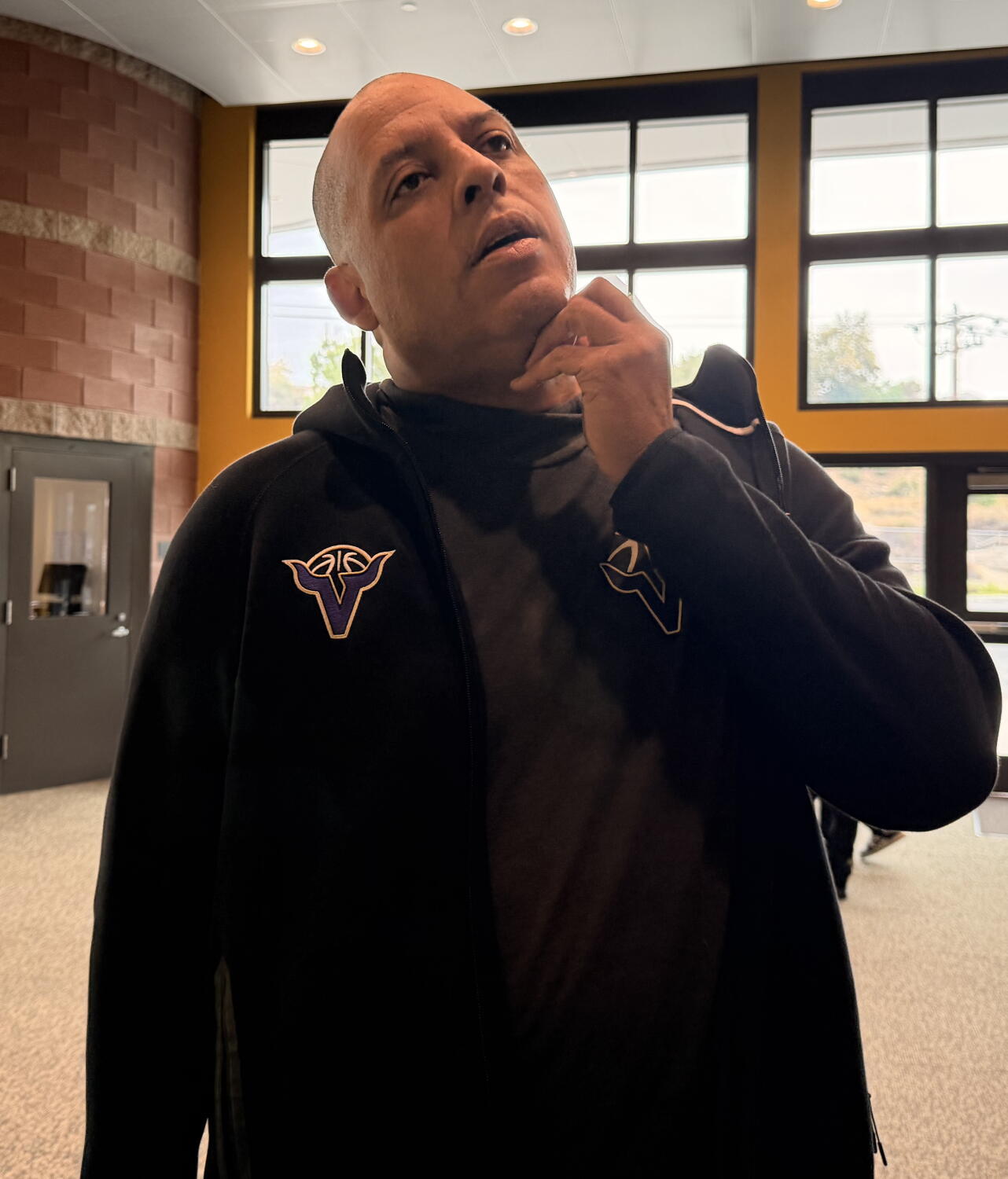
Bill Bedgood is officially back as the head boys basketball coach at Valencia High School, reclaiming the sideline where he previously built a consistent winner in the Foothill League before stepping away in 2021. Rather than a simple nostalgia tour, his return exposes a deeper reality about Southern California prep sports, where institutional memory and proven program stability have become rare commodities amid constant coaching turnover.
Most local sports blurbs treat a coaching hire like a transaction. Someone leaves, someone arrives, and the athletic director issues a standard statement about excitement for the upcoming season. That surface-level coverage misses the actual mechanics of high school athletics. When a program brings back an established architect like Bedgood, it is making a calculated admission about what it takes to survive in modern prep basketball.
The Reality Behind the Valencia Homecoming
High school coaching is a grind that breaks most people within five years. You are managing teenagers, appeasing parents, navigating transfer rules, fundraising for basic gear, and teaching a full load of classes—all for a stipend that barely covers gas money. When Bill Bedgood originally stepped down from Valencia in 2021 after a decade at the helm, nobody in the Santa Clarita Valley questioned his reasons. Ten years in one spot in the Foothill League is an eternity.
During that first tenure, Bedgood established a clear identity. His teams were disciplined, defensively sound, and notoriously difficult to prepare for in league play. They won Foothill League titles. They made deep playoff runs in the CIF Southern Section. More importantly, the program functioned like a cohesive unit from the freshman level up to varsity.
When he walked away, the expectation was that a new voice would carry that foundation forward. Instead, Valencia experienced the exact turbulence that plagues so many public school programs when a longtime leader exits. Continuity fractured. Systems changed overnight. Players and families suddenly found themselves adjusting to new expectations while rival programs in the valley capitalized on the transition.
Bringing Bedgood back is not about looking backward. It is an institutional course correction. Athletic directors across California are realizing that hiring young, ambitious coaches often turns their programs into stepping stones, while hiring outsiders unfamiliar with the specific community culture leads to friction. Bedgood already knows the hallways, the feeder middle schools, the faculty, and the exact pressure points of coaching in Santa Clarita.
How Coaching Turnover Destroys Public School Programs
To understand why Valencia moved quickly to bring Bedgood back into the fold, you have to look at the structural disadvantages public high schools face right now. Private schools operate with open enrollment and massive donor networks. Public schools like Valencia rely entirely on neighborhood boundaries, community buy-in, and multi-year player development.
When a public school changes coaches every two or three years, the developmental pipeline collapses. Consider a hypothetical example of a typical fourteen-year-old incoming freshman. Under a stable regime, that kid spends two years learning a specific defensive rotation and offensive terminology on the lower levels before ever stepping onto a varsity floor. By junior year, the reads are automatic.
Now imagine that same program switches head coaches twice in four years. That player learns three different defensive philosophies, deals with shifting playing-time criteria, and watches upperclassmen transfer out because they do not fit the new system. By the time that kid is a senior, the program is still in "rebuilding mode."
Bedgood eliminates that learning curve immediately. His expectations are already documented in the banners hanging in the Valencia gymnasium.
The Foothill League Arms Race
The Foothill League has never been an easy place to coach basketball. Programs like Saugus, Hart, West Ranch, Canyon, and Golden Valley constantly battle for local supremacy, and every gym in the Santa Clarita Valley turns into a pressure cooker on Tuesday and Friday nights.
In recent years, the competitive balance across the league has shifted rapidly. West Ranch raised the bar with high-level talent and deep postseason runs. Saugus and Hart maintained their traditional toughness. For Valencia, slipping even slightly in coaching stability meant falling behind rivals who were maximizing every ounce of local talent.
Why Familiarity Matters in League Play
In a twelve-game league schedule where every opponent knows your tendencies, tactical adjustments win games. You cannot simply out-athlete every team in the Foothill League; the talent pool is drawn from the exact same youth leagues and AAU circuits. Victory comes down to execution in the fourth quarter, scouting accuracy, and player buy-in.
Bedgood built his reputation on out-scheming opponents in February. He understands how to pace a season so a team peaks when league play begins rather than burning out in December showcase tournaments. That kind of institutional rhythm cannot be downloaded from a coaching clinic.
The Second Stint Trap
Returning to a job where you already succeeded carries a massive hidden risk. Sports history is littered with coaches who came back for a second act only to discover that the world had changed while they were gone.
The high school basketball environment today is fundamentally different from what it was even five years ago. The transfer portal mentality has trickled down to fifteen-year-olds. Club basketball coaches hold unprecedented influence over players' decisions, often encouraging kids to leave public schools if they are not getting immediate varsity touches or social media highlights.
Parents are also far more aggressive about playing time and college recruitment exposure than they were a decade ago. A coach who demands strict accountability, preaches ball movement over isolation scoring, and benches players for missing defensive assignments faces pushback that simply did not exist in 2015.
Adapting Without Losing Identity
If Bedgood tries to run the exact same playbook—both on the court and in the locker room—that he used in 2018, he will run into friction. Modern players respond differently to authority. They consume basketball differently, modeling their games after NBA spacing and three-point volume rather than traditional motion offenses.
However, the best veteran coaches do not abandon their core principles; they update their delivery. Accountability still wins high school games. Rebounding, free-throw shooting, and taking care of the basketball remain the bedrock of CIF playoff success, regardless of how many step-back threes kids watch on their phones. The challenge for Bedgood will be translating those timeless demands to a roster raised in the highlight-reel era.
What Makes a Program Builder Different From a Tactician
There is a massive difference between a coach who knows X's and O's and a coach who knows how to run a high school basketball program. Plenty of assistants can draw up a great out-of-bounds play with four seconds left on the clock. Very few people can manage a sixty-player program across three levels while keeping boosters happy, grades eligible, and campus administrators supported.
When Valencia hired Bedgood back, they were hiring a program CEO.
Here is what actually goes into that role behind the scenes:
- Lower-level alignment: Ensuring the freshman and junior varsity coaches teach the exact same defensive footwork and terminology used on varsity, so call-ups are seamless.
- Academic monitoring: Tracking grade checks before the CIF eligibility deadline hits, rather than scrambling after a starter becomes ineligible in January.
- Community trust: Maintaining open lines of communication with local youth coaches and middle school families so top eighth-graders choose to stay at their neighborhood public school rather than commuting to a private school in the San Fernando Valley.
- Summer league management: Organizing forty-game summer schedules, travel tournaments, and weight-room blocks without burning out multi-sport athletes.
Most first-time head coaches get overwhelmed by the administrative weight of those four bullet points before they ever get to coach a single defensive drill. Because Bedgood has already done the job at Valencia, he does not waste energy figuring out how the building works. He starts on day one with the infrastructure already mapped out in his head.
The Broader Lesson for High School Athletics
Look around Southern California high school sports right now and you will see a quiet crisis in coaching retention. School districts struggle to find qualified teachers who are also willing to spend thirty hours a week in a gymnasium after the final bell rings. Walk-on coaches—individuals who work outside jobs and arrive on campus at 3:30 PM—often lack the daily presence on campus needed to build real relationships with students.
When a veteran educator and proven coach steps back onto the sideline, it stabilizes an entire athletic department. Other coaches on campus benefit from having a seasoned peer in the office. Young coaches get a mentor who knows how to handle difficult parent meetings without escalating conflict.
Valencia did not just solve a basketball vacancy. They bought themselves certainty in an era where high school sports are increasingly chaotic.
What Happens When the Ball Tips Off
Nostalgia disappears the moment the opening tip goes up in November. Nobody in the Foothill League is going to hand Valencia a victory out of respect for Bill Bedgood's past resume. Opposing coaches will scout his sets just as aggressively as before, and rival student sections will be just as loud.
The real test of this reunion will not be measured in preseason hype or press releases. It will show up in January, on a cold Tuesday night in a packed gym, when a close game hangs on whether five teenagers trust their coach's system enough to make the extra pass instead of forcing a bad shot. That is the exact standard Bill Bedgood built at Valencia the first time around, and the sole reason the school handed him the whistle again.