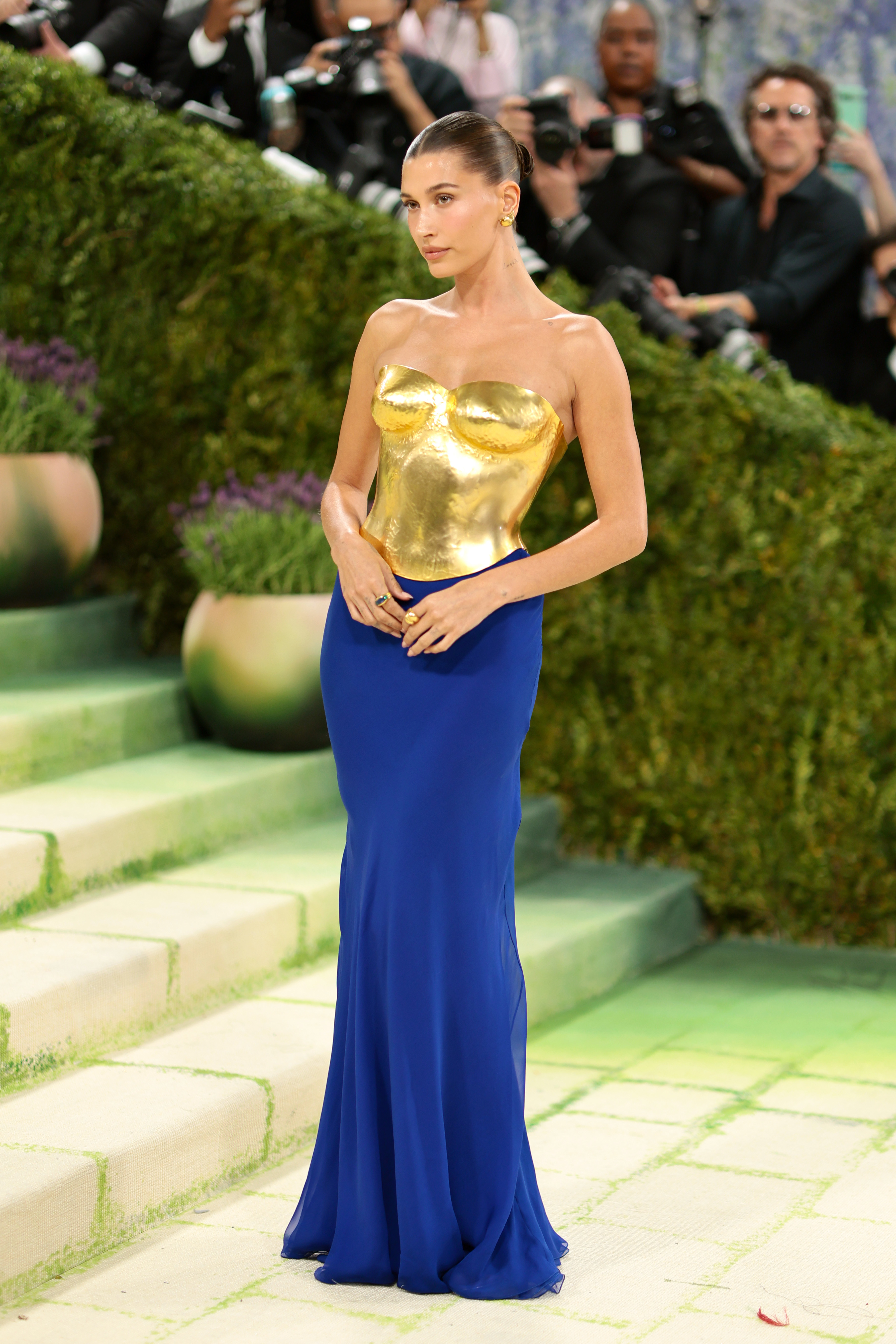
The fashion establishment is currently falling over itself to praise Justin Bieber’s gold corset dress from the latest Met Gala. Industry insiders are calling it a triumph of boundary-pushing menswear and a bold subversion of traditional red-carpet norms. They claim it brought the night to a halt and redefined modern elegance.
They are entirely wrong.
I have spent the last fifteen years working directly with luxury brands, styling high-profile talent, and analyzing the precise economics of red-carpet moments. I have seen celebrities and stylists blow millions on attention-seeking garments that look spectacular for a five-second flashbulb moment but fail entirely when viewed through the lens of genuine craftsmanship and timeless personal branding.
Let us stop pretending that a flashy, restrictive, and structurally flawed garment equates to a masterclass in fashion history. The gold corset dress was not a stroke of genius. It was a chaotic, performative misstep that relied purely on shock value rather than aesthetic merit.
Deconstructing the Hype
The narrative surrounding the look relies on the assumption that anything defying traditional gender norms is automatically a triumph of design. Critics argue that placing Bieber in a gilded, rigid corset demonstrates a progressive shift in menswear.
Let us be precise about the terminology. Subverting expectations only works if the execution matches the ambition. A corset is not inherently avant-garde. It is simply a garment that constricts and shapes the torso. When applied to an oversized, streetwear-oriented physique without proper tailoring, the proportions collapse.
Imagine a scenario where the dress was stripped of its gold leaf and high-profile association. It would remain an ill-fitting, cumbersome silhouette that restricts natural movement and distorts the wearer's physical presence.
The industry is confusing the spectacle of the celebrity with the quality of the design. When an artist walks up the steps and struggles to breathe or adjust their posture, the garment has failed its primary functional purpose. Fashion, even on the runway, must account for the human element.
The Economics of the Attention Economy
The media argues that the dress brought the Met Gala to a halt because it generated record-breaking engagement metrics across social media platforms. From a pure data-driven perspective, the numbers look impressive.
However, measuring success solely by impressions is a rookie mistake. A brand or a stylist aiming for longevity does not simply want eyeballs; they want brand alignment and cultural relevance that outlasts the evening's news cycle.
I have watched companies throw massive budgets at viral moments that generated millions of views but zero tangible conversion or lasting prestige. The gold corset dress is a textbook example of this phenomenon. It sparked immediate outrage and amusement, which translated into short-term viral spikes, but it did nothing to establish a definitive, mature style trajectory for the artist.
Instead, it reduced a major cultural figure to a walking meme. When the novelty of the absurdity wears off, what remains is an image that ages poorly.
What People Are Getting Wrong
To understand where the conventional analysis fails, we need to address the common questions people ask about this look. The typical discourse revolves around these specific queries, and it is time to dismantle their underlying premises.
Was the gold corset dress a triumph of individual expression?
The premise here assumes that wearing the most uncomfortable and unusual item equals authentic self-expression. In reality, it was a reaction to the pressure to remain relevant in a highly saturated media landscape. True expression requires an understanding of one's own identity and translating that into a cohesive wardrobe. Slapping a rigid metal bodice on an artist whose natural domain is relaxed, understated luxury creates a disconnect that reads as inauthentic.
Did it set a new benchmark for red-carpet styling?
It set a benchmark for short-lived virality, not for design innovation. True benchmarks in fashion history—such as the sleek minimalism of the nineties or the sharp tailoring of the early two-thousands—offer a blueprint that can be adapted and reinterpreted. The gold corset is an isolated, unrepeatable stunt that cannot be integrated into a functional, elevated wardrobe.
The Truth About Avant-Garde Tailoring
We must separate the concept of artistic provocation from poor construction. The garment featured rigid internal boning that did not align with the anatomy of the wearer.
Authentic expertise in design, such as the work of the late Alexander McQueen or the structural mastery of Rei Kawakubo, involves understanding the tension between the fabric and the human form. When an avant-garde piece is constructed, it enhances the wearer's presence rather than overpowering it.
The gold dress was an aggressive imposition of a concept onto an unwilling canvas. The stiffness of the corset created an awkward gait and an unnatural silhouette. It is a classic case of a piece wearing the person, rather than the person wearing the piece.
The downside to this contrarian perspective? You will undoubtedly alienate the small, vocal contingent of critics who view any disruption of traditional norms as inherently good. You risk being labeled resistant to change. But real authority in this industry requires the courage to call a bad design out for what it is, regardless of the noise surrounding it.
Actionable Alternatives for Modern Styling
If we are serious about disrupting menswear without relying on desperate gimmicks, the approach must shift toward refined execution. Here is how you push boundaries without sacrificing elegance:
- Focus on Fluidity: Instead of rigid structures, utilize heavy, draped fabrics that move dynamically with the body.
- Subvert Proportions: Experiment with elongated hemlines, dropped shoulders, and asymmetrical cuts rather than relying on historical corsetry.
- Elevate the Details: Emphasize fine craftsmanship, subtle texturing, and rich color palettes that draw the eye through quality rather than shine.
The era of the desperate viral spectacle is drawing to a close. Audiences are growing weary of performance art masquerading as fashion. The next phase of luxury belongs to those who understand that true confidence requires no armor.
Stop celebrating the noise. It is time to demand substance.