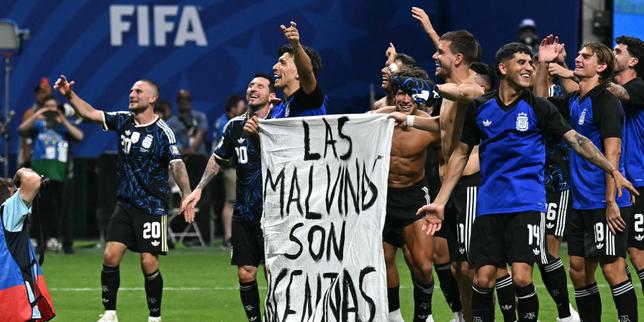
The press loves a broken icon. It feeds the insatiable hunger for a humanity we insist on projecting onto people who, quite frankly, are not like us. When the cameras captured David Beckham in the aftermath of a crushing World Cup exit, the media machine shifted gears instantly. They pivoted from tactical analysis to the tender embrace of a spouse, painting a picture of a man shattered, requiring professional-grade consolation to survive the night.
It is a beautiful story. It is also fundamentally dishonest.
We are obsessed with the "heartbroken" athlete. We demand that they mirror our own emotional fragility because it makes their superhuman output feel accessible. If he hurts like I do, his success feels less like a genetic or disciplined anomaly and more like something I could reach if only the universe were slightly kinder. This is the lazy consensus. We mistake professional disappointment for personal catastrophe, and in doing so, we strip the athlete of the very trait that made them an elite competitor in the first place: the ability to compartmentalize and burn.
The Myth of the Consolation Prize
Let us look at the mechanics of elite sports psychology. High-stakes performance at the World Cup level is not fueled by emotional stability; it is fueled by an obsessive, often destructive, need for validation through victory. When that victory is denied, the athlete does not need a hug to "fix" them. They are undergoing a physiological crash. Adrenaline, cortisol, and testosterone are fluctuating wildly as the body transitions from a state of total, predatory focus to absolute inactivity.
The narrative of "Victoria consoling David" is a projection of domestic soft power. It serves to domesticate the beast. It reassures the public that the man who just failed on the global stage is still a "good husband," a "family man," a creature who returns to the fold to be mended by domesticity.
But what if he didn't need to be mended?
Imagine a scenario where the post-match silence is not a void to be filled with platitudes and tissues. Imagine it is the most productive hour of that athlete's career. In the immediate aftermath of a failure, the brain is mapping the path of the loss with painful clarity. Every touch, every missed pass, every tactical error is being seared into the neural architecture to ensure it never happens again. By forcing a narrative of "consolation," we interrupt that vital, cold-blooded autopsy.
Why We Prefer the Victim to the Predator
Why are we so uncomfortable with the idea that Beckham—or any elite athlete—might not be "heartbroken" in the way we use the word? Because if he is not heartbroken, he is dangerous. If he is already obsessing over the next qualification cycle before he’s even left the stadium, he isn't relatable. He is a machine.
We love the narrative of the suffering athlete because it validates our own mediocrity. If the greatest player of his generation can be brought to his knees by a penalty shootout, then it is perfectly acceptable for the rest of us to crumble when our project meetings go sideways or our personal lives hit a snag. It is a mass-marketed excuse for emotional instability.
I have spent enough time in the backrooms of elite sporting organizations to know that the internal dialogue is rarely "I need a shoulder to cry on." It is usually "I know exactly why this failed, and I am going to make sure the person who stopped me pays for it in the next meeting." That is not heartbreak. That is cold, tactical fuel.
The Disruption of the Emotional Consensus
If you want to understand elite performance, you must stop looking at the press conferences and the staged photographs. You must look at the silence. The media relies on the "consolation" trope because it is easy, visual, and clicks. It requires zero insight into the rigors of high-stakes environments. It is sports reporting for people who don't actually watch the game.
The reality is far less romantic. The partner of an elite athlete is not a therapist; they are a witness to a process that most of the world is not equipped to understand. When an athlete returns from a loss, they are not bringing a deficit of emotional support to the table. They are bringing a deficit of ego. The support they require is not emotional validation—it is the containment of the fire. They don't need to be told they are a "good person" or "loved anyway." They need the space to stop vibrating with the residual energy of the defeat.
Stop Analyzing the Feelings, Start Analyzing the Data
The next time you see a headline about an athlete being "consoled" after a defeat, pause. You are not witnessing a moment of human healing. You are witnessing a PR filter being applied to raw, unfiltered ambition.
The athlete is not a tragedy. The athlete is a business enterprise, and a loss is simply a market correction. The most dangerous players in the history of the sport are the ones who use that loss as a catalyst, not a moment for a cry.
We need to stop demanding that our heroes be soft. We need to stop projecting our need for comfort onto people whose survival depends on their ability to resist it. If we want to understand the true nature of excellence, we have to look past the tabloid headlines and accept the uncomfortable truth: the greatest among us are not the ones who heal the fastest; they are the ones who turn the suffering into a weapon.
Stop looking for the hug. Start looking for the adjustment.