Winter weather prediction in Wyoming is a high stakes guessing game. Every autumn, residents across the Cowboy State watch for the release of the venerable Farmers' Almanac, a publication that has claimed to forecast seasonal climates months in advance since the early nineteenth century. This year, the traditional outlet promises a snowy Wyoming winter, leaning heavily on time tested formulas and solar cycles. Professional meteorologists view these claims with open skepticism. One prominent atmospheric scientist recently dismissed such long range outlooks as voodoo magic, pointing to the chaotic nature of modern weather systems. This clash between folk forecasting and atmospheric science highlights a persistent tension in how society tries to peer into the future.
Long range forecasting sits at an awkward intersection of tradition, public demand, and scientific limitation. Millions of people rely on seasonal winter outlooks to plan agricultural operations, municipal snow removal budgets, and travel logistics. Yet, predicting atmospheric behavior months ahead remains one of the hardest problems in modern science. The atmosphere is a turbulent fluid system governed by non-linear equations. Small changes today snowball into massive shifts weeks down the line. When traditional almanacs claim to know the exact snowfall totals for Jackson Hole or Cheyenne in January, scientists wince. They know the math does not support such precision.
The Mechanics Behind Traditional Almanac Predictions
The Farmers' Almanac has survived for over two centuries by sticking to a proprietary formula developed in 1818 by its founding editor, David Young. This formula purportedly relies on planetary positions, sunspot activity, and lunar phases. Proponents argue that solar cycles exert a subtle gravitational and magnetic influence on Earth's upper atmosphere, which eventually cascades down to surface weather patterns.
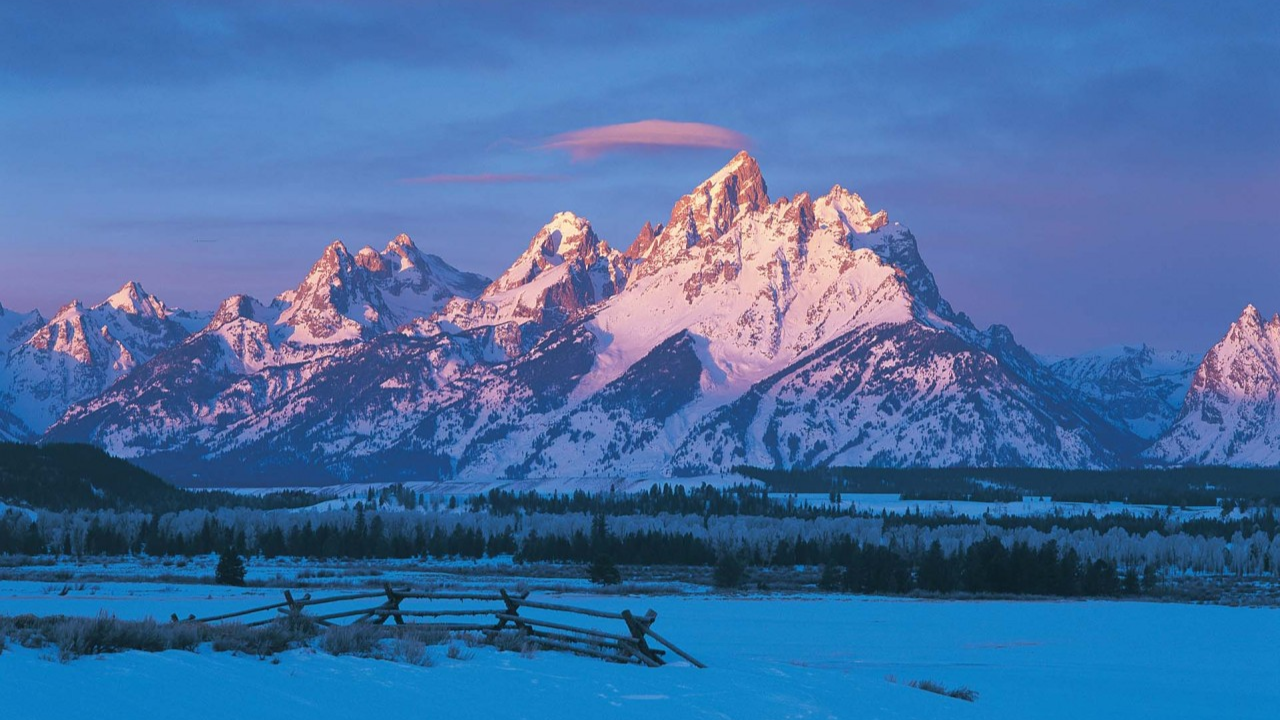
From a purely historical standpoint, statistical correlations do exist between solar activity and regional climate variations over decades or centuries. However, trying to scale those broad macro trends down to specific weekly weather events in a geographically complex state like Wyoming is where the methodology breaks down. Wyoming features extreme topographic diversity, ranging from the sweeping high plains of the east to the jagged, microclimate heavy peaks of the Teton Range. A solar cycle index cannot account for how a localized mountain wave will dump three feet of snow on one side of a mountain pass while leaving the valley ten miles away bone dry.
Modern meteorology does not entirely dismiss solar influences, but it treats them as background noise rather than primary drivers for seasonal winter storms. The atmosphere is simply too dynamic. Between the solar driver and the snow shovel sits the chaotic churn of the jet stream, fluctuating ocean temperatures thousands of miles away, and rapidly shifting atmospheric pressure gradients.
Why Professional Meteorologists Call It Voodoo Magic
When mainstream meteorologists use harsh terms like voodoo magic to describe long range almanac predictions, they are reacting to the illusion of certainty. Traditional forecasting methods often rely heavily on recurring patterns or cycles that may or may not hold true in a changing climate.
Consider the fundamental physics of numerical weather prediction. Computer models run by agencies like the National Oceanic and Atmospheric Administration process millions of observations gathered from weather balloons, satellites, surface stations, and ocean buoys. Even with supercomputers crunching this data, predictability drops off sharply after about ten days. This limitation is known as the horizon of predictability.
Beyond two weeks, deterministic forecasts become practically useless. Meteorologists shift to probabilistic forecasting. They run ensembles—dozens of slight variations of the same computer model—to see a spread of possible outcomes. If twenty ensemble members show a cold front and five show a heatwave, forecasters can assign a percentage likelihood to the cold front.
Almanacs, by contrast, offer a single, definitive narrative for a Tuesday in February published eight months in advance. This absolute certainty defies the fundamental laws of atmospheric physics. It ignores the chaotic nature of the fluid envelope surrounding our planet. To a scientist who spends a career respecting the chaotic limits of the atmosphere, claiming to know precise winter severity months ahead looks less like science and more like astrology.
The Wyoming Factor: Topography Defies Simple Rules
Wyoming presents a brutal test for any weather forecasting method, whether traditional or high tech. The state's average elevation is over six thousand feet, making it the second highest state in the nation. This geography creates localized weather systems that frequently defy broader regional trends.
A classic winter weather event in Wyoming involves Pacific moisture slamming into the western slope of the Continental Divide, dropping heavy powder in Star Valley and Jackson. By the time that air mass crosses the mountains and descends into the wind-scoured basins of central Wyoming, the moisture is wrung out, leaving Casper or Laramie cold, clear, and windy.
Traditional almanacs rarely capture this spatial granularity. A prediction of a snowy Wyoming winter might hold true for the western mountain ranges while proving entirely false for the southeastern plains. When a forecast is broad enough to cover an entire state characterized by radically different microclimates, it becomes easy to claim accuracy after the fact through confirmation bias. People remember the big blizzard that matched the prediction and forget the weeks of dry, unseasonable warmth that contradicted it.
The Psychology of Wanting to Know the Future
The enduring popularity of long range weather predictions reveals a deep human desire for control and preparation in an unpredictable world. Winter in Wyoming is not a minor inconvenience; it can be an economic and physical challenge. Ranchers must manage feed supplies for livestock. Department of transportation officials must allocate salt, sand, and overtime budgets for snowplow crews. Ski resorts need to market their seasons to tourists months in advance.
When facing high stakes, people look for anchors of certainty. The Farmers' Almanac provides a clear, unyielding narrative that feels comforting. It gives a definite answer in a world where science often responds with probability curves and error bars.
Professional meteorology, for all its technical superiority, struggles with public communication precisely because it embraces uncertainty. Telling a municipal manager that there is a forty percent chance of above average snowfall leaves decision-makers in a difficult spot. They cannot budget for a forty percent chance the same way they can budget for a definitive warning of a brutal winter. This communication gap creates a market space that traditional almanacs happily fill.
The Changing Baseline of Winter
Compounding the difficulty of winter forecasting is the shifting baseline of regional climates. Long range prediction formulas developed a century ago were built on historical climate norms that are rapidly shifting.
Temperatures across the western United States have warmed significantly over the past several decades. While Wyoming still experiences severe winter cold snaps and massive snowstorms, the timing, frequency, and duration of these events are evolving. Traditional forecasting methods that rely on fixed historical repetition struggle to account for non-stationary climate dynamics.
When a traditional formula predicts a classic, old fashioned winter based on nineteenth-century data baselines, it often misses the subtle thermodynamic shifts introduced by warmer global baseline temperatures. A warmer atmosphere can hold more moisture, which means when winter storms do form, they can sometimes produce heavier, more intense precipitation events, even if the overall snow season is shorter or more erratic.
Separating Signal From Noise in Seasonal Outlooks
Despite the skepticism surrounding almanacs, professional meteorologists do issue seasonal outlooks of their own. Agencies like the Climate Prediction Center release long lead forecasts every month. However, these outlooks look very different from the specific claims found in popular publications.
Official seasonal outlooks rely heavily on teleconnections—large-scale climate patterns that influence weather across vast distances. The most famous of these is the El Niño Southern Oscillation, or ENSO, operating across the equatorial Pacific Ocean, alongside the Pacific Decadal Oscillation and the Arctic Oscillation.
During an El Niño winter, meteorologists can state with statistical backing that the jet stream is more likely to push storm tracks across the southern tier of the United States, often leaving the Pacific Northwest and parts of the northern Rockies drier and milder than average. Conversely, a La Niña phase often tilts the odds toward colder and snowier conditions in the northern tier, including parts of Wyoming.
Even these teleconnections are not absolute guarantees. They operate on probabilities. An El Niño or La Niña event loads the dice, but it does not dictate every roll. A winter influenced by a strong La Niña can still experience prolonged blocking highs that shut off snowfall entirely for weeks at a time. This nuance is difficult to distill into a catchy headline about a snowy winter, which is why the public often tunes out the probabilistic warnings of scientists in favor of the bold assertions of almanacs.
The Cost of Overconfidence
Relying on flawed long range forecasts carries real-world costs. If a municipality drastically underbudgets for snow removal because an almanac predicted a mild winter, an unexpected series of blizzards can drain public coffers in weeks. Conversely, if a rancher panics and purchases expensive supplemental feed based on a dire seasonal warning of a historic freeze that never materializes, profit margins evaporate.
The friction between traditional folklore and empirical science is not merely an academic debate about methodology. It touches on how society processes risk. As computer modeling improves and high-performance computing enables better ensemble forecasting, the gap between what science can predict and what the public wants to know remains wide.
The meteorologist who dismissed traditional forecasts as voodoo magic was reacting to the unearned confidence of a system that bypasses the laws of fluid dynamics. Wyoming winter weather will remain fiercely independent of formulas printed a year in advance. The atmosphere refuses to be scripted. The snow will fall where the pressure gradients, jet stream positioning, and mountain barriers dictate, paying no attention to sunspots or historical calendars.