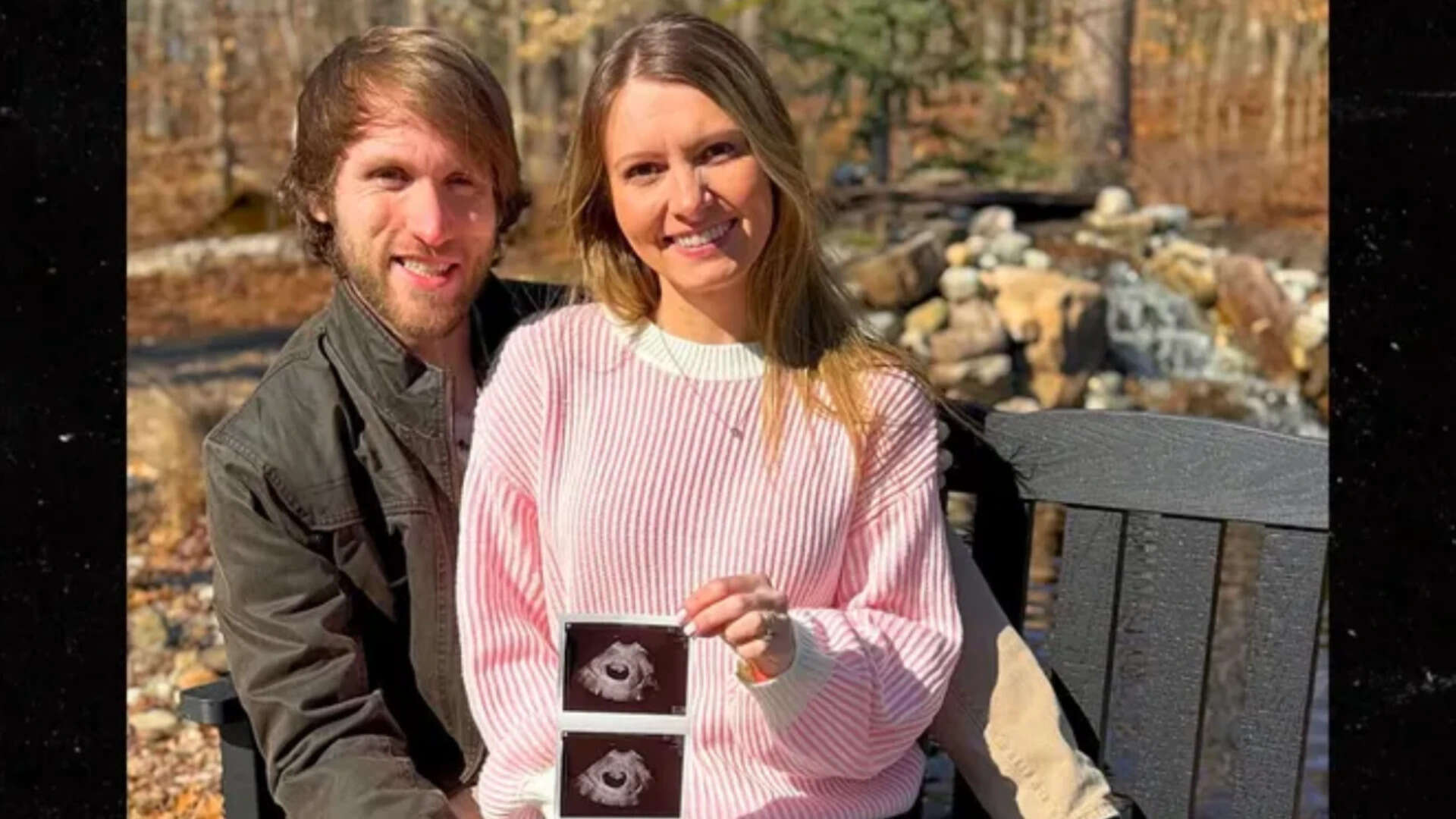
When Jesse Ridgway, known to millions online as McJuggerNuggets, announced that he and his wife Ashley terminated their pregnancy following a Trisomy 21 diagnosis, the internet exploded. It wasn't just a ripple of disagreement. It was a torrential downpour of vitriol, death threats, and comparisons to historical dictators.
People are furious. But why? For another look, consider: this related article.
The situation forces us to look at a messy intersection. It's where the raw vulnerability of reproductive freedom crashes head-first into disability advocacy, all magnified by the funhouse mirror of influencer culture.
The Announcement That Set the Internet on Fire
Jesse and Ashley, a prominent New Jersey-based creator couple, shared their news on Instagram. They explained that their doctors had diagnosed the fetus with Trisomy 21, commonly known as Down syndrome. Further coverage on this trend has been published by Reuters.
Jesse wrote that the choice wasn't made lightly. He confessed that while he was initially optimistic about parenting a child with intellectual delays, researching the potential medical complications—including severe heart defects, hearing loss, and major developmental struggles—altered their perspective.
They made the decision they believed was best for their long-term family dynamic. New Jersey law permits abortion at all stages of pregnancy, making the procedure entirely legal.
The couple expected some pushback. They didn't expect the utter savagery that followed.
Commenters labeled them "murderous" and sent explicit death threats. Some angry users even targeted the couple's sick dog. The sheer volume of hate highlights a massive disconnect between public medical choices and the reality of private family planning.
The Hidden Numbers Behind Down Syndrome Diagnoses
Here is something honestly nobody wants to talk about. The Ridgways did what the vast majority of people do in the exact same situation. They just made the mistake of saying it out loud.
Data regarding termination rates after a prenatal diagnosis of Down syndrome is telling. While exact numbers vary depending on the region and the year of the study, research consistently shows a high rate of termination.
- A comprehensive study published in Prenatal Diagnosis found that the termination rate for Down syndrome in the United States sits around 67%.
- In the United Kingdom and parts of Europe, that number climbs significantly higher, often estimated between 75% to 90%.
These aren't rare anomalies. They're standard statistics.
The harsh truth is that most people who receive this diagnosis choose to terminate. They just don't post it on an Instagram feed to 4.3 million subscribers. They do it quietly. They do it in consultation with their doctors, shedding private tears in sterile clinics, shielding themselves from public judgment.
Jesse noted this exact phenomenon in his post. He mentioned that the high percentage surprised him initially because the public discourse makes it seem like everyone carries these pregnancies to term. The stigma creates a wall of silence. When an influencer breaks that wall, they take the hit for the collective actions of thousands of anonymous families.
Disability Advocacy Confronts Reproductive Choice
The anger from the disability community isn't just mindless internet trolling. It comes from a place of deep, systemic pain and existential fear.
Advocates and individuals with Down syndrome view these high termination rates through a terrifying lens. To them, it looks like an attempt to eliminate their population. It feels like society is saying their lives have zero value.
Activists like Heidi Crowter in the UK have actively fought legal battles against abortion laws that treat Down syndrome pregnancies differently than typical ones. When a high-profile creator explicitly states they aborted because of a disability, it reinforces the narrative that living with a disability is a tragedy to be avoided at all costs.
It creates a brutal ethical paradox:
- The Pro-Choice Stance: A woman has absolute autonomy over her body and her future. A family has the right to decide if they possess the emotional, financial, and physical capacity to raise a child with complex medical needs.
- The Disability Rights Stance: Selective termination based on genetic traits can border on a modern form of eugenics, devaluing the lives of disabled people who are currently thriving, loving, and contributing to the world.
There is no neat middle ground here. Both arguments hold immense weight. That's why the comments sections look like a war zone.
The Price of Total Transparency
We demand authenticity from online creators. We track their relationships, their breakups, their financial wins, and their health struggles.
But there's a line.
When influencers share something as deeply polarizing as a selective termination, they step out of the realm of lifestyle entertainment and enter a cultural minefield. The audience feels a sense of ownership over the creator's life. When that creator makes a choice that violates the audience's moral code, the sense of betrayal is intense.
The Ridgways decided to be honest. They wanted to reduce the stigma and be transparent about a traumatic event. Instead, they became a lightning rod for a debate that humanity hasn't figured out how to have calmly.
Navigating a prenatal diagnosis requires clear information, not emotional internet commentary. If you or someone you know is facing a difficult prenatal diagnosis, avoid the chaos of social media comments. Turn to trusted resources like the National Down Syndrome Society (NDSS) or the Global Down Syndrome Foundation to understand the realities of the condition. Consulting with a certified genetic counselor can provide objective, personalized medical facts away from the noise of the internet.