The headlines are predictable. They focus on the individual—the "French Man" who committed a stomach-turning act of sexual violence at thirty thousand feet. They highlight his absurd defense, his claimed ignorance, and the shock of the passengers. But focusing on the perpetrator’s personal pathology is the easy way out. It’s the lazy consensus that allows the travel industry to ignore a much uglier reality.
This isn't just about one predator on a Miami-bound flight. This is about the fundamental, structural negligence of the commercial aviation industry. While airlines obsess over the weight of your carry-on and the exact angle of your seat during takeoff, they have created a lawless vacuum where physical safety is a secondary concern to "customer experience." If you found value in this post, you might want to check out: this related article.
We are told that flying is the safest way to travel. That’s a lie of omission. It’s the safest way to avoid a mechanical crash, but it’s one of the most vulnerable environments for human beings to inhabit.
The Sovereignty Gap at Altitude
When you cross an international border on the ground, the laws are clear. When you are in the air, you are in a jurisdictional gray zone that predators understand better than the victims do. The Tokyo Convention and subsequent treaties theoretically govern crimes on aircraft, but the practical application is a mess of red tape. For another angle on this event, check out the recent update from AFAR.
I’ve seen how airlines handle "disturbances." The internal manuals emphasize de-escalation not to protect the victim, but to avoid an unscheduled landing. A diversion costs between $10,000 and $200,000 depending on the fuel dump and gate fees. To an airline, a sexual assault in row 42 is often treated as a "customer service issue" until the police are at the gate. By then, the crime scene—the seat, the clothing, the DNA—has been contaminated by ten hours of recirculated air and movement.
The "Big Deal" the perpetrator didn't see isn't just his own delusion. It’s a reflection of an industry that treats the cabin like a living room rather than a high-stakes, confined public space.
Alcohol is the Industry’s Profitable Weapon
Let’s talk about the variable nobody wants to touch: the open bar at 35,000 feet. Airlines fight tooth and nail against any regulation of in-flight alcohol service because the margins on premium beverages and the "tranquilizing" effect of booze on a cramped cabin are too valuable to lose.
They serve diuretics and depressants in a pressurized environment where the effects of alcohol are compounded by lower oxygen levels ($O_2$ saturation drops in the cabin). This isn't a "luxury perk." It’s a liability. Every time an airline hands a third gin and tonic to a passenger who has been sitting in a dark cabin for six hours, they are complicit in the loss of inhibitions that leads to these "incidents."
If you want to stop assaults, you stop the flow of booze. But the industry won't do it. They’d rather deal with the occasional lawsuit or bad PR cycle than lose the revenue from the cart.
The Physical Architecture of Vulnerability
Look at the seats. We are currently seeing a push for "high-density" seating that forces strangers into intimate physical contact for durations that exceed most first dates.
- Middle Seat Dynamics: You are sharing an armrest with a stranger. In any other context, this proximity would be considered a breach of personal space.
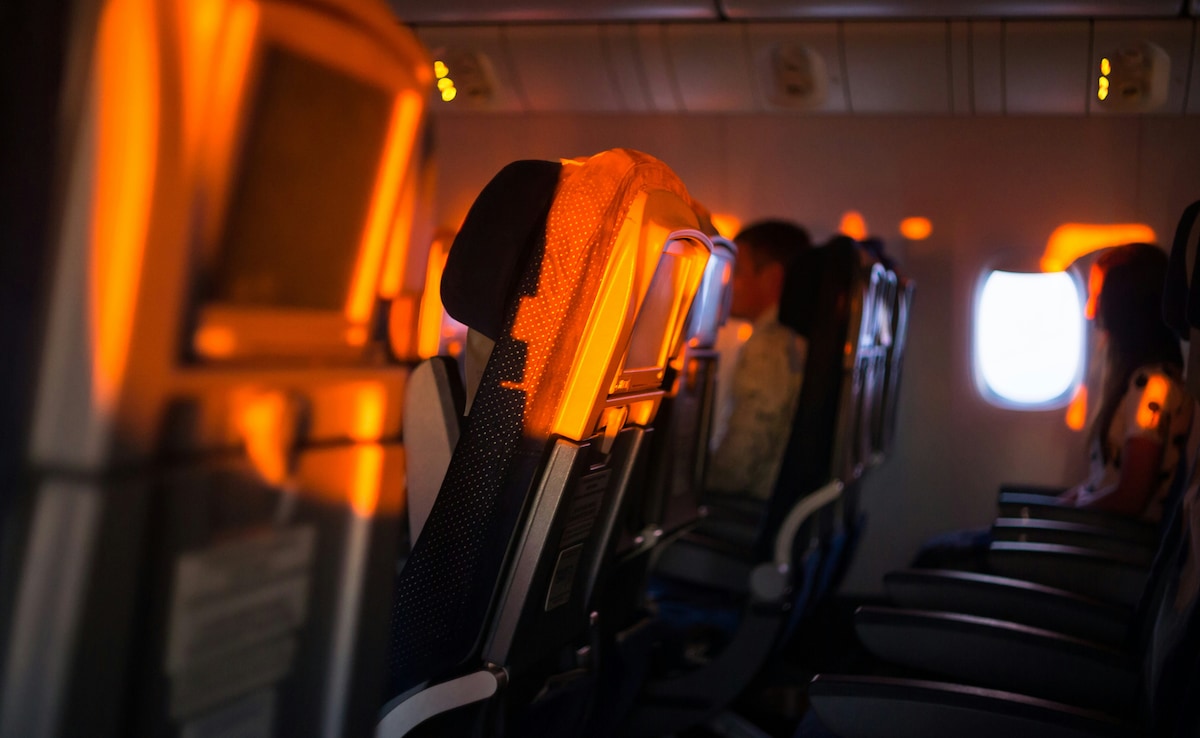
- The "Dark Cabin" Policy: On long-haul flights, crew members actively encourage passengers to close window shades and dim the lights to induce sleep. This creates a graveyard shift environment with minimal supervision.
- Crew-to-Passenger Ratios: The FAA mandates one flight attendant for every 50 seats. On a wide-body jet with 300 passengers, you have six people responsible for safety, medical emergencies, food service, and policing behavior. They aren't security guards; they are overworked waiters in a pressurized tube.
The industry has designed a space that is perfect for a predator. It’s dark, it’s crowded, and the "security" is busy selling duty-free perfume at the front of the plane.
The Myth of the "No Fly List"
People love to talk about the No-Fly List as if it’s a universal shield. It isn’t. Most "internal" airline blacklists are not shared between carriers. A man can be banned from one airline for harassment and walk right onto a competitor’s flight the next day.
Unless a crime reaches the level of a federal felony and the TSA gets involved, there is no centralized database to keep these people off planes. The industry protects its data silos more than its passengers. They view sharing "bad passenger" lists as a competitive disadvantage or a legal risk regarding defamation.
Stop Asking the Wrong Questions
The media asks: "How could he think this wasn't a big deal?"
The real question is: "Why does the environment make him feel safe enough to try?"
We’ve turned air travel into a commodity where the only metric that matters is the price of the ticket. When you strip away the dignity of the travel experience, you invite the lowest common denominator of behavior.
If you want to fix this, you don't just prosecute the individual after the damage is done. You change the mechanics of the flight:
- Mandatory cabin lighting minimums during "sleep" cycles.
- Hard caps on alcohol units tied to a passenger’s passport or boarding pass.
- Federal Air Marshals whose job description includes cabin safety, not just hijacking prevention.
- Universal Blacklists where a sexual assault on one carrier is a lifetime ban from the sky.
Until then, every "sleeping woman" on a long-haul flight is a gamble the airline is willing to take to keep their overhead low. They aren't selling you travel; they are selling you a seat in a lawless room and hoping nothing happens before you land.
The perpetrator said he didn't think it was a big deal. The way the industry is built suggests they secretly agree.
Don't look for a "solution" in a press release. Look at the seat map and the drink menu. That’s where the crime begins.
Stop pretending the cabin is a safe space. It’s a high-density transit zone with zero effective policing and a financial incentive to keep it that way. You are on your own at 30,000 feet. Act accordingly.


