Legal liability in commercial aviation pivots on the precise differentiation between predictable environmental hazards and unpreventable atmospheric anomalies. When Singapore Airlines Flight SQ321 encountered severe convectively induced turbulence over the Irrawaddy River in Myanmar, the resulting rapid altitude displacement of over 54 meters within five seconds triggered immediate structural, medical, and legal cascades. The litigation initiated by Linda Kitchen at the British High Court demands an analytical breakdown of how international aviation law, specifically the Montreal Convention, handles strict liability versus operational negligence, and how carriers calculate risk exposure when onboard safety protocols collide with rapid-onset weather phenomena.
The Mechanics of Convective G-Force Disruption
Flight data records and findings from Singapore's Transport Safety Investigation Bureau establish that the Boeing 777-300ER entered an area of rapidly developing convective clouds. These formations generate intense localized updrafts and downdrafts capable of altering vertical acceleration vectors faster than standard avionics systems can register and mitigate.
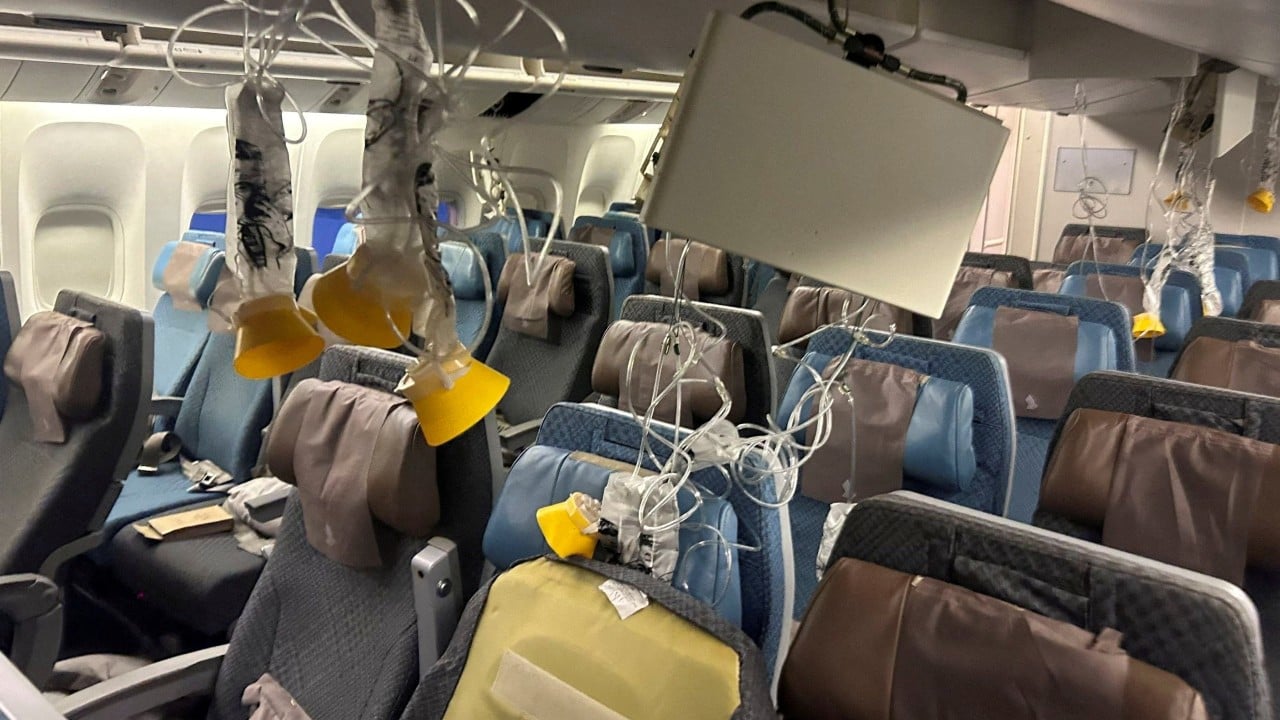
The physical vector changes created a micro-environment of zero-gravity followed by extreme hyper-gravity within a span of seventeen seconds. Passengers unbelted during the meal service became unanchored projectiles. The operational failure point was not pilot error, but a temporal bottleneck: the seat belt sign was illuminated only after initial vertical accelerations began, leaving insufficient time for cabin crew to issue verbal warnings or for passengers to secure themselves.
The Montreal Convention and the Threshold of Carrier Liability
Under international air transport treaties, passenger claims for bodily injury or death occurring onboard an aircraft or during embarkation and disembarkation are governed by the Montreal Convention of 1999. This framework operates on a two-tier liability structure that changes the burden of proof depending on the financial scale of the damages sought.
For damages up to 128,825 Special Drawing Rights, the carrier operates under strict liability. The injured party or their estate does not need to prove negligence on the part of the airline; they must only demonstrate that an accident occurred onboard the aircraft resulting in injury or death. The carrier cannot contest this tier unless they prove contributory negligence by the passenger.
For claims exceeding that statutory threshold, the airline faces unlimited liability unless it can prove two cumulative conditions:
- The damage was not due to the negligence or other wrongful act of the carrier, its servants, or agents.
- The damage was solely due to the negligence or other wrongful act of a third party.
In the context of the SQ321 litigation, Singapore Airlines cannot easily invoke the "third party" or "act of God" defense without proving that the convective storm cell was entirely undetectable by any known meteorological or radar capability, and that all operating procedures adhered strictly to industry best practices.
Radar Blind Spots and Meteorological Detection Limits
A central technical debate in determining operational negligence centers on the aircraft's onboard weather radar system. Investigation reports indicate that the storm clouds responsible for the severe updrafts were not displayed on the flight deck navigation screens prior to impact.
Radar performance in convective weather relies on the reflectivity of water droplets and ice crystals. Rapidly developing cells that undergo explosive vertical growth can alter moisture density faster than standard airborne radar sweep cycles refresh. The manufacturer maintained that the radar hardware did not experience a functional failure, pointing instead to atmospheric invisibility factors unique to rapidly expanding convective updrafts. Legal experts representing injured passengers scrutinize whether flight crews should have altered course earlier based on broader regional weather patterns, introducing a dispute between tactical radar interpretation and strategic meteorological avoidance.
Financial Calculus and Settlement Structures
Airlines manage catastrophic low-frequency events through structured pre-litigation compensation models designed to mitigate protracted court battles and stabilize corporate reputation metrics. Following the incident, Singapore Airlines deployed immediate financial assistance frameworks:
- Unconditional advance payments distributed to cover immediate medical expenses and short-term recovery needs.
- Structured tiered compensation offers for passengers sustaining minor soft-tissue injuries versus those requiring long-term surgical intervention for spinal trauma.
- Full fare reimbursement for all manifested occupants of the flight.
When plaintiffs reject these baseline offers to pursue high-court litigation, the financial risk model shifts from fixed-cost remediation to variable judicial awards. High Court claims involving permanent spinal disruption, loss of consortium, and psychological trauma require economic quantification of future earnings, specialized domestic care, and long-term rehabilitation costs.
Operational Risk Mitigation and Systemic Adaptation
Commercial carriers are forced to re-evaluate cabin service policies during cruise phases. The traditional operational assumption that cruising altitude at FL370 is inherently stable is undermined by changing climate patterns that increase the frequency of clear-air turbulence and undetected convective cells.
Carriers are adjusting threshold triggers for mandatory seatbelt sign enforcement, reducing reliance on cabin crew discretion during meal services, and investing in advanced predictive turbulence software that utilizes real-time atmospheric data-sharing between aircraft fleets. The legal outcome of the High Court proceedings will establish a precedent for how heavily courts weigh unpredictable atmospheric physics against a carrier's absolute duty of care for seated and unseated passengers alike.