The battlefield does not wait for international consensus. On the muddy fields and shattered treelines of eastern Ukraine, an invisible shift has already taken place, transforming low-cost quadcopters and fixed-wing surveillance platforms into autonomous hunters. Both sides of the conflict are rapidly integrating artificial intelligence into their guidance systems, turning commercial hardware into lethal precision weapons that bypass traditional electronic warfare.
Electronic jamming has long been the primary shield against remote-controlled unmanned aerial vehicles. Radio frequencies flood the electromagnetic spectrum, severing the link between the pilot sitting in a reinforced bunker miles away and the explosive payload hurtling through the sky. For a time, signal suppression worked. Operators scrambled frequencies, operators lost video feeds, and drones dropped harmlessly into agricultural fields.
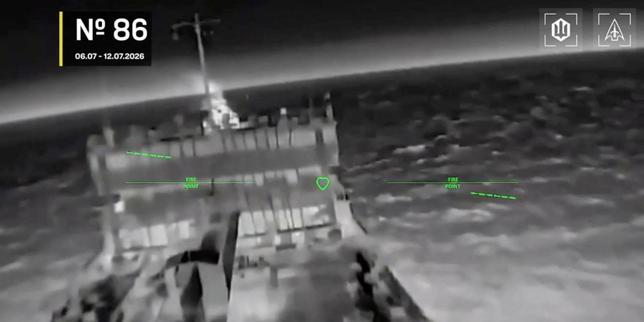
That vulnerability forced a technological pivot. Engineers and front-line technicians began embedding machine vision and onboard neural networks directly onto the circuit boards of small strike platforms. Once a target is designated by the human operator during the initial phase of flight, the onboard computer takes over the final approach. It tracks visual contours, calculates vectors, and steers the craft into its target even when every radio wave within a twenty-mile radius is scrambled to static.
This development marks the crossing of a profound threshold in modern warfare. We are watching the automation of the kill chain at scale, driven not by multi-billion-dollar defense contractors operating in sterile laboratories, but by necessity, survival, and rapid prototyping workshops just kilometers from the contact line.
The Engineering of Machine Targeting
The mechanics behind autonomous terminal guidance rely on edge computing. Heavy cloud processing is impossible when communication links are jammed or nonexistent. Instead, developers pack lightweight processing chips onto custom frames, pairing them with standard optical cameras and open-source computer vision libraries.
When a drone approaches a contested zone, the human operator uses a standard joystick control link. The moment interference spikes, or when the operator chooses to engage autonomous mode, the onboard software isolates the visual profile of the target—be it a trench position, an armored vehicle, or a moving personnel carrier. The algorithm matches pixel arrays against pre-trained object recognition models, locking onto the visual signature.
Wind shear, sudden evasive maneuvers, and ground clutter complicate the mathematics. Yet modern optical tracking algorithms compensate for these variables with startling speed. The drone no longer requires a continuous stream of navigational instructions from a human mind. It executes a mathematical trajectory based on visual feedback loops executed hundreds of times per second.
This creates a severe tactical dilemma for defending forces. Traditional counter-measures focused on disrupting the invisible umbilical cord between pilot and machine. Now, cutting the cord only removes human oversight during the final seconds of flight, leaving the machine fully capable of completing its terminal dive independently.
Industrial Scale at the Edge
Innovation on the battlefield rarely originates in boardrooms. It emerges from necessity, forged by teams of civilian engineers, military volunteers, and soldiers who understand coding as well as they understand ballistics.
Workshops hidden in industrial basements across Ukraine and Russia serve as micro-factories for these autonomous systems. Components are imported from global commercial supply chains—standard microcontrollers, camera modules, and lithium-ion batteries—then modified with custom-flashed firmware. The barrier to entry has plummeted. What once required state-sponsored defense infrastructure can now be assembled on a workbench with a soldering iron and an internet connection.
This democratization of autonomous technology carries dangerous implications. As software libraries improve and hardware becomes cheaper, the proliferation extends far beyond conventional state militaries. The techniques being pioneered under fire today will inevitably influence global security landscapes for decades, reshaping the ethics and execution of armed conflict.
The Erosion of Human Command
Behind the technological marvel lies a creeping erosion of moral and tactical accountability. When a human pilot guides a weapon directly into a target, the cognitive weight of the action rests squarely on their shoulders. They perceive context, assess hesitation, and hold the immediate power to abort.
Autonomous terminal guidance short-circuits that psychological loop. By delegating the final moments of lethal engagement to an algorithm, the distance between operator and consequence widens. The machine does not hesitate when a civilian wanders into the frame alongside a military asset. It matches pixels. It matches vectors. It executes.
Military doctrine has historically emphasized positive control. Commanders want certainty that engagement criteria are strictly met before ordnance is expended. But when electronic warfare makes manual control unreliable, commanders face a stark choice: accept high attrition rates due to enemy jamming, or cede terminal control to software routines that prioritize probability over judgment.
Most have chosen the software. The tactical imperative to strike the enemy outweighs the abstract discomfort of machine-assisted targeting. As a result, the frontline is drifting toward a reality where human operators initiate attacks, but machines decide how they finish.
The Cost of Speed
The race to achieve total software autonomy has created a frantic feedback loop. Every software update deployed to counter a new jamming frequency is met with an adversarial counter-patch within days. It is an iterative cycle of technological evolution compressed from years down to weeks.
In this environment, long-term strategic planning takes a back seat to immediate tactical survival. Troops do not care about the philosophical debates surrounding autonomous weapons systems when an armored column is advancing across an open field. They care about what works right now, tonight, in the freezing mud.
That pragmatism is understandable, but it locks the world into an irreversible trajectory. The invisible lines separating human-guided combat from autonomous warfare are dissolving under the pressure of immediate conflict. Once crossed, those lines cannot be redrawn. The intelligence humming inside these small frames will continue to evolve, growing faster, smarter, and far more independent long after the smoke clears from these fields.