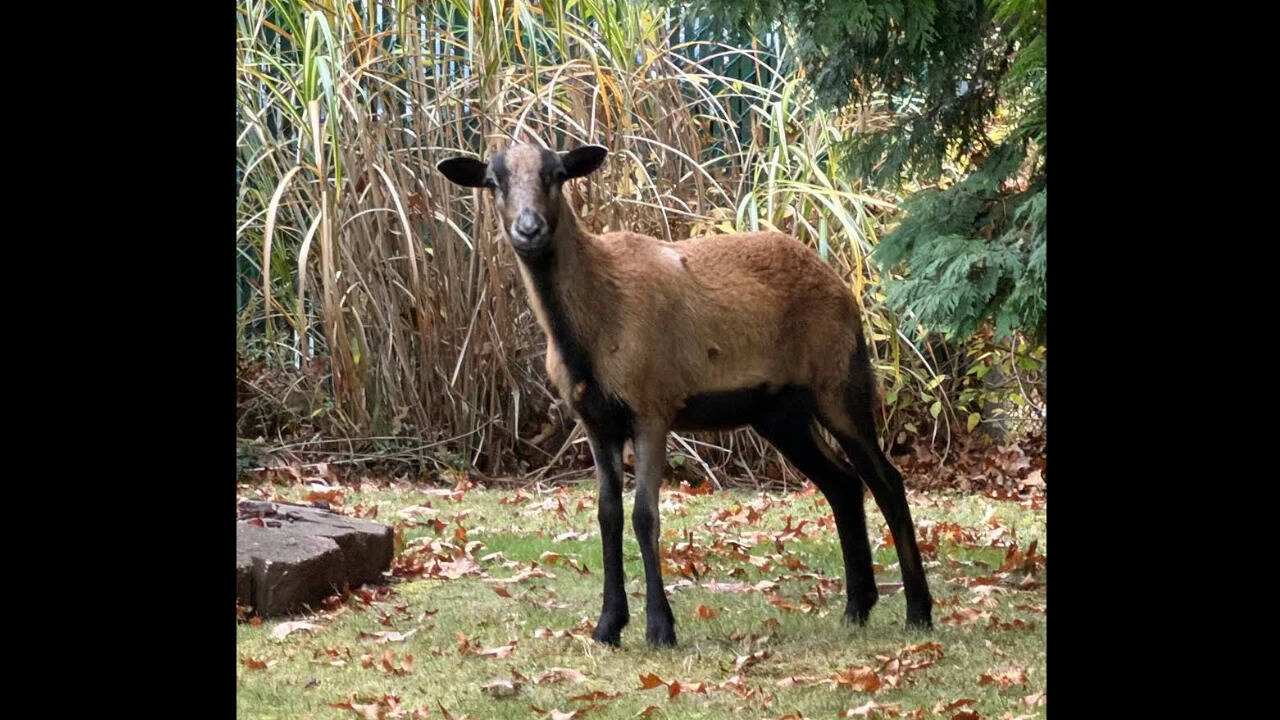
Livestock containment failures rarely resolve through brute force; they resolve through velocity asymmetry and spatial compression. When an escaped domestic sheep evades standard pedestrian capture until intercepted by a 13-year-old rider on horseback, the event demonstrates a fundamental principle of pursuit-evasion mechanics: matching or exceeding the target's top-end sprint capacity while preserving maneuverability alters the energy expenditure curve in favor of the pursuer. Standard reporting treats such incidents as charming rural anomalies. A rigorous operational breakdown reveals a textbook study in prey flight instincts, terrain friction, equine biomechanics, and the decisive role of high-agility operators in rural asset recovery.
The Failure Modes of Pedestrian Livestock Recovery
Containment breaches in pastoral environments stem from three predictable vulnerabilities: perimeter degradation, gate-latch failure, and behavioral panics triggered by external predators or sudden acoustic shocks. Once a sheep breaches a boundary, its operational profile shifts instantly from sedentary grazing to high-alert evasion.
Domestic sheep (Ovis aries) retain acute flight responses bred into wild mouflon ancestors. When pursued by humans on foot, a sheep exploits two distinct physiological advantages:
- Power-to-Weight Acceleration: A healthy adult sheep weighs between 45 and 100 kilograms depending on breed and fleece load, possessing rear-quarter musculature optimized for explosive lateral bursts. Human runners on uneven pasture experience significant ground-reaction force losses, yielding lower initial acceleration over the first 30 meters.
- Wide-Angle Monocular Vision: Positioned laterally on the skull, ovine eyes provide a visual field spanning roughly 270 to 320 degrees. A pedestrian approaching from almost any angle outside a narrow blind spot directly behind the hindquarters triggers immediate directional deviation.
Pedestrian pursuit fails because human runners enter an unfavorable thermodynamic exchange. Every lunge by a foot pursuer forces the sheep into a short, high-speed vector change. Because the sheep accelerates faster over short distances and navigates rough turf with four-point stability, the human expends maximum aerobic capacity merely to maintain visual contact. Within minutes, the human hits anaerobic threshold while the sheep settles into a sustainable trot, resetting the distance gap indefinitely.
Biomechanical Asymmetry in Mounted Interception
Introducing a horse and rider into the containment equation inverts the energy balance. The equine platform eliminates the speed deficit while altering the psychological pressure exerted on the target.
An average light riding horse sustains a canter between 16 and 27 kilometers per hour and executes a gallop exceeding 40 kilometers per hour. Even a moderately conditioned stock horse maintains speeds double those of an adult human sprinter without approaching anaerobic exhaustion. This velocity surplus enables three tactical shifts that pedestrian responders cannot execute:
- Vector Cutting Rather Than Tail-Chasing: Pedestrian pursuers inevitably fall into pure pursuit—running directly toward the animal's current coordinates. Pure pursuit guarantees the longest possible path to interception and constantly pushes the target away from containment zones. A mounted operator possesses the speed reserve to run a lead-pursuit vector, angling ahead of the sheep's trajectory to sever escape corridors.
- Flanking Pressure and Flight Zone Manipulation: Every herd animal maintains a defined flight zone—the perimeter at which an encroaching threat triggers movement—and a point of balance located roughly at the shoulder. Moving past the point of balance toward the head drives the animal backward or forces a sharp turn; staying behind it drives the animal forward. On horseback, a rider adjusts position relative to the sheep's point of balance in fractions of a second, steering the animal without physical contact.
- Terrain Neutralization: Tall grass, mud, scrub brush, and uneven furrows degrade human stride efficiency by up to 30 percent. Equine limb architecture—characterized by long tendons acting as elastic springs—absorbs surface irregularities while preserving forward momentum.
The Operator Variable: Why a 13-Year-Old Rider Excels
Operational outcomes depend on the interface between the equine platform and the human controller. The presence of a 13-year-old rider is not an incidental detail; specific physical and cognitive factors make adolescent equestrians uniquely effective in high-agility livestock interception.
First, payload-to-horse mass ratio favors lighter riders. A 13-year-old typically weighs between 40 and 55 kilograms, roughly half the mass of a fully equipped adult male rider. In equine biomechanics, reduced deadweight decreases concussive load on the horse's forelimbs during hard stops, sharp rollbacks, and rapid acceleration bursts. The horse corners tighter and accelerates faster, directly countering the sheep's primary defense mechanism: sudden 90-degree directional jukes.
Second, lower center of gravity enhances dynamic balance. Shorter torso length keeps the rider's mass closer to the horse's spine, reducing rotational torque when the mount executes abrupt lateral shifts. An adult rider with a higher center of mass exerts greater leverage against the saddle during sudden turns, forcing the horse to compensate biomechanically and slowing reaction times.
Third, situational risk tolerance and cognitive focus operate differently in experienced youth riders compared to adults. Adult responders frequently over-manage containment scenarios, splitting attention between property liability, multi-person coordination, and physical self-preservation. A skilled young rider conditioned in rural horsemanship treats the pursuit as a single-variable spatial puzzle: close the gap, control the angle, secure the target.
The Four Phases of High-Speed Ovine Interception
Deconstructing a successful mounted capture reveals a sequence of four distinct operational phases. Missing any link in this chain results in either a lost target or physical injury to the livestock.
Phase 1: Visual Acquisition and Range Closing
The initial objective is reducing distance without triggering an erratic panic sprint. A horse approaching at full gallop straight at a solitary sheep risks driving the animal into fences, roadways, or dense timber where equine access terminates. The rider must close distance along an offset arc, using steady pace rather than sudden noise to establish presence.
Phase 2: Corridor Compression
Once within 15 to 20 meters, the rider utilizes natural or artificial boundaries—fence lines, hedgerows, ditches, or embankments—to eliminate escape degrees of freedom. In open terrain, a sheep has 360 degrees of potential movement. By positioning the horse parallel to a fence line at a 45-degree angle behind the sheep's shoulder, the rider collapses the available escape vectors to a single narrow lane.
Phase 3: Velocity Matching and Fatigue Induction
Sheep possess high burst speed but poor thermal dissipation, particularly when carrying heavy wool. Sustained movement above a trot rapidly elevates core body temperature. The mounted operator holds a steady pursuit pace just fast enough to prevent the sheep from stopping or doubling back, forcing continuous aerobic output until the animal's stride shortens and head carriage drops—clear physiological markers of onset fatigue.
Phase 4: Dismount and Physical Capture
The terminal phase carries the highest failure probability. Transitioning from mounted control to ground restraint creates a brief window where pressure drops and the sheep can bolt back past the horse. Effective execution requires halting the horse immediately adjacent to the exhausted target, executing a rapid dismount on the side away from the escape lane, and securing the animal by the jaw and flank—never by the wool, which causes subcutaneous bruising and tears free under tension.
Operational Limitations and Systemic Constraints
Relying on ad-hoc mounted pursuit introduces clear risks and operational boundaries that land managers must account for. No single recovery method works across all environments.
- Surface Traction Hazards: Wet clay, asphalt roadways, and steep scree slopes severely compromise equine footing. Pursuing agile livestock across paved surfaces creates an unacceptable risk of catastrophic equine falls, rendering mounted interception non-viable in suburban or highway-adjacent escapes.
- Prey Panic Thresholds: Solitary sheep separated from a flock experience acute cortisol spikes. Excessive pressure from a large predator-shaped silhouette like a horse can induce capture myopathy—a metabolic condition where extreme exertion and stress cause severe muscle damage, kidney failure, or sudden cardiac arrest hours after capture.
- Infrastructure Entanglement: High-speed chases near barbed wire, woven mesh fencing, or irrigation equipment endanger both horse and sheep. If the target breaches a low-clearance obstacle that blocks the horse, pursuit terminates instantly.
Designing Resilient Containment and Rapid-Response Protocols
Treating an escaped animal recovery as a lucky break obscures the systemic adjustments required to prevent recurrence and standardize response. Agricultural operators and rural property managers should restructure containment and recovery protocols around three concrete directives:
- Shift from Reactive Pursuit to Funnel Architecture: Install permanent or portable V-shaped catch pens along known perimeter weak points and drainage corridors. Escaped livestock naturally follow fence lines and terrain contours; strategic funneling allows a single mounted or ATV operator to guide animals into self-latching enclosures without high-risk physical tackling.
- Deploy Asymmetric Assets Immediately: When a breach occurs in open terrain, prohibit uncoordinated foot chases. Pedestrian swarming scatters livestock and elevates animal stress before effective assets arrive. Dispatch mounted riders or low-ground-pressure utility vehicles immediately to establish perimeter containment and execute lead-pursuit vectoring.
- Train Operators in Flight-Zone Geometry: Technical riding ability alone does not guarantee containment success. Youth and adult riders alike must drill point-of-balance positioning—learning exactly how advancing past the target's shoulder initiates a turn while dropping behind it drives forward motion. Mastering spatial pressure turns a chaotic chase into predictable, low-stress livestock handling.