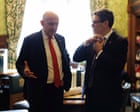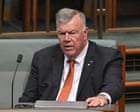
Discretionary allocation of taxpayer-funded parliamentary staff functions as a structural mechanism of executive leverage rather than a purely administrative process. In late October 2026, Prime Minister Anthony Albanese bypassed One Nation leader Pauline Hanson to directly offer Farrer MP David Farley an unsolicited personal adviser position valued at up to $200,000 per year. While Hanson and One Nation characterized the move as an attempt to exert undue political influence and fracture party cohesion, Labor representatives denied any poaching intent, framing the incident within standard crossbench resource management. Examining the institutional rules governing Australian parliamentary staffing reveals how unilateral executive discretion creates asymmetric bargaining dynamics between a governing party and minor-party representatives.
The Institutional Architecture of Parliamentary Staffing
Under the Australian federal parliamentary framework, baseline operational capacity is standardized, while expansion capacity is centralized. Every member of the House of Representatives receives a default baseline entitlement of five electorate staffers funded by the public purse. Beyond that baseline, the authority to approve, withhold, or revoke additional personal staff allocations rests exclusively with the prime minister.
This administrative design establishes a two-tier resource model:
- Statutory Baseline Allocations: Fixed, non-discretionary staffing slots guaranteed to all sitting MPs regardless of party affiliation or voting record.
- Executive Discretionary Allocations: Variable, uncodified adviser positions—often carrying senior salary bands such as the Adviser 3 classification—granted solely at the prime minister's pleasure.
Because minor parties and independents lack the centralized research, policy, and communications apparatus of major political parties, the marginal utility of a single additional adviser is substantially higher for a crossbench MP than for a government or opposition backbencher. In a minor-party office, one senior adviser represents a 20 percent increase in total human capital. By retaining unilateral control over this scarce resource, the executive branch holds an uncodified tool that operates outside formal legislative negotiations.
Centre for Public Integrity director Catherine Williams has noted that unilateral prime ministerial control over staffing allocations is structurally problematic because it lacks transparent criteria and formal oversight. Without published eligibility thresholds or an independent parliamentary remuneration tribunal governing crossbench staffing ratios, identical requests can yield divergent outcomes depending on executive priorities.
Deconstructing the October 2026 Farley Offer
The dispute surrounding David Farley illustrates how discretionary staffing operates when deployed outside formal party-to-party channels. According to statements released by Pauline Hanson and One Nation, the sequence of events involved three distinct deviations from standard parliamentary protocol:
- Bilateral Bypassing of Party Leadership: Prime Minister Albanese wrote directly to Farley rather than routing the allocation through Hanson, the leader of One Nation, despite the party having an existing, unresolved request for broader staffing increases.
- Unsolicited Provisioning: Neither Farley nor his office had submitted an individual request for the specific Adviser 3 role, which carried a remuneration ceiling of $200,000.
- Preceding Private Engagement: The written offer followed a series of private meetings initiated by the prime minister with Farley over the preceding weeks, alongside separate party allegations that the government had floated potential regional water grant funding relevant to Farley's electorate of Farrer.
Farley immediately rejected the position, and Hanson publicly framed the offer as "grubby dealings" and an effort to buy political favor. Conversely, the Labor government rejected accusations of bribery or defection inducement, asserting that no improper strings were attached to the offer and characterizing Hanson's reaction as an overstatement.
The Asymmetry Matrix: Comparative Crossbench Allocations
To evaluate whether the Farley offer represents an anomaly or a consistent administrative pattern, it must be mapped against contemporaneous crossbench staffing outcomes. Public records from October 2026 highlight three distinct comparative cases:
- David Farley (One Nation MP for Farrer): Prior to the unsolicited offer, Farley operated as the only member of the parliamentary crossbench without additional staff beyond the five-person default baseline. His political biography—having previously been a member of the Nationals and having sought Labor preselection in 2021 before winning Farrer for One Nation—positioned him as a crossbencher with prior institutional ties across multiple political alignments.
- Barnaby Joyce (One Nation MP): Following his defection from the Nationals to One Nation in December, Joyce was offered and accepted an additional staff member, an allocation that One Nation leadership did not challenge as undue interference.
- Fatima Payman (Independent Senator): After departing the Labor Party to sit on the crossbench as an independent, Payman publicly requested additional staffing resources to manage her legislative workload. Albanese noted that she held one more staffer than she possessed as a government backbencher, though Payman maintained her requests for further parity had gone unanswered.
This comparison exposes an operational contradiction in how staffing allocations are justified and contested. When an additional staffer was granted to Joyce upon entering One Nation, party leadership accepted the resource as a legitimate operational necessity. When an equivalent resource was offered directly to Farley without party-level mediation, it was rejected as a divisive wedge. Simultaneously, from the executive side, the contrast between withholding requested resources from a former Labor senator (Payman) while proactively offering an unrequested $200,000 position to a One Nation MP (Farley) demonstrates that allocation decisions do not follow a uniform formula based purely on workload.
Cause-and-Effect Mechanics of Executive Patronage
In parliamentary systems where the government seeks to insulate its legislative agenda or weaken emerging electoral threats—particularly amid polling showing One Nation's primary vote rivaling Labor's—discretionary resource allocation triggers predictable game-theoretic dynamics.
1. The Principal-Agent Wedge
By directing a high-value resource ($200,000 salary capacity) directly to an individual MP rather than the party's central leadership, the executive attempts to alter the principal-agent relationship within the minor party. If the MP accepts the resource, their operational capacity becomes partially dependent on executive goodwill, creating an implicit incentive to avoid hostile parliamentary tactics or to maintain open bilateral channels with the prime minister's office.
2. The Political Poison Pill
Even when rejected, an unsolicited offer functions as a strategic signaling mechanism. By making the offer and allowing its existence to surface alongside reports of private meetings, the executive forces the minor party into a defensive posture. If the MP accepts, they face internal suspicion from party leadership regarding their loyalty. If the MP rejects the offer, they forfeit tangible operational capacity that could otherwise serve their electorate, while party leadership must expend political capital publicly defending the unity of its parliamentary wing.
3. Legislative Bargaining Amortization
In a hung parliament or a contested legislative environment, every crossbench vote carries a measurable shadow price. Providing staffing infrastructure early—outside of a specific bill negotiation—builds relational capital before a legislative crunch occurs. Unlike direct policy concessions, which require parliamentary passage and public justification, staffing allocations operate through internal administrative channels with minimal immediate scrutiny.
Structural Limitations and Counter-Incentives
Viewing discretionary staffing purely as a tool of executive manipulation overlooks real operational constraints and countervailing risks for the governing party.
First, electorate workload disparities are genuine. Regional seats such as Farrer cover vast geographic territories with complex agricultural, water, and infrastructure constituent demands. A baseline staff of five is calibrated for average metropolitan electorates and frequently creates severe administrative bottlenecks in large rural divisions. Providing an extra adviser to the sole crossbench MP operating without supplementary staff has a defensible administrative rationale independent of defection theories.
Second, reputational blowback limits the effectiveness of unilateral offers. When an unsolicited allocation is publicly rejected and framed as a "bribe" or "grubby dealing," the executive suffers an immediate narrative penalty. Instead of quietly cultivating a pliable crossbench ally, the prime minister invites scrutiny from integrity watchdogs and opposition figures over the politicization of taxpayer-funded entitlements.
Third, party discipline mechanisms within minor parties often override individual resource incentives. For an MP like Farley, defecting or visibly aligning with a Labor government carries severe electoral risk in a conservative rural seat like Farrer, where voter sentiment would likely punish perceived floor-crossing at the subsequent election. No single $200,000 staff allocation can offset the loss of an MP's primary electoral base.
Resolving the Governance Deficit: Institutional Reform
The recurring friction over crossbench staffing—spanning One Nation, independent senators, and major-party leadership—stems from a single structural flaw: the conflation of executive authority with parliamentary administration. As long as the prime minister holds sole discretion over non-baseline staff allocations, every approval will be viewed through the lens of political patronage, and every denial will be framed as partisan punishment.
To eliminate both the reality and the perception of undue influence, parliamentary staffing must be decoupled from the prime minister's office and transferred to an independent statutory body, such as the Independent Parliamentary Expenses Authority (IPEA) or a dedicated cross-party parliamentary committee. Under a rules-based framework, supplementary staffing allocations would be calculated using transparent, objective metrics:
- Party Representation Ratios: A fixed formula allocating central policy and legislative advisers proportional to the number of sitting MPs and senators within a recognized party room.
- Geographic and Demographic Weighting: Automatic baseline adjustments for electorates exceeding specific square-kilometer thresholds, accounting for the higher travel and constituent-service overhead of rural divisions.
- Crossbench Parity Rules: Standardized supplementary staffing tiers for independent MPs and senators who lack access to major-party research infrastructure.
Until statutory reform replaces executive discretion with formulaic entitlement, minor-party leaders must centralize all administrative communications with the prime minister's office—requiring that any resource offers directed to individual members be formally routed through party leadership before bilateral meetings occur.
For more details on the initial party statements and political reaction surrounding the staffing dispute, watch Political Tensions Rise As One Nation MP Rejects Albanese's Extra Staff Offer, which summarizes the immediate response from One Nation and the federal government.