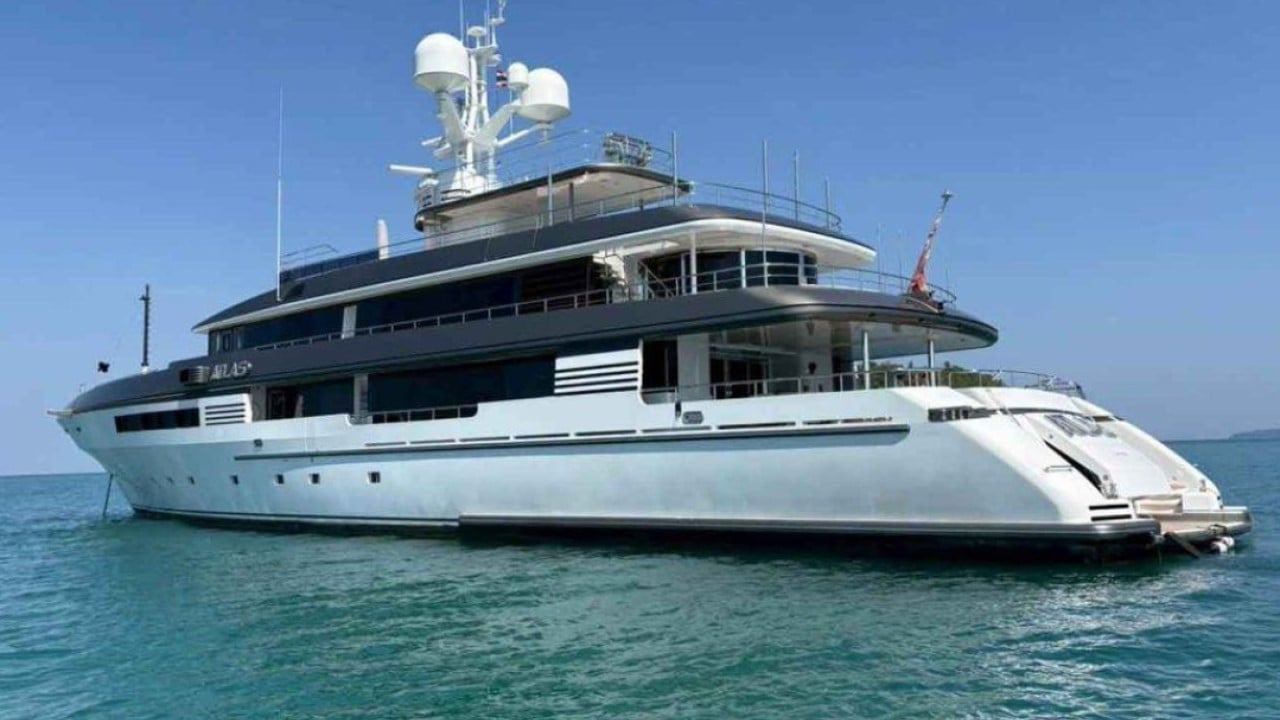
Mainstream news outlets are hyperventilating over a spectacular photo-op in Phuket. The Thai Anti-Money Laundering Office (AMLO) just put the 51-meter superyacht Atlas on the auction block with a starting price of US$18.3 million. The mainstream consensus is lazy, predictable, and entirely wrong. The media wants you to celebrate this as a triumphant victory against transnational call-center cartels and the South African financier Benjamin Mauerberger. They paint a picture of law enforcement flexing its muscles, drying up illicit cash flows, and returning justice to the state.
It is an expensive illusion.
I have spent nearly two decades tracking illicit maritime flows and navigating the backwaters of sovereign asset recovery. I can tell you from the grease on my own hands that executing a public auction on a seized superyacht is not a sign of a functioning asset recovery system. It is a desperate, face-saving fire sale. When states seize ultra-luxury floating assets, the criminals do not lose. The taxpayers do.
The underlying premise that seizing a US$18 million superyacht deals a critical blow to a multi-billion-dollar scam industry is completely flawed. Mainstream reporting completely misses the bizarre, upside-down math of luxury maritime asset forfeiture. Here is what is actually happening behind the glossy press releases in Phuket.
The Crushing Overhead of Freezing Luxury Assets
The moment a sovereign state chains a hull like the Atlas to a pier, it walks directly into a financial trap. Mainstream reporters see an US$18.3 million asset ready to balance the state ledger. They fail to understand that a superyacht is not real estate; it is a highly volatile, rapidly deteriorating machine that actively devours capital every single hour it sits idle.
The baseline rule of thumb in the maritime industry is that a superyacht costs roughly 10% of its initial purchase value every single year just to maintain operational readiness. The Atlas, a 51-meter Codecasa vessel built with complex custom engineering, requires constant mechanical upkeep.
Imagine a scenario where a bureaucrat from a domestic anti-money laundering agency is suddenly responsible for an industrial asset that requires specialized engineering, anti-fouling hull treatments, generator cycles, and constant climate control to stop tropical rot from destroying the interior woodwork.
- Crewing Penalties: You cannot simply lock the cabin doors and walk away. Maritime insurance laws and basic port safety regulations mandate a skeleton crew—including a certified captain and engineer—to remain on board to manage bilge pumps and fire risks.
- Berthing and Mooring Dues: Marina space in premium hubs like Phuket is premium real estate. A 167-foot slip generates massive daily overhead.
- Depreciation Curve: While a criminal asset rests in the bureaucratic limbo between initial seizure and a final court order for public auction, the value drops off a cliff.
By the time a government agency coordinates the legal frameworks to clear a clean title for a public buyer, the asset has swallowed millions in state storage fees. If the state skimps on maintenance to save money, the vessel rots, the engines seize, and the auction value craters. The criminal loses a piece of fiberglass they had already written off as an operational expense; the state absorbs a logistical nightmare.
The Market Failure of Sovereign Yacht Auctions
The lazy consensus assumes that a luxury auction operates like a standard commercial transaction. It does not. The market for clean, high-end superyachts is tiny, insular, and obsessively risk-averse. When a vessel carries the baggage of an Interpol Red Notice, Cambodian scam syndicates, and international asset forfeiture litigation, the buyer pool shrinks to virtually zero.
A legitimate billionaire looking for a 50-meter custom cruiser wants an immaculate pedigree, a clear paper trail from a reputable shipyard, and zero chance of maritime lien complications. They do not want a boat that was seized at Phuket Island Marina amid allegations of cross-border investment fraud.
This creates a massive market distortion. The starting price of US$18.3 million for the Atlas is a desperate attempt to recoup basic asset protection costs, not an accurate reflection of market demand. Sophisticated maritime buyers know that state agencies are desperate to dump these assets. They wait out the initial auctions, watch the reserve prices drop, and swoop in to buy a mechanically neglected hull for pennies on the dollar.
The ultimate irony? The deep-discount buyers in these distressed sovereign auctions are frequently front companies or intermediaries acting on behalf of other gray-market actors. The state ends up laundering the asset back into the maritime ecosystem for a fraction of its true value, while the original syndicates have already adapted.
The Flawed Premise of Asset-Centric Enforcement
The public loves the theater of a yacht seizure because it matches their Hollywood-fueled idea of fighting crime. But if you want to understand why transnational scam operations in Southeast Asia are booming despite these high-profile busts, look at the structural asymmetry of the fight.
To a syndicate generating tens of millions of dollars a week from cross-border call-center networks and automated investment rackets, a US$18 million yacht is not core infrastructure. It is entirely non-essential. It is a lifestyle accessory.
The true operational infrastructure of modern syndicates consists of distributed server nodes, localized satellite links, and highly liquid cryptocurrency layered across decentralized protocols. When AMLO brags about seizing a boat, they are targeting the exhaust of the criminal enterprise, not the engine.
While the Thai state spends months arguing over the maritime jurisdiction of a Cayman Islands-flagged hull, the underlying criminal architecture remains entirely unbothered. The operators simply buy another shell company, lease a new compound across the border, and continue extracting millions from global victims. The yacht bust is a lagging indicator of past wealth, not an active disruption of current criminal capability.
Dismantling the Illusion
Stop looking at high-profile luxury auctions as evidence of effective law enforcement. They are expensive public relations exercises designed to simulate structural progress against deep-seated institutional challenges. True asset recovery requires systemic transparency, rapid inter-governmental banking freezes, and the immediate dismantling of the corporate registries that mask ultimate beneficial ownership.
Until those hard, unglamorous systemic changes occur, every superyacht auction in Phuket is just a temporary distraction—a costly, state-funded spectacle where the taxpayer picks up the maintenance tab while the real syndicates sail completely out of view.

/https://tf-cmsv2-smithsonianmag-media.s3.amazonaws.com/filer/c6/97/c697b065-e0bd-4970-81ea-819779296b91/u765404inp.jpg)
