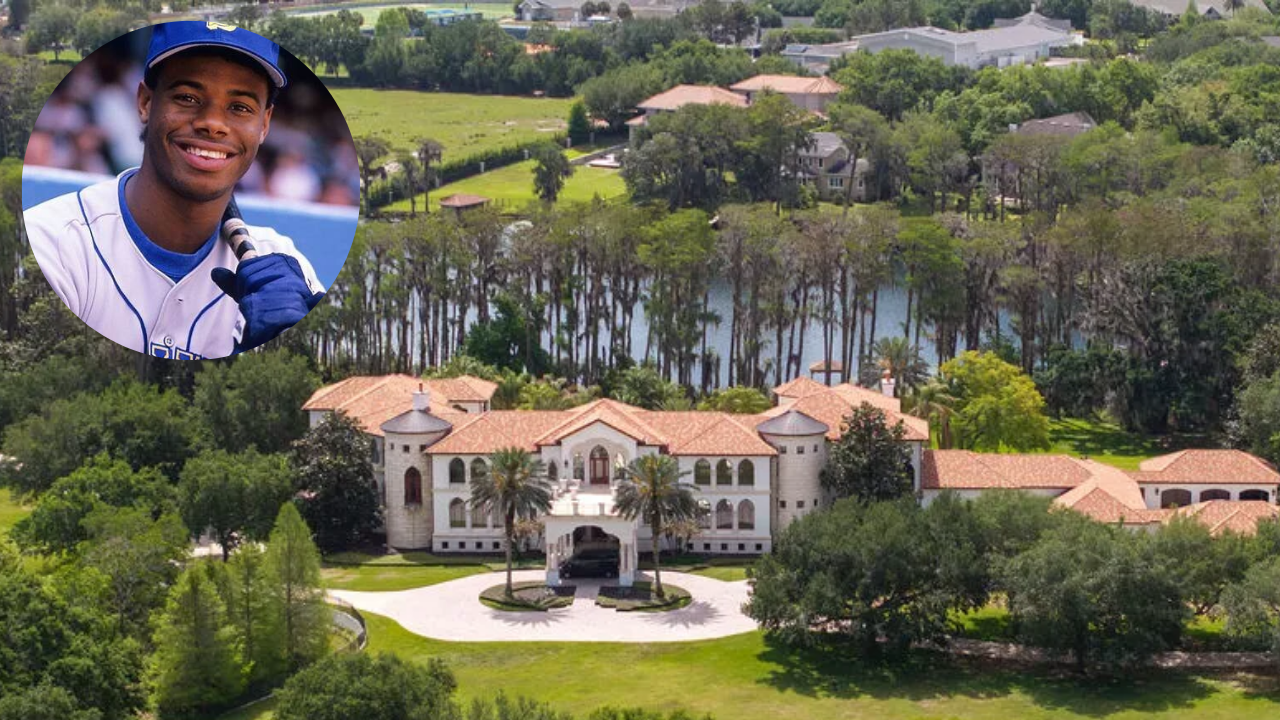
Capital allocation strategies deployed by professional athletes during peak earning years frequently dictate long-term portfolio stability far more effectively than initial contract valuations. When high-profile sports figures transition from active competition to post-career wealth management, their primary financial objective shifts from cash flow generation to capital preservation and inflation hedging. Examining the 2004 acquisition of 11.58 lakefront acres in Windermere, Florida, for $2.575 million provides a clinical case study in long-horizon real estate positioning. Deconstructing this transaction requires analyzing the precise mechanisms of athlete liquidity management, high-barrier-to-entry geographic zoning, structural construction costs, and the macro-level economic shifts that drive ultra-high-end property valuations over a two-decade timeline.
The initial land purchase price established a baseline valuation of approximately $222,360 per acre within a specialized submarket defined by restricted supply and elite demographic clustering. Real estate assets positioned along premier aquatic networks, such as the Butler Chain of Lakes, operate under unique economic constraints. Shoreline availability is strictly finite, meaning that raw acreage within gated luxury enclaves behaves less like conventional suburban residential parcels and more like scarce industrial commodities. By locking down nearly twelve contiguous acres with extensive direct water frontage, the asset insulated itself from surrounding suburban sprawl and speculative volatility. The economic principle at play is absolute spatial monopoly; once a finite perimeter of waterfront land is absorbed by private ownership, new entrants cannot replicate the geographic positioning regardless of capital availability. Learn more on a similar subject: this related article.
Between 2004 and 2008, capital deployment shifted from passive land holding to active physical improvement. The construction of a custom 22,108-square-foot structure represented a substantial capital expenditure that coincided with a severe macroeconomic downturn. While standard residential construction during the 2008 financial crisis experienced massive valuation contractions, custom mega-estates targeting ultra-high-net-worth buyers follow a distinct pricing function. These properties bypass standard market comparables because their utility value and bespoke engineering cannot be replicated on short notice. The integration of specialized recreational infrastructure—including a commercial-grade gym, an indoor golf simulator, a multi-tier private theater, and professional athletic facilities—internalized high-cost services that would otherwise require external expenditure or fail to meet privacy thresholds for high-profile public figures.
Analyzing the financial architecture of elite athlete earnings during this period illuminates the underlying mechanics of such capital outlays. Major sports contracts, such as multi-year agreements signed around the turn of the millennium, frequently incorporated deferred compensation structures or multi-year payout schedules extending well past retirement. Sterilizing these cash flows into hard assets with intrinsic long-term utility acts as an effective defense against systematic inflation and currency devaluation. Real estate functions as a tangible store of value that absorbs liquidity during high-earning years and converts transient athletic compensation into permanent generational equity. Further reporting by The Athletic delves into similar views on the subject.
Comparing real estate asset accumulation to alternative asset classes highlights the risk mitigation profile inherent in prime physical holdings. While public equities and venture investments are subject to rapid liquidity shocks, corporate governance failures, and market sentiment volatility, physical land tied to constrained municipal zones enjoys a defensive floor. When an individual commands outsized earnings during a compressed athletic window, the primary risk is not generating insufficient capital, but failing to sterilize purchasing power against lifestyle inflation and taxation. Real estate forces illiquidity upon capital, which functions as a structural safeguard against premature depletion.
Analyzing the progression from a $2.575 million land acquisition to a $27 million market listing reveals a valuation multiple exceeding ten times the initial baseline over a twenty-two-year horizon. This appreciation rate outpaces broad residential real estate indexes, driven by three primary structural drivers.
First, structural scarcity in Central Florida luxury sectors creates an inelastic supply curve. Zoning regulations, environmental protections surrounding protected lake systems, and strict municipal building codes restrict new large-format developments, forcing prospective buyers of elite estates into a closed secondary market where supply is mathematically fixed.
Second, the geographic migration patterns of wealth toward tax-favorable jurisdictions like Florida concentrated high-net-worth capital into specific submarkets near Orlando. This migration altered the demand curve, shifting the reservation prices of incoming buyers significantly upward.
Third, the compounding effect of custom architectural scale ensures that replacement cost inflation heavily outpaces standard inflation metrics. Rebuilding a twenty-two-thousand-square-foot compound with specialized structural requirements today demands labor, engineering, and material expenses vastly higher than mid-2000s baselines.
Evaluating the economic friction of holding such an asset involves calculating carrying costs, property taxes, structural maintenance, and the opportunity cost of capital over two decades. Large-format estates carry significant fixed operational overhead. Property taxes, insurance premiums for luxury coastal and lakefront structures, and continuous facility management require steady capital allocation. However, when paired with an appreciating land base and an income stream that featured long-tail payouts, the holding strategy functioned as an effective wealth-preservation vehicle. The structural separation of personal residence from standard liquid investments provided tax sheltering and asset protection benefits common to sophisticated portfolio management.
The microeconomic dynamics of custom-built mega-estates introduce a unique pricing risk known as liquidity friction. Standard residential properties sell quickly because their target demographic represents a broad segment of the population. Ultra-luxury compounds possessing hyper-specific customization—such as professional-grade sports infrastructure, private screening rooms, or massive climate-controlled wine cellars—narrow the pool of eligible buyers to a microscopic fraction of the global population. Consequently, the time-on-market metric for such properties is inherently extended. Sellers must absorb carrying costs while waiting for the exact intersection of buyer wealth, geographic preference, and aesthetic alignment to occur.
The strategic decision to list the property at the $27 million threshold reflects current liquidity conditions in the luxury tier rather than arbitrary pricing. High-end real estate pricing at this tier relies on matching rare asset specifications with a very narrow pool of qualified buyers capable of absorbing high operational overhead. Rather than attempting a quick liquidation during market shifts, positioning the estate as the premier trophy property in the Orlando region forces competing sellers out of consideration and anchors the upper bound of local market valuations.
Execute the exit strategy by capitalizing on peak regional pricing indices and transitioning illiquid real estate equity into liquid sovereign or equity instruments to optimize post-retirement capital velocity.