The earth does not forget the shape of a crater. Long after the smoke clears, long after the journalists pack their satellite kits and the generals issue their carefully measured statements, the ground keeps a hollow memory.
Myla knew the sound of wind in the poplars. It was a soft, steady sigh that rolled across the fields west of Kyiv, carrying the scent of damp soil and coming rain. People planted cherry trees here. They built low-slung houses with blue window frames, painted to match the summer sky. They kept jars of pickled cucumbers in cool cellars and waited for evening when the heat broke.
Then came the night the sky turned white.
It was not a gradual warning. There was no sirens' buildup that let a mother finish stirring the porridge or a father close the chicken coop. There was a roar that tore the atmosphere in half, a concussive hammer blow that shattered every pane of glass for miles, followed by secondary detonations that rolled across the horizon like thunder stuck in a loop.
When the sun rose over Myla, half the street was gone.
Not flattened by an advancing tank column, not chipped by stray rifle fire. Erased. Converted into grey dust and jagged timber. In the center of the devastation lay an enormous wound in the dirt, deep enough to swallow a house.
The military called it a legitimate target.
To the strategists sitting in command centers miles away, looking at thermal feeds and intelligence reports, the calculation was clean. Somewhere beneath the routine rhythms of this quiet rural community, a warehouse had been adapted. Boxes of artillery shells had been stacked against whitewashed walls. Pallets of mortar rounds had been tucked behind barns where tractors usually sat. From an operational standpoint, an ammunition depot is a threat. It demands a response. It invites the full, indiscriminate fury of a cruise missile.
But mathematics do not bleed.
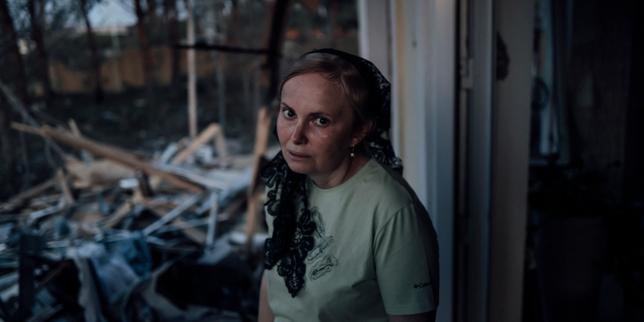
Ask Maria, who stood in the middle of her yard the morning after, holding a melted plastic toy she had pulled from the rubble of what used to be her daughter's bedroom. She did not care about logistics chains or supply lines. She cared about the fact that nobody came to tell them. Nobody knocked on their wooden gates to say: Get out. Tonight, this place becomes a bullseye.
"We lived here for forty years," she whispered, her hands shaking as she tried to brush soot off a family portrait that was miraculously unbroken. "We didn't store their shells. We didn't invite the war to our doorstep. Why did they decide our children were the price of their defense?"
This is the hidden cost of modern conflict. It is not just the casualties recorded in daily briefings, the neat rows of numbers tallied by international monitors. It is the profound, grinding confusion of civilians caught in the crossfire of decisions made entirely without their consent.
Consider the mechanics of how a village becomes a battlefield overnight. Modern logistics are vast and desperate. Armies defending an invaded nation must scatter their munitions to survive. If they store everything in massive, centralized depots, a single enemy strike can paralyze an entire front line. So, out of sheer survival instinct, logistics officers decentralize. They utilize abandoned warehouses, commercial storage sheds, farm cooperatives, and rural barns. They blend into the geography because standing out means dying.
It is a logical military imperative. It is also an absolute civilian catastrophe.
When a barn filled with ordnance goes up in flames, it does not announce itself with polite discretion. It takes the dairy farmer next door with it. It swallows the elderly couple who refused to leave their orchard because they could not imagine dying anywhere else. It creates a bitter, corrosive resentment that no counter-offensive can easily sweep away.
The people of Myla were not angry at the enemy alone. Anger at an invading force is a given, a baseline current of survival. Their deeper, sharper fury was directed inward. It was aimed at the invisible machinery of their own side that had placed a target on their backs without so much as a whispered warning.
"They treat us like collateral," Dmytro said, leaning against the twisted metal frame of his garage. He was a mechanic before the invasion, a man who could fix any tractor engine by ear. Now he spent his days picking shrapnel out of his roof insulation. "They tell us we are all in this together. But when they bring the gunpowder into our backyards, they don't ask if we want to play the hero. They just use us as shields and hope we survive the fallout."
It is an uncomfortable truth that war journalism often glosses over. We prefer clean narratives of unified resistance. We want to see every citizen as a willing partisan, every community an unbreakable fortress of collective will.
Reality is far messier. Reality is terrified, exhausted people standing in a smoking crater, trying to figure out why the defense of their country required the destruction of their home.
The distinction between a soldier and a civilian is the foundational pillar of international humanitarian law. It is the thin line separating civilized conflict from total barbarism. Yet, when military assets are integrated into populated areas—even under the agonizing duress of an existential invasion—that line blurs. It stretches until it snaps.
When an ammunition dump detonates in a residential sector, the blast radius does not respect the Geneva Conventions. It kills indiscriminately. And afterward, the survivors are left in a peculiar kind of limbo. They are hailed as patriots in the national news, yet treated as an operational afterthought by the commanders who put them in harm's way.
The dust in Myla still settles into the hair of anyone who walks down its broken lanes. The authorities have promised compensation. Forms have been filled out, digital registries updated, official committees established to assess the damage. But money cannot reassemble a centuries-old well or restore the quiet safety of a summer evening where the only sound was the wind in the poplars.
As the sun dips below the horizon, casting long, bruised shadows across the shattered brickwork, a lone dog barks in the distance. There are no streetlights left to turn on. The world has grown quiet, but it is the quiet of a graveyard, heavy with unasked questions and the bitter taste of a survival that cost too much.