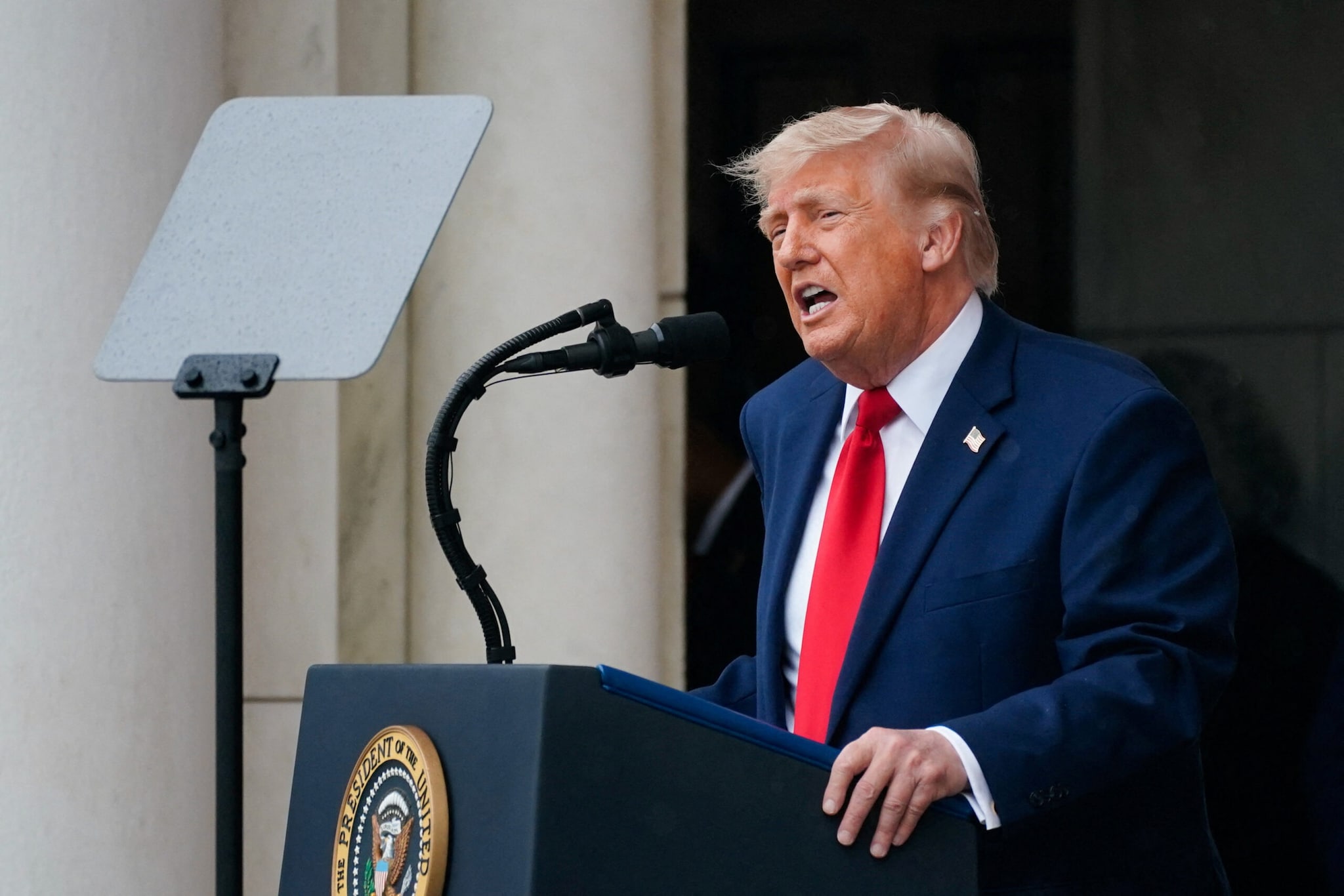
The political commentary machine has a predictability problem. Every time an anonymous source whispers to a reporter that a major geopolitical leader is "privately panicking" over a piece of diplomacy, the media ecosystem swallows the bait whole. The latest narrative—that the Trump administration is secretly losing its mind because a newly surfaced Iranian diplomatic framework looks "worse" than the Joint Comprehensive Plan of Action (JCPOA) he abandoned—is a masterclass in misunderstanding how high-stakes international leverage actually works.
This isn't a crisis of American diplomacy. It is a textbook application of game theory, controlled leaks, and intentional strategic ambiguity.
The lazy consensus dominating the headlines argues that Washington got outplayed, that tearing up the 2015 nuclear pact destroyed America’s bargaining power, and that the current administration is now trapped in a corner of its own making. That view is not only naive; it fundamentally misreads the mechanics of modern statecraft.
The Fallacy of the Static Agreement
Mainstream foreign policy analysts treat international treaties like real estate contracts. They assume the goal is to sign a piece of paper, lock in a price, and walk away. If the new terms look more permissive on the surface than the old terms, the commentator class immediately declares a loss.
They fail to realize that an agreement is merely a snapshot of a power dynamic at a single moment in time.
When the United States exited the JCPOA, it did not do so under the illusion that Iran would immediately stop its centrifuges and sue for peace. It did so to break a stagnant status quo that favored Tehran over the long horizon. The original 2015 deal possessed built-in expiration dates—sunset clauses—that would have legally permitted Iran to resume advanced enrichment by the mid-2020s anyway.
By dismantling that framework, the administration shifted the theater of engagement from a rigid legal structure to an unpredictable arena of economic and asymmetric pressure. A fluid, unquantifiable environment always favors the stronger superpower over the isolated regional actor.
Dismantling the "Private Panic" Narrative
Let’s address the core premise of the panic narrative. Ask yourself a simple question: if a leader is genuinely panicking in private, who benefits from that information escaping the room?
In Washington, leaks are rarely accidental slips of the tongue. They are deliberate policy instruments.
When the public hears that an administration is "terrified" of a weaker deal, it sets up a highly effective smoke screen. It signals to adversarial negotiators in Tehran and Moscow that the U.S. feels vulnerable, prompting them to overplay their hand or demand concessions that expose their true red lines.
Imagine a scenario where a corporate raider pretends to be desperate to close a acquisition, allowing the target company to feel a false sense of security right before the terms are aggressively rewritten. In geopolitics, this is called strategic feigned weakness.
Furthermore, a leaked rumor of a "worse deal" creates immediate political cover at home. By lowering the bar of public expectation, any final agreement that manages to secure even minor structural concessions looks like a monumental diplomatic victory by comparison. It is Anchoring 101, played out on the global stage.
The Real Numbers the Commentators Ignore
The narrative that the U.S. lost its leverage evaporates when you look at the raw macroeconomic data. Foreign policy cannot be decoupled from balance sheets.
- Iran’s Inflation Rate: Hovering stubbornly between 30% and 45% over recent years, crushing domestic purchasing power.
- The Rial's Collapse: The Iranian currency has repeatedly hit historic lows against the U.S. dollar, paralyzing non-oil trade.
- Liquid Reserves: Despite increased oil exports to specific illicit markets, Iran's easily accessible foreign exchange reserves remain severely restricted compared to the pre-2018 era.
A country operating under these economic constraints does not hold the upper hand in a negotiation, regardless of how confident its state media appears. The hard reality is that Iran requires sanctions relief far more than the United States requires a signature on a document. To argue that Washington is the party panicking ignores the fundamental asymmetry of the economic battlefield.
Why Flawed Assumptions Drive Bad Questions
The public frequently asks variations of the same flawed question: Why can't the U.S. just negotiate a permanent deal that solves the nuclear issue forever?
The question itself is broken because it assumes a permanent solution is possible with a revolutionary regime. Geopolitical friction with Tehran is not a misunderstanding that can be cleared up with better phrasing or a more polite summit. It is a structural conflict of interest.
Another common inquiry found across foreign policy forums is: Did leaving the JCPOA make the Middle East more dangerous? The brutal, honest answer is that the region was already on an escalating trajectory. The JCPOA provided Iran with a massive influx of cash via sanctions relief, which was promptly funneled into regional proxies across Yemen, Syria, and Lebanon. The idea that a signed document created a period of genuine stability is a historical rewrite. The danger merely changed formats.
The Cost of the Contrarian Playbook
To be absolutely clear, this aggressive, disruptive approach to foreign policy carries significant downside risks. It is not a clean or comfortable strategy.
It alienates traditional European allies who prefer predictable, rule-based frameworks, even when those frameworks are failing. It forces the international community to operate in a perpetual state of high-alert anxiety. It risks miscalculation, where a spark in the Persian Gulf could escalate into an unintended conventional conflict.
But pretending that returning to the status quo of 2015 is a viable alternative is pure fantasy. The world has moved on. The alliances have shifted. Russia and China are now actively integrating Iran into alternative financial and military blocs, rendering the old multilateral enforcement mechanisms obsolete.
The Actionable Reality
Stop reading the headlines that treat international diplomacy like a high school drama where people "panic," "slam," or "cower."
Look at the structural realities instead. The current noise around a "worse deal" is theater designed to reset expectations, test adversary reactions, and manage domestic political optics. The United States still holds the ultimate economic trump cards, and no amount of anonymous leaking changes the math on the ground.
The next time you see an article claiming a superpower is shaking behind closed doors, ignore the analysis. Watch the capital flows. Watch the shipping lanes. Ignore the script. Focus on the leverage.