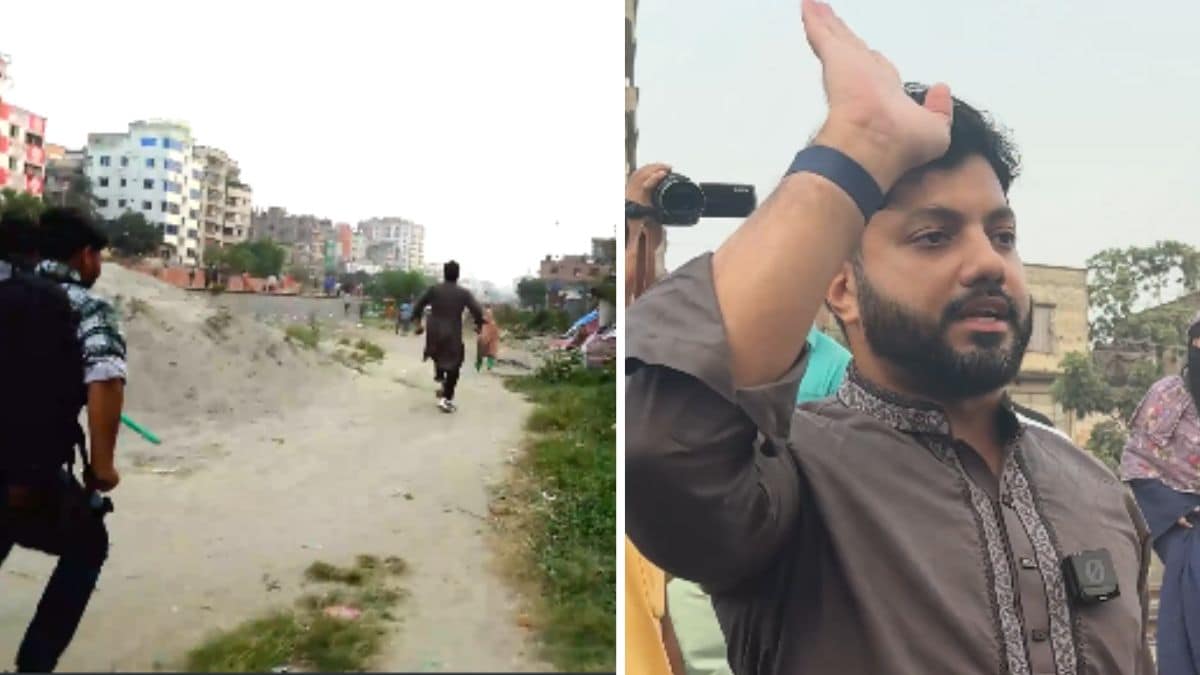
On October 17, 2026, then-State Minister for Liberation War Affairs and Dhaka-6 Member of Parliament Ishraque Hossain stepped out of a vehicle near Gendaria Railway Station in Dhaka holding a megaphone in one hand and a pistol in the other during a self-styled anti-drug operation. Within forty-eight hours, the Dhaka Metropolitan Police (DMP) ordered an investigation into the display of firearms, police officials publicly stated they had not been informed of the raid in advance, and Hossain stepped down from the cabinet amid political fallout.
Standard wire-style reporting treats this episode as a self-contained scandal: a politician waves a gun at a suspected drug den, video circulates online, and police open a probe. That framing misses the structural tension between constituency-level executive theater, operational coordination failures, and the state monopoly on coercive force. Understanding what happened—and why it escalated so rapidly into a cabinet exit—requires separating verified facts from contested claims and examining the institutional mechanisms at work.
Deconstructing the Competitor Narrative
Typical news coverage of the Gendaria incident follows a predictable sequence. First, it describes the visual spectacle: video footage posted to Hossain's social media page showing him and associates near railway tracks, six individuals detained, and police later testing seized powder to determine whether it was a narcotic. Second, it records dueling statements: Hossain asserts that his firearm was licensed, that he acted in self-defense after months of gathering intelligence and dozens of unproductive police meetings, and that he never intended to intimidate anyone. Third, it notes that DMP leadership assigned a Wari division deputy commissioner to examine whether firearms laws or public order rules were breached.
That narrative is thin because it stops at surface contradiction ("he says self-defense, police say unannounced, probe launched"). It does not map three core analytical dimensions:
- Jurisdictional and Role Mismatch: A state minister for liberation war affairs and constituency lawmaker does not sit in the operational command chain of the Dhaka Metropolitan Police for routine narcotics enforcement. Blending legislative representation, ministerial rank, and street-level armed action blurs distinct roles of state authority.
- Information Asymmetry Between Elected Officials and Police: Whether a politician claims thirty to forty prior meetings with police or police state they received zero advance notice of the afternoon operation itself, an uncoordinated raid turns a law-enforcement problem into an inter-institutional clash.
- Reputational Risk vs. Street Legitimacy: Short-form video clips of an armed official detaining suspects can win immediate applause among constituents frustrated by street crime and narcotics, yet simultaneously erode institutional restraint and trigger legal scrutiny over firearms display.
Known Facts Versus Contested Claims
Rigorous analysis requires separating what is established in the public record from assertions made by participants during a fast-moving controversy.
Established Facts
- On Saturday, October 17, 2026, Ishraque Hossain—then State Minister for Liberation War Affairs and MP for Dhaka-6—took part in an anti-drug drive near Gendaria Railway Station in Dhaka, with footage shared on his Facebook page.
- Video material showed Hossain holding a pistol alongside a megaphone while associates and bodyguards moved toward people near the railway tracks.
- Six people were detained and handed over to police, with authorities indicating that recovered powder required chemical testing to confirm if it was an illegal drug.
- On October 18, 2026, DMP officials confirmed an investigation into the display of firearms during the operation, with a Wari division deputy commissioner tasked with examining the matter.
- DMP representatives stated that police were not informed of the raid beforehand and learned of it afterward.
- Following the controversy, the video was removed from Hossain's page, and within days—on October 19–20, 2026—Hossain stepped down from his ministerial post and his resignation was accepted via gazette notification.
Contested Claims and Open Questions
- Intent and Threat: Hossain maintained that his pistol was legally licensed, that he did not fire shots or use the weapon to intimidate anyone, and that he raised it for self-defense amid concerns about armed pushback from dealers. Critics and observers pointed to the visible display of firearms during a public chase and aggressive conduct by bodyguards.
- Prior Coordination: Hossain stated he had collected information over six months, acted on resident complaints, and held thirty to forty meetings with police without seeing sufficient results. Police maintained they had no prior notice of this specific raid. Both statements can be partially true if general complaints were discussed in past meetings while tactical execution on October 17 occurred without operational handoff.
- Legal Thresholds: Under Bangladesh's firearms rules, carrying a licensed weapon for self-defense differs from displaying it in a manner that causes public fear or annoyance. Determining whether a violation occurred depends on investigative findings regarding exact movements, context, and witness accounts.
The Three Pillars of Armed Vigilante-Style Enforcement
When a public official conducts an armed street raid outside standard police command, the underlying dynamics can be structured around three operational pillars: command authority, escalation risk, and media amplification.
1. Command Authority and Chain of Custody
Effective narcotics enforcement relies on clear chain of custody: intelligence gathering, warrant or legal authorization, tactical containment, safe detention, forensic substance testing, and prosecutorial documentation. When an elected official or minister leads a raid without prior police coordination, chain of custody starts on shaky ground. Powder found near suspects is only legally meaningful if handled and documented cleanly from seizure to laboratory testing. Without a formal police operational plan, suspects may dispute how items were found, witnesses may scatter unpredictably, and officers arriving after the fact inherit a volatile scene rather than a controlled arrest.
2. Escalation Risk in Dense Urban Spaces
Locations like railway corridors in dense Dhaka neighborhoods combine high foot traffic, constrained escape routes, onlookers, and potential criminal actors. Introducing private firearms into a crowd—even legally licensed ones carried by a minister or bodyguards—raises the probability of miscalculation. A single stray shot, a panicked bystander, or a physical scuffle can turn a publicized crackdown into a fatal shooting or a civil rights crisis. In political economy terms, the marginal cost of a single error in an armed civilian-led raid is extraordinarily high compared to the incremental street-level disruption achieved by detaining a handful of suspects.
3. Media Amplification and Political Backlash
Modern political actors frequently use social media platforms with large followings to project decisive action on everyday grievances such as street crime, extortion, or narcotics. Yet visual media is unforgiving. Footage that looks like "decisive action" to supporters can simultaneously look like intimidation or lawlessness to institutional leaders, legal experts, and rival political actors. Once video of an armed minister circulates widely, executive leadership faces intense pressure to act swiftly to preserve institutional norms—turning a local constituency stunt into a high-stakes cabinet crisis.
Why Uncoordinated Crackdowns Fail as Structural Anti-Drug Strategy
Politicians who intervene directly in street-level drug busts often point to frustration with slow bureaucracy, resource constraints, or perceived police inaction. Those frustrations are real in many urban policing environments. Still, substituting ad-hoc raids for institutional reform creates predictable cause-and-effect distortions.
First, street-level displacement replaces network disruption. Detaining six individuals near railway tracks may temporarily clear a visible corner, but retail drug markets adapt rapidly by shifting blocks, changing runners, or operating at different hours unless supply nodes, financiers, and transit routes are dismantled through sustained investigative work.
Second, public friction weakens institutional trust. When police publicly state they were not informed of an operation in advance, the public sees a fractured state apparatus. Citizens may become unsure whether enforcement is governed by law and procedure or by personal political theatricality.
Third, self-help enforcement invites copycat dynamics. If a senior official models armed street intervention, other actors—including party cadres, local strongmen, or rival groups—may claim similar license to police neighborhoods with force, undermining public safety rather than strengthening it.
Operational Playbook for Constituency Leaders Facing Street Crime
A constituency representative or minister confronting persistent narcotics complaints and resident frustration does not have to choose between passive indifference and armed street intervention. A disciplined operational sequence channels constituent pressure into durable enforcement without crossing legal or institutional lines.
- Audit and Document Specific Hotspots: Compile structured incident logs from residents—exact locations, time windows, observable patterns, and safety hazards—rather than relying solely on informal complaints.
- Establish a Formal Liaison Protocol with Police Command: Request written or minuted coordination meetings with division-level police leadership and anti-narcotics units, setting clear expectations on intelligence sharing, joint patrols, and follow-up reporting.
- Separate Advocacy from Tactical Execution: Use public office to press for police staffing, lighting, CCTV coverage, municipal cleanup, and rehabilitation referrals, while leaving physical arrests, searches, and firearm use strictly to authorized law-enforcement personnel.
- Enforce Strict Firearms and Security Discipline: Require personal security details and associates to keep licensed weapons concealed and holstered unless a specific, immediate self-defense threat arises, avoiding performative display in public operations.
- Measure Outcomes by Sustained Deterrence, Not Viral Clips: Track whether a location remains clear over thirty to ninety days and whether cases progress through investigation, rather than judging success by same-day social media engagement.
Limitations and Institutional Trade-Offs
No governance playbook eliminates friction overnight. Even when an elected official follows every procedural step, police agencies may still face manpower shortages, equipment limits, or complex criminal networks that take months to investigate. Institutional reform is slower than a street raid and generates fewer immediate applause lines. Furthermore, strong political pressure on police can occasionally swing too far in the opposite direction if not paired with oversight, risking arbitrary detentions or rights violations. The objective is not frictionless perfection, but a durable division of labor where elected officials drive accountability and resources while law enforcement exercises lawful force.
Strategic Action
For political leaders and executive governments navigating high-visibility public security controversies, the decisive strategic move is to codify a bright-line rule separating elected officials from armed street operations while mandating joint police-community tasking. Cabinet leadership should pair accountability over unlawful or provocative firearms display with formal, transparent coordination channels between lawmakers and metropolitan police divisions—giving constituents measurable action against street crime while protecting the rule of law and the state's exclusive operational mandate.
For a direct look at police commentary on the inquiry, see the Dhaka Metropolitan Police probe video. This video provides relevant visual context on official statements surrounding the investigation into the armed operation.