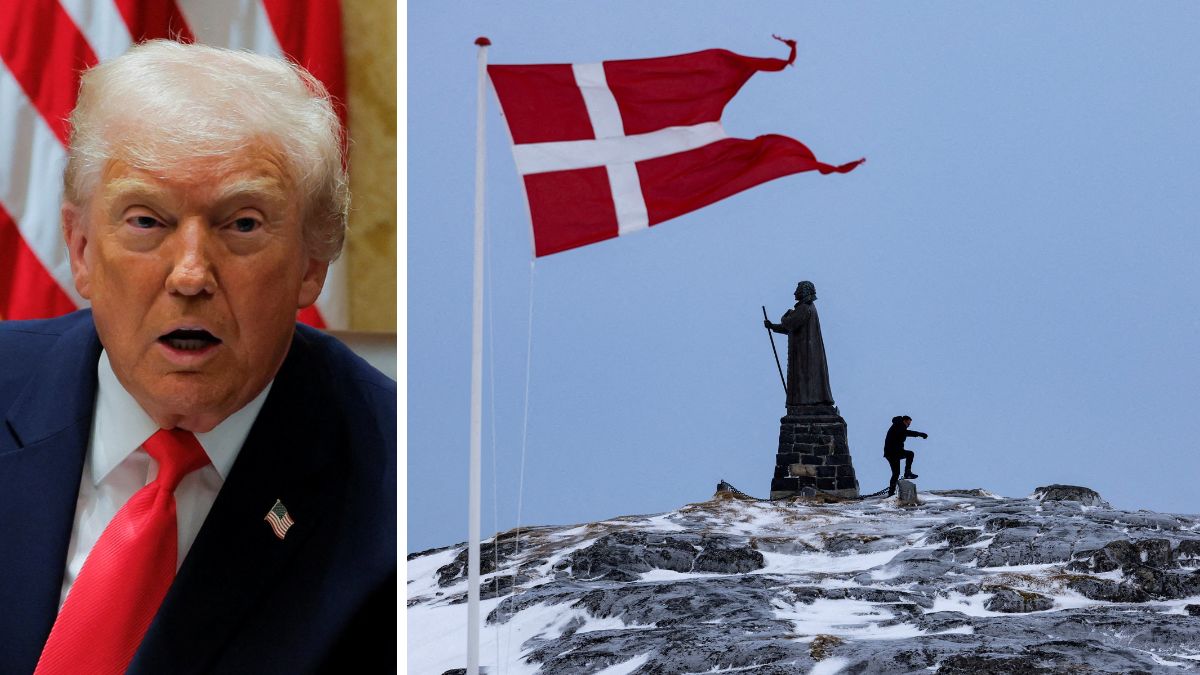
International diplomacy has always functioned as an exercise in mutual fiction, but the recent Arctic security pact regarding Greenland takes the craft to a rare, dizzying height. Read the declarations coming out of Washington, then pivot immediately to the official statements issued in Copenhagen and Nuuk. You are left staring at two distinct geopolitical universes.
In the American narrative, the accord represents an unalloyed triumph of executive will—a permanent arrangement securing unmitigated strategic control over the world’s largest island at zero financial cost. In the Danish and Greenlandic framing, the exact same document is hailed as a masterclass in defensive sovereignty, an ironclad reaffirmation of the local right to self-determination, and a comforting continuation of existing Cold War frameworks.
Both sides cannot be telling the truth. Or, more accurately, both are telling carefully edited versions of a much messier reality.
To understand why this diplomatic theater matters, we have to look past the talking points and examine the actual mechanics of the 2026 agreement. Strip away the social media declarations and the defensive podium posturing, and you find a document that updates the vintage 1951 Defense of Greenland Agreement. That foundational Cold War treaty already gave the United States sweeping rights to establish military bases, station personnel, and move freely across the territory.
So why the sudden, high-stakes collision of interpretations?
The friction stems from domestic political survival. For the White House, projecting total dominance over Arctic resources and security is an absolute requirement for an administration that campaigned on hardline transactional foreign policy. Portraying the pact as a permanent acquisition of strategic real estate satisfies a core political base, even if international law and Danish constitutional reality remain entirely unchanged. Danish Prime Minister Mette Frederiksen and Greenlandic leaders, meanwhile, face an equally unforgiving domestic audience. Handing over national territory to a foreign power is a political death sentence in Copenhagen and Nuuk. Consequently, their apparatus must frame the deal as a strict defense of local autonomy, emphasizing that Danish sovereignty is untouched and that Greenlandic fishing, hunting, and administrative rights are fully protected.
Beneath the rhetorical warfare, however, concrete shifts occurred. The agreement does introduce new provisions that go beyond the 1951 baseline. It explicitly paves the way for expanded military footprints at locations like Narsarsuaq and Mestersvig, references cooperative frameworks for missile defense architecture, and formalizes strict investment screening mechanisms. This last point is perhaps the most consequential clause in the entire text. By barring non-NATO states—chiefly China and Russia—from gaining footholds in Greenland’s critical mineral extraction and infrastructure, Washington achieved its primary strategic objective without firing a shot or breaking the alliance.
At the same time, Copenhagen secured a vital long-term anchor. The treaty explicitly mandates that should Greenland ever exercise its constitutional right to full independence from Denmark, the security arrangement remains fully binding, and the nascent republic is locked directly into NATO. For Washington, this eliminates the nightmarish geopolitical scenario of a newly independent, economically fragile Arctic state selling critical mining rights to foreign adversaries. For Denmark, it provides an orderly transition framework that insulates Copenhagen from future bilateral pressure.
Yet, framing this outcome as a clean victory obscures the structural damage inflicted along the way. The crisis that preceded the penning of this accord brought allied relations to a breaking point not seen in modern history. Behind closed doors in European capitals, contingency plans were quietly drawn up. Trust, once shattered by open threats of coercion against a sovereign NATO partner, cannot be restored by a bureaucratic addendum.
The dual-narrative dance will continue because it serves both governments domestically. Washington gets to claim it conquered the ice through sheer leverage, while Europe gets to pretend that patience and polite diplomacy tamed the storm. Meanwhile, the strategic reality on the ground remains unchanged: a massive, resource-rich island at the top of the world is locked permanently into the Western defense perimeter, managed by a treaty whose true cost will only become visible the next time great power competition turns cold.

.png)

