Optimizing nightly recovery requires shifting from subjective comfort to quantified physiological variables. Most consumer commentary treats sleep as a monolithic state of rest, ignoring the distinct architectural phases that govern cognitive restoration, tissue repair, and metabolic regulation. True systemic optimization demands an empirical breakdown of the variables that dictate sleep efficiency: circadian alignment, thermal regulation, mechanical support, and environmental attenuation.
The Circadian Feedback Loop
Circadian rhythmicity functions as a master pacemaker governed by the suprachiasmatic nucleus. This internal clock operates on a roughly twenty-four-hour cycle, entrained primarily by photon absorption through retinal ganglion cells.
When ambient light strikes the retina during late evening hours, melanopsin signaling suppresses pineal melatonin synthesis. This endocrine delay shifts sleep onset latency outward, fragmenting the initial stages of non-rapid eye movement sleep. The operational variable here is lux exposure over time. Mitigating this disruption requires managing both luminous intensity and spectral distribution. Blue-spectrum wavelengths between four hundred and fifty and four hundred and eighty nanometers exert the strongest suppression effect on melatonin production.
Conversely, morning photon exposure anchors the circadian phase. High-intensity lux exposure within sixty minutes of waking triggers a cortisol awakening response, establishing a precise phase-reference point that dictates endogenous melatonin release approximately sixteen hours later. Sleep optimization fails when this temporal anchor drifts. Interventions focusing solely on nighttime artifacts while ignoring morning entrainment ignore the primary systemic driver.
Thermal Dynamics and Vasomotor Control
Core body temperature undergoes a regulated oscillation of approximately one degree Celsius across the circadian cycle. Sleep onset requires a coordinated reduction in core temperature, driven by vasodilation in the distal extremities.
The mechanism relies on arteriovenous anastomoses located in the palms and soles. When ambient and microclimature conditions permit heat dissipation through these vascular beds, warm blood flows outward, shedding thermal energy and lowering core temperature. If the sleeping surface or room ambient temperature prevents this thermal gradient, the hypothalamus delays the physiological transition into slow-wave sleep.
Optimizing this vector requires managing the heat capacity and thermal conductivity of the sleep microenvironment. Synthetic materials with high thermal insulation trap metabolic heat, elevating skin temperature and preventing the necessary drop in core temperature. High-performance recovery systems utilize phase-change materials or active thermal regulation to maintain continuous heat flux away from the body throughout the night.
Biomechanical Alignment and Load Distribution
Musculoskeletal recovery during sleep depends entirely on spinal neutral alignment and pressure distribution. During wakefulness, axial loading compresses the intervertebral discs, squeezing fluid out of the nucleus pulposus.
During recumbency, this hydrostatic pressure drops, allowing the discs to rehydrate via oncotic pressure. However, if the supporting surface fails to distribute body mass uniformly, localized pressure points create sustained tissue ischemia. This triggers subconscious micro-arousals designed to shift position, fragmenting sleep architecture without necessarily causing full conscious awakening.
The mechanical interface must provide proportional immersion. High-density viscoelastic foams and zoned pocket-coil architectures achieve this by countering local force vectors. A surface that is excessively rigid forces the spine into lateral flexion or extension, straining paraspinal musculature. A surface that lacks structural yield permits excessive pelvic sinkage, distorting lumbar lordosis. The optimization threshold is reached when surface pressure drops below the capillary closure pressure of superficial tissues, eliminating the physiological trigger for postural shifting.
Environmental Noise Attenuation and Auditory Cortex Gating
Even during deep sleep stages, the auditory cortex remains active, monitoring environmental stimuli for potential threat detection. Transient acoustic variations above thirty decibels can elicit autonomic nervous system responses, including transient spikes in heart rate and sympathetic nervous system activation, even when the subject remains asleep.
This phenomenon, known as micro-arousal loading, degrades sleep quality by preventing the consolidation of slow-wave sleep cycles. Over time, chronic acoustic intrusion elevates baseline cortisol and impairs metabolic efficiency.
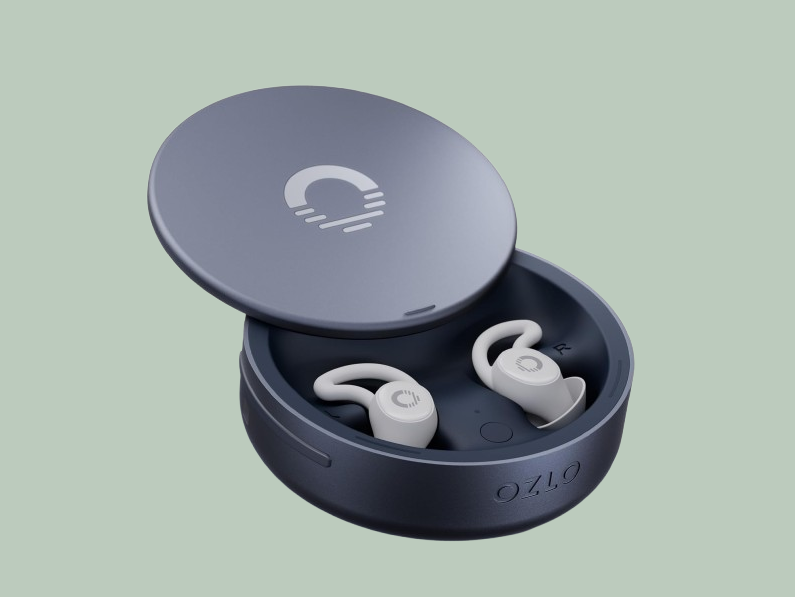
Mitigating this variable requires dual-pathway attenuation: source reduction and continuous acoustic masking. While physical mass in walls and double-pane fenestration blocks high-frequency transmission, low-frequency structural vibrations penetrate standard barriers. Broadband acoustic masking via stable, non-rhythmic sound profiles raises the auditory threshold, narrowing the signal-to-noise ratio between background ambiance and sudden environmental transients.
Air Quality and Metabolic Waste Accumulation
Micro-environmental ventilation directly impacts cognitive recovery. In enclosed sleeping spaces without adequate air exchange, carbon dioxide concentrations accumulate rapidly, frequently exceeding one thousand parts per million by the middle of the night.
Elevated carbon dioxide levels induce subtle respiratory stimulation and disrupt autonomic stability, increasing heart rate variability markers associated with physiological stress. Furthermore, particulate matter and volatile organic compounds off-gassed from synthetic bedroom furnishings place an ongoing load on upper airway mucosal membranes.
Addressing this constraint requires decoupling thermal insulation from airtightness. Mechanical ventilation systems with heat recovery cores allow continuous introduction of filtered exterior air without degrading the thermal stability of the room. Maintaining particulate counts below target thresholds prevents inflammatory responses that contribute to nocturnal airway resistance.
The Deployment Protocol
To operationalize these variables, implement the following diagnostic sequence over a fourteen-day monitoring period:
- Measure baseline ambient light levels in the sleeping quarters using a calibrated light meter, ensuring zero intrusion from artificial sources below four hundred and eighty nanometers after sunset.
- Track core body temperature trends and skin temperature differentials to confirm appropriate thermal gradient maintenance and prevent nocturnal micro-awakenings caused by heat retention.
- Audit the mechanical support interface for localized pressure hotspots and spinal alignment integrity during side and supine postures.
- Quantify nocturnal acoustic fluctuations using a decibel meter to identify transient noise spikes that trigger autonomic nervous system activation.
- Log indoor carbon dioxide levels to verify that ventilation rates maintain air quality parameters below operational thresholds for metabolic recovery.