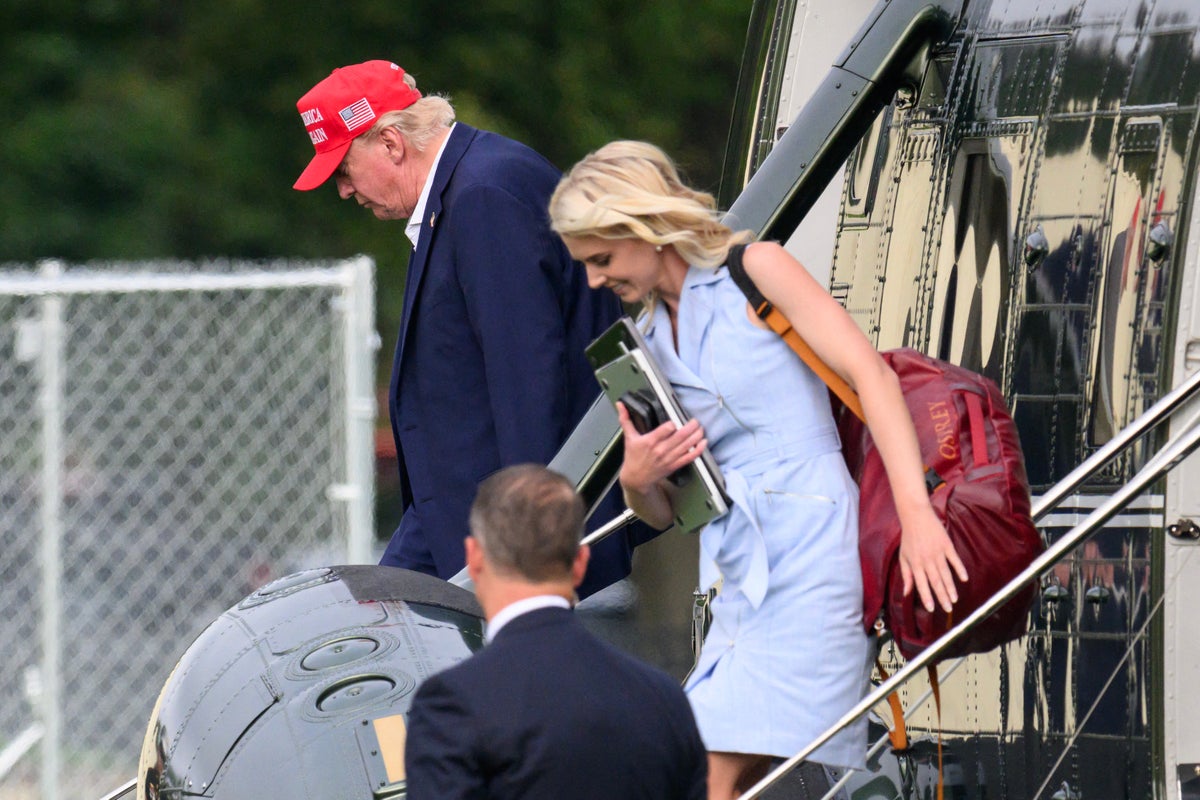
Access inside modern political operations is rarely governed by formal org charts. Instead, operational influence follows an informal proximity gradient, where physical closeness to the principal functions as the primary currency of power. When outsider accounts and internal leaks expose the mechanics of staff loyalty—such as the operational role occupied by White House aide Natalie Harp—observers often misinterpret personal devotion as mere anomaly. In institutional analysis, however, absolute alignment of interest between a principal and a subordinate creates a specialized structural utility. Understanding how an aide transitions from logistical functionary to ideological gatekeeper requires examining the mechanics of executive dependency, the erosion of traditional filtering layers, and the cost function of absolute administrative loyalty.
Traditional executive offices operate on a tiered filter system. Chiefs of staff, communications directors, and policy advisors act as frictional layers designed to moderate the flow of information, temper institutional impulses, and protect the principal from external noise. This bureaucratic friction exists to standardize decision-making. Yet, principals under acute legal, political, or psychological pressure frequently experience a systemic breakdown of trust in these formal layers. For a deeper dive into similar topics, we suggest: this related article.
When institutional buffers are perceived as liabilities, the principal seeks a frictionless conduit. This creates an opening for hyper-aligned operators. The mechanics of this shift follow a predictable trajectory:
- Information Hyper-Curation: Formal staff filters are bypassed as the subordinate supplies raw, unfiltered data directly tailored to the principal's immediate cognitive biases.
- Operational Ubiquity: The aide assumes continuous presence, collapsing the boundaries between professional hours and private quarters, thereby removing competitor access.
- Amplification of Impulses: Rather than acting as a check on erratic or unconventional actions, the operator validates and executes them immediately, transforming intent into output without procedural delay.
In the case of executive assistants who manage digital communication vectors and document flow, the operational leverage is absolute. Controlling the distribution of media and managing direct output channels grants the assistant veto power over the narrative environment. When traditional advisors calculate political risk, a hyper-loyal operator calculates only the principal's immediate gratification. This asymmetry explains why traditional staffers view such figures with alarm while principals view them as indispensable. For additional background on this topic, detailed coverage can also be found at The Washington Post.
The structural tension generated by this dynamic exposes the vulnerability of institutional guardrails. When an individual operates outside standard clearance pathways, internal security and administrative protocols face structural bypass. Institutional friction protects an organization from idiosyncratic decision-making. Removing that friction shifts the organization from a rules-based hierarchy to a personality-driven orbit.
The strategic takeaway for analyzing executive management under high-stress conditions is straightforward. When formal institutional checks are bypassed in favor of absolute personal devotion, operational risk scales exponentially. The efficiency of a frictionless conduit is offset entirely by the absence of critical evaluation, converting the executive office into an echo chamber optimized for impulse execution rather than strategic governance.
Natalie Harp's role in the Trump administration
This video provides context on the public scrutiny surrounding Natalie Harp's relationship with Donald Trump and her role within the White House inner circle.