Federal bureaucracy rarely moves with genuine speed, yet an aggressive administrative apparatus has turned its sights on naturalized Americans under the banner of voter integrity. Recent enforcement directives out of Washington target individuals who have already sworn an oath of allegiance, examining their past paperwork for technical anomalies under the assumption that illegal voting is widespread among immigrant populations. This approach shifts the burden of proof backward, transforming long-settled civic status into a provisional state subject to sudden audit.
Decades of immigration litigation show that state-level databases frequently fail to communicate cleanly with federal naturalization records. When an administrative clerk flags a mismatched middle name or a dormant driver license registration from a decade prior, the system defaults to suspicion. Civil rights attorneys note that these audits disproportionately focus on communities of color and individuals from non-Western nations, raising immediate constitutional questions about equal protection under the law.
The Mechanics of Administrative Attrition
To understand how these targeted reviews operate, one must examine the mechanics of modern federal data sharing. Agencies utilize automated matching software designed to catch anomalies in massive registries. However, these programs lack context. A person who legally changed their surname upon marriage might trigger an automated alert indicating a duplicate identity or a secondary voting profile. Rather than resolving the discrepancy through routine correspondence, the process often initiates a formal notice of intent to revoke citizenship, known legally as denaturalization.
Denaturalization was once a rare tool reserved for major war criminals or individuals who lied about high-level terrorist affiliations during their initial screening. Over the past several years, however, the threshold has shifted toward lower-level administrative errors. A misplaced digit on a 1995 permanent residency application—uncovered twenty years later after the individual became a proud citizen—can suddenly become grounds for a multi-year legal battle. The psychological weight of this scrutiny changes the relationship between the immigrant and the state. Security is replaced by permanent apprehension.
Historical Precedents and Modern Realities
Governments have historically weaponized administrative oversight during periods of political anxiety. Following the passage of the 1996 immigration laws, federal prosecutors experimented with specialized task forces designed to strip citizenship from minor offenders. Yet those efforts were largely constrained by limited database integration. Today, biometric collection, centralized cloud storage, and rapid-fire algorithms allow for continuous surveillance of the naturalized population at a scale previously unimaginable.
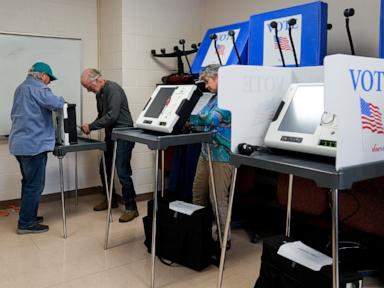
Local election officials find themselves caught in the middle. Municipal registrars are mandated by state law to maintain clean voter rolls, yet they rarely possess the training required to interpret complex federal naturalization histories. When pressure arrives from state attorneys general demanding aggressive purges of suspected non-citizen voters, local offices often comply out of fear of litigation, removing legitimate voters whose citizenship remains entirely intact.
The Cost of Verification
Defending against a denaturalization proceeding requires significant financial resources. Private immigration attorneys report charging tens of thousands of dollars to contest federal motions that allege material misrepresentation on historic paperwork. For working-class families who achieved citizenship through years of low-wage labor and steady contributions to their local economies, this financial barrier is insurmountable. Many choose not to fight, accepting administrative closure or the quiet forfeiture of their rights rather than facing financial ruin in federal court.
Meanwhile, empirical data regarding undocumented voting continues to show infinitesimal rates of occurrence. Independent studies conducted by academic institutions and bipartisan election watchdogs consistently find that non-citizens rarely risk federal prison time and automatic deportation by casting ballots. Despite these findings, the political utility of maintaining a narrative of widespread voter fraud remains high. The administrative machinery continues to grind forward, powered by the premise that every naturalized citizen must perpetually prove their right to belong.
The consequences extend far beyond the courtroom. Immigrant communities across the country are observing these shifts with growing unease. Civic participation rates in local elections among newly minted citizens are beginning to drop in jurisdictions most affected by aggressive voter purges. When the state treats citizenship as a conditional privilege rather than a permanent legal status, the fundamental promise of naturalization begins to erode from the inside out.