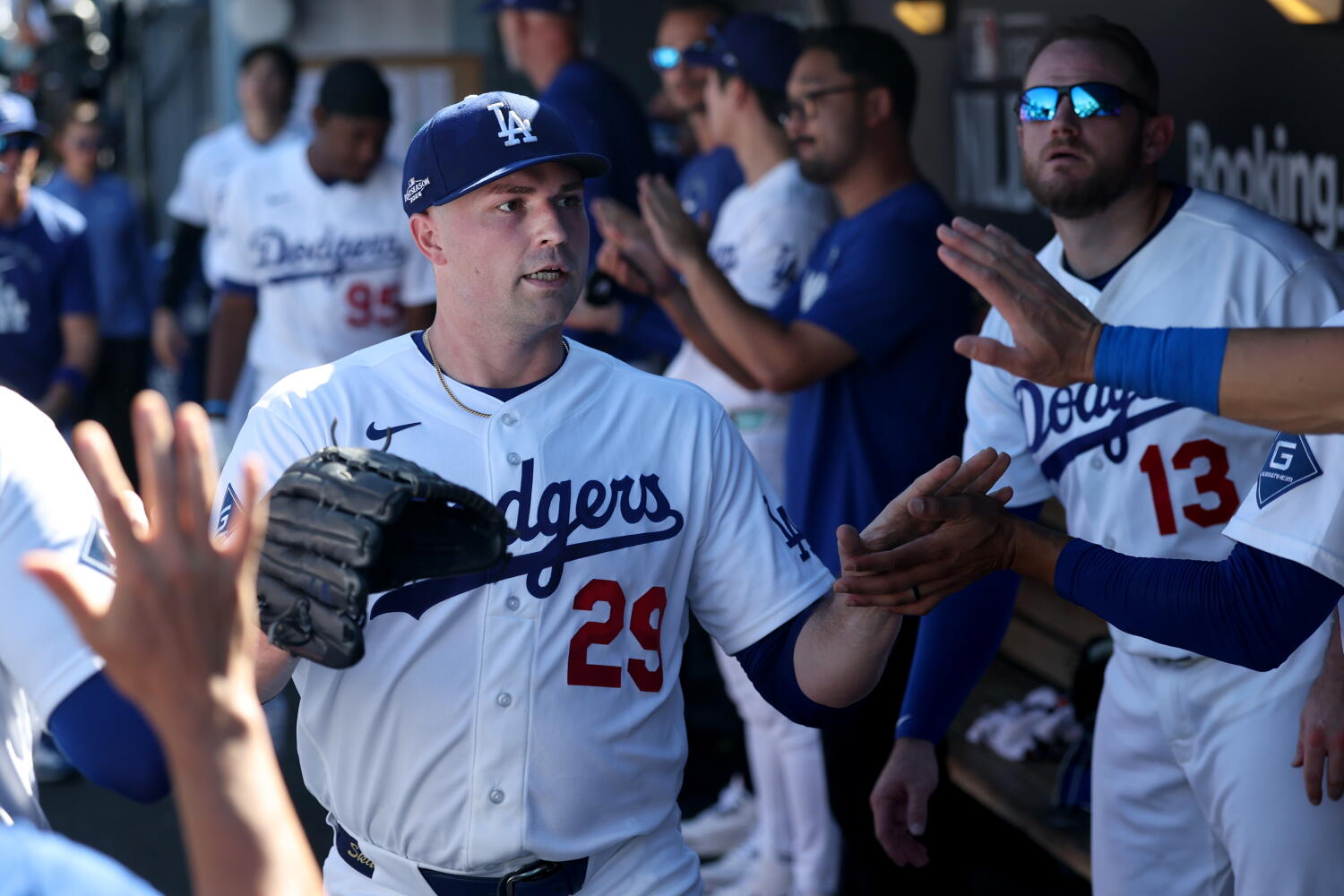
Postseason pitching is rarely a test of pure stuff; it is a stress test of sequencing, workload management, and stress-threshold efficiency. When elite arms face high-leverage environments, variance shrinks the margin of error to millimeters. Analyzing Tarik Skubal’s Game 1 performance for the Los Angeles Dodgers against the Atlanta Braves reveals a clinical masterclass in mitigating sequence entropy through fastball command and lateral plane separation.
Evaluating this outing requires deconstructing three distinct operational components: the sequence stabilization mechanism, the thermal endurance factor, and the high-leverage out-pitch economy. Also making headlines in this space: Under The Friday Night Lights And The Long Saturday Shadows.
The Mechanics of Sequence Stabilization
The primary metric of a dominant postseason start is not total strikeouts, but consecutive scoreless frames executed against high-contact batting orders. Skubal’s performance featured a pivotal structural turning point immediately after a game-opening single.
Instead of pitching into traffic with elevated stress metrics, the left-hander initiated a sequence stabilization loop by retiring 15 consecutive batters. This efficiency stems from a distinct pitch-design philosophy: Additional information into this topic are detailed by Yahoo Sports.
- Early-Count Zone Aggression: Attacking the outer third with four-seam fastballs to establish a strike-to-ball ratio that forces hitters out of their preferred pull-side launch angles.
- Velocity Banding: Varying the velocity differential between the four-seamer and the breaking repertoire by roughly 10 to 12 miles per hour, creating temporal disruption in the batter's cognitive processing window.
- Planes of Attack: Utilizing high-spin vertical rise to neutralise flat-swing planes, shifting hitters from aggressive launch states to defensive contact modes.
Environmental Variables and Thermal Endurance
Operating under extreme ambient thermal conditions introduces physical degradation markers that skew conventional performance metrics. With game-time temperatures reaching extreme heat levels, physiological fatigue typically manifests as a drop in spin rate and a contraction of the velocity band by the fourth frame.
Skubal’s output defied this degradation curve through kinetic efficiency. By shortening his arm path slightly during high-heat frames, he maintained his release point consistency. This mechanical discipline preserved his extension, ensuring that his second-tier offerings maintained sharp bite even as core body temperature regulation became a factor for both pitcher and catcher. The ability to suppress hard contact under high-density heat stress separates elite frontline starters from standard rotation arms.
Out-Pitch Economy and Leverage Management
The macro-strategy of deep postseason outings relies on pitch conservation. Throwing 15 or more pitches per frame invites bullpen reliance early in a series. Skubal’s efficiency metrics kept his pitch count manageable through six complete innings, heavily relying on a low-swing-and-miss threshold early in counts to induce weak ground-ball contact.
When counts deepened, the reliance shifted to a high-spin slider that targeted the back foot of right-handed batters or faded away from lefties. This sequencing prevents hitters from sitting on a singular velocity tier. By expanding the strike zone vertically when ahead in the count, he minimized free passes and neutralized the heart of the Braves' lineup.
Strategic Forecasting
The long-term value of a frontline starter acquired for postseason runs lies in setting a baseline standard for the rotation's sequencing strategy. As series lengthen and opposing hitters gain multiple viewings of a pitcher's repertoires, the adjustment window narrows.
To sustain this level of dominance across subsequent rounds, the tactical imperative shifts toward altering the sequencing footprint early in games—introducing breaking balls earlier in the count to disrupt aggressive first-pitch hacking. Success in deep October runs belongs to the arms that can dynamically shift their primary weapon profile before opposing analytics departments can map out a counter-strategy.
This video provides highlights of postseason baseball action matching the context of high-stakes playoff pitching dynamics.