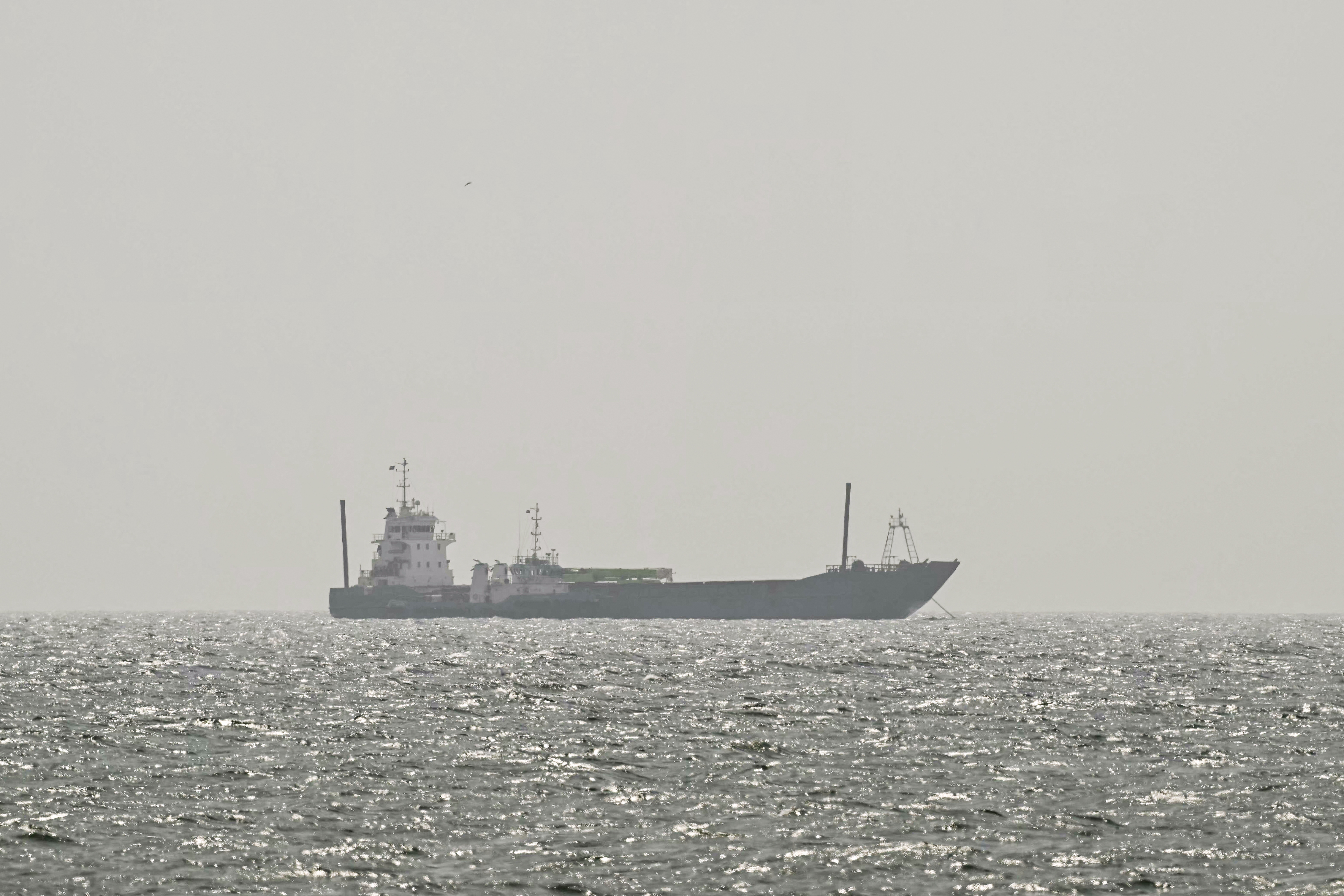
Geopolitical leverage over critical energy corridors rarely shifts through pure kinetic force; it migrates through the institutionalization of administrative choke points. The legislative framework advanced by Iran to formalize a transit control mechanism over the Strait of Hormuz represents an aggressive transition from temporary military disruption to permanent economic taxation. By structurally segmenting maritime traffic into barred entities, conditional debtors, and permitted payers, Tehran is attempting to codify a sovereign right to tax roughly twenty percent of global petroleum flows. Analyzing this mechanism requires stripping away diplomatic posturing to examine the operational math, the legal contradictions, and the systemic vulnerabilities embedded in a state-administered maritime toll system.
The Tripartite Segmentation of Transit Rights
The core structural logic of the proposed legislative package relies on a rigid classification of flag states and ownership registries. Rather than treating the maritime corridor as a neutral international strait governed by standard freedom-of-navigation principles under the United Nations Convention on the Law of the Sea, the framework introduces a tiered liability and access matrix.
The first tier consists of absolute exclusion. Vessels flagged by, owned by, or linked to Israel and the United States face a permanent transit ban. This prohibition functions as an explicit political penalty, overriding commercial calculus and converting geographic positioning into an instrument of direct state sanction.
The second tier introduces conditional access bound to historical indemnification. Ships associated with allied or hostile states are theoretically granted passage only upon the settlement of what parliamentarians term war reparations. This creates an elastic financial barrier where the cost of entry is decoupled from operational utility and tied instead to cumulative geopolitical grievances.
The third tier establishes the commercial extraction engine: standard merchant traffic permitted to transit conditional upon prior authorization and revenue sharing. Under this tier, commercial operators face administrative screening managed by domestic maritime authorities alongside significant financial levies designed to monetize the corridor.
The Economic Cost Function and Market Transmission
Imposing an unbudgeted transit tax or cargo-value percentage fee alters the microeconomics of global energy shipping overnight. Shipowners operating crude and liquefied natural gas carriers function within tight margin tolerances where voyage economics depend on predictable per-diem operational expenditures.
When a state actor introduces variable tolls—reported in instances up to multi-million-dollar flat fees or percentage charges of cargo value—the risk premium spikes exponentially. Ship operators respond through three immediate financial vectors:
The first vector is direct cost internalization or pass-through. Charterers absorb the levy and immediately reprice forward contracts, transmitting the cost directly to global refining centers and end consumers. This explains the immediate spike in global commodity benchmarks following administrative announcements from Tehran.
The second vector is insurance repricing. Marine war risk underwriters recalibrate their underwriting models when a recognized sovereign begins boarding vessels, demanding authorization, and enforcing localized tariffs. Premium spikes compound the direct toll costs, making transit through the corridor financially prohibitive even for vessels legally permitted to pass.
The third vector is asset re-routing. Because alternative high-volume pipeline bypasses—such as the East-West Pipeline in Saudi Arabia or the Habshan-Fujairah pipeline in the United Arab Emirates—possess finite nameplate capacities, they cannot absorb the entirety of displaced maritime volume. Consequently, any sustained friction in Hormuz creates a structural supply rationing effect, driving up global freight rates across all unconstrained maritime routes.
The Dual Blockade Paradox and Enforcement Mechanics
The viability of an administrative toll system depends entirely on coercive enforcement architecture. The current operational reality in the Persian Gulf is defined by a dual blockade model. On one side, external naval forces maintain restrictions targeting domestic ports. On the other side, domestic proxy forces and coastal defense batteries project surface-to-surface missile threats, deploy sea mines, and enforce boarding protocols near the territorial narrows.
This dynamic creates a systemic enforcement paradox. For a toll system to generate sustainable state revenue rather than purely episodic extortion, commercial vessels must calculate that paying the administrative fee is cheaper and safer than defiance or avoidance. However, because external powers threaten secondary sanctions against any entity remitting funds to the administering authority, shipowners face a catastrophic compliance dilemma. Complying with regional authorities triggers regulatory penalties from western financial systems; defying them triggers kinetic interception or asset seizure.
The structural mechanics thus transform the strait from a logistical conduit into a localized bargaining chip. The allocation of projected revenues—earmarked partially for military infrastructure development and partially for public fiscal stabilization—signals that the mechanism is designed to institutionalize a permanent rent-seeking revenue stream. By anchoring state budgeting to maritime transit taxes, the framework locks the administering government into maintaining high threat levels to justify the continued collection of security-linked rents.
Strategic Execution and Systemic Vulnerabilities
Evaluating the long-term viability of the proposed toll structure exposes fundamental fragilities. Administrative extraction models collapse when the targeted volume drops below the threshold required to sustain the enforcement apparatus. If the combined effect of secondary sanctions, naval escort operations, and alternative routing succeeds in starving the corridor of third-party traffic, the revenue projections fail.
The strategic play for commercial operators and consumer states centers on asset pooling and coordinated naval protection to systematically erode the enforcement bandwidth of the coastal authority. By refusing to normalize the legal precedent of sovereign transit taxation in international straits, maritime nations aim to prevent a dangerous systemic precedent where every geographical choke point becomes subject to localized fiscal holdups. The ultimate resolution will not be found in diplomatic compliance with unilateral invoicing, but in the relentless technical optimization of convoy security, dynamic insurance pooling, and the rapid expansion of overland bypass infrastructure to bypass the Hormuz toll architecture entirely.
U.S. Reinstates Naval Blockade, Announces 20% Toll on Strait of Hormuz | Iran Conflict
This video provides contemporary context regarding the ongoing geopolitical maneuverings and conflicting announcements surrounding naval blockades and transit toll implementations in the Strait of Hormuz.
http://googleusercontent.com/youtube_content/1

