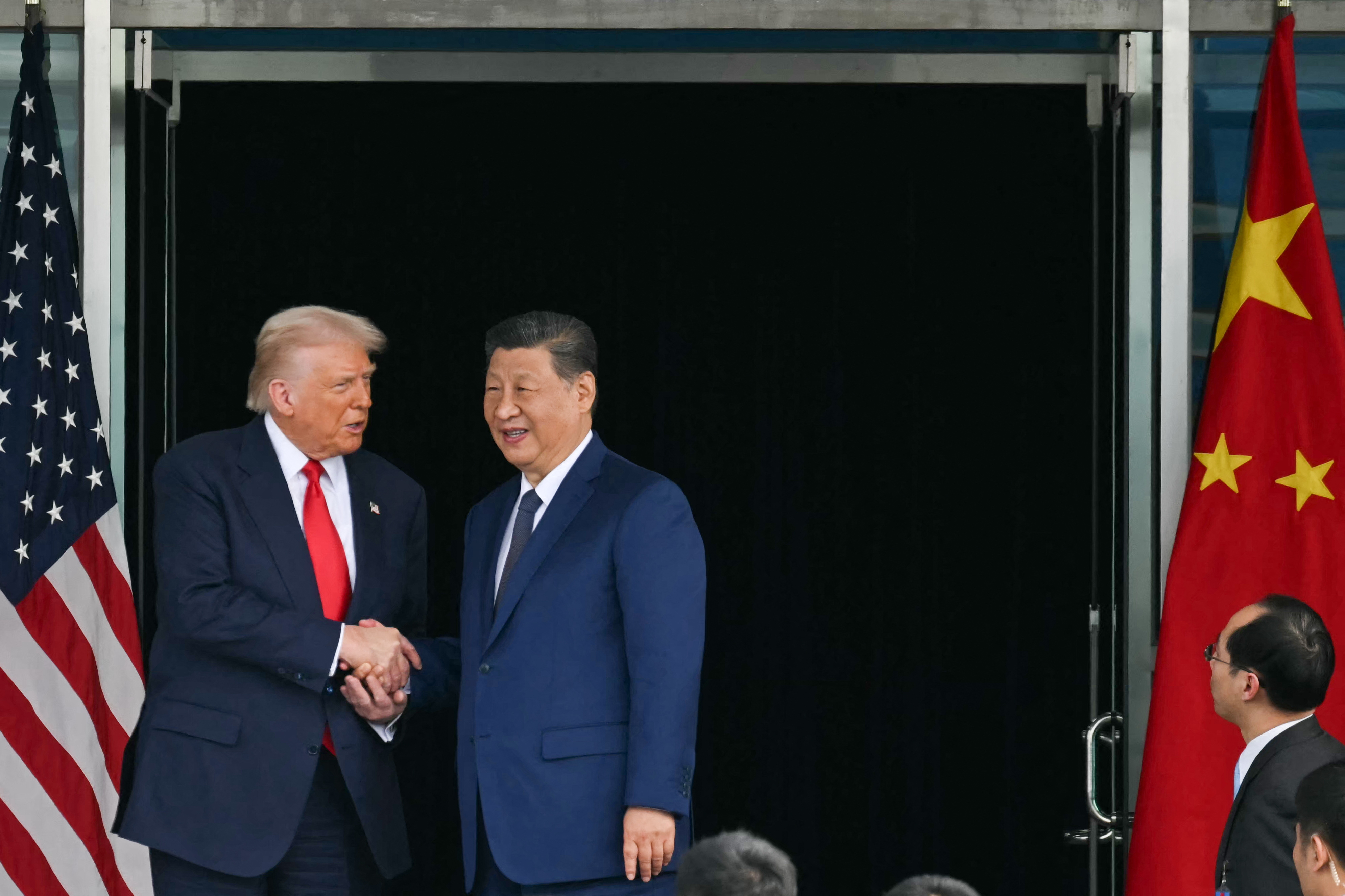
High-level bilateral engagements between dominant geopolitical powers rarely function as mechanisms for immediate problem-solving. Instead, state summits serve as calibration exercises designed to establish boundaries, signal structural leverage, and manage systematic friction without triggering uncontrolled escalation. The recent summit between US President Donald Trump and Chinese President Xi Jinping exemplifies this dynamic. Behind the public display of personal warmth and political ceremony lies a calculated strategy of institutionalized stalemate, where both nations prioritize predictable competition over volatile resolution.
The Three Pillars of Summit Utility
Analyzing state-level summits through an operational lens reveals that diplomatic encounters yield utility across three distinct vectors, regardless of whether formal treaties are executed. You might also find this related story useful: The Myth of Iraq’s Breakup Hides a Far More Dangerous Reality in Baghdad.
- Strategic Escalation Management: Establishing direct communications to mitigate the risk of accidental conflict stemming from military proximity or economic retaliations.
- Domestic Horizon Scanning: Signalling domestic stability and leadership authority to internal constituencies while securing short-term economic pauses.
- Regulatory and Technological Frontier Boundary Setting: Defining non-negotiable operational domains in critical sectors, notably artificial intelligence and high-technology export controls.
The headline outcomes of the Washington meeting—specifically the agreement to extend a bilateral trade truce by two months alongside symbolic commitments regarding technological oversight—reflect a deliberate choice to institutionalize managed friction rather than pursue structural reconciliation.
The Cost Function of Bilateral Truces
Short-term economic extensions, such as sixty-day trade war pauses, do not eliminate systemic market friction; they merely change its financial pricing structure. When sovereign states opt for incremental truce extensions rather than comprehensive trade policy reforms, the resulting economic impact operates through specific cost functions: As highlighted in recent coverage by Associated Press, the effects are significant.
- Capital Allocation Uncertainty: Corporations delay long-term capital expenditure projects due to unpredictable tariff schedules and regulatory risks, reducing productive capacity growth across global supply chains.
- Supply Chain Bifurcation Costs: Firms incur structural overhead by dual-sourcing components and establishing redundant operational hubs to buffer against sudden policy shifts upon truce expiration.
- Asymmetric Arbitrage Exploitation: Market actors utilize temporary policy freezes to accelerate short-term inventory stocking, distorting standard trade flow metrics and artificially inflating quarterly import data.
A short extension signals that neither economy is prepared to absorb the immediate macroeconomic shock of maximum tariff enforcement. However, it simultaneously confirms that neither administration possesses the internal political room required to make the structural concessions necessary for a lasting trade agreement.
+-----------------------------------------------------------------------+
|                 MECHANICS OF BILATERAL EQUILIBRIUM                   |
+-----------------------------------------------------------------------+
|  STRATEGIC INCENTIVE                 POLICY EXECUTION                 |
|  - Domestic political stability      -> Symbolic diplomatic warmth     |
|  - Avoid immediate economic shock    -> Short-term tariff extensions   |
|  - Sovereign technological autonomy  -> Unilateral export boundaries   |
+-----------------------------------------------------------------------+
Strategic Asymmetry in Emerging Technologies
The intersection of artificial intelligence and national security represents a fundamental divergence in sovereign policy frameworks. The structural tension surrounding state regulation versus market autonomy prevents true convergence on global governance models.
The assertion that emerging technologies like artificial intelligence must remain under human control highlights an underlying strategic asymmetry. For open market economies, state enforcement of artificial intelligence controls presents complex regulatory challenges regarding private sector compliance, open-source innovation, and capital access. Conversely, state-directed economies view technological governance as a centralized security imperative.
Consequently, high-level agreements regarding technology oversight remain aspirational. Neither power will yield structural advantages in compute capacity, advanced semiconductor manufacturing, or algorithmic architecture in exchange for bilateral goodwill. Strategic stability in advanced technology is maintained not through international accords, but through dynamic deterrence—where targeted export restrictions, domestic subsidies, and supply chain reshoring function as self-enforcing boundaries.
Executive Action Plan for Geopolitical Risk Isolation
To navigate persistent geopolitical volatility between major industrial economies, corporate leadership and institutional strategists must abandon assumptions of structural convergence and implement operational resilience frameworks.
- Audit Supply Chain Vulnerabilities: Map multi-tiered supplier networks to identify single-point geographic dependencies for raw materials, critical components, and manufacturing capacity.
- Stress-Test Tariff Scenarios: Model corporate earnings and margin compression under varying tariff escalation frameworks, establishing clear cost-pass-through thresholds for end consumers.
- Decouple Critical Data Infrastructure: Separate core intellectual property, customer data, and algorithmic assets across distinct jurisdiction-specific architectures to maintain regulatory compliance under expanding data sovereignty laws.
- Establish Dual Operational Footprints: Diversify production capacity into third-party neutral jurisdictions to preserve market access across competing trade blocs.