Power has a distinct sound. In modern corridors, it does not arrive with the heavy tramp of boots or the dramatic roll of drums. It hums. It clicks through fiber-optic cables, echoes quietly in the polished marble lobbies of private equity firms, and flashes across smartphone screens in the form of newly minted digital tokens.
Consider the trajectory. You might also find this similar coverage interesting: Stop Obsessing Over Whether Kevin Warsh Will Hike Rates Today.
For decades, the intersection of public office and private enterprise was governed by a set of unwritten guardrails—fragile, perhaps, but treated with a baseline of institutional reverence. Assets went into blind trusts. Walls were erected between governance and personal enrichment. Those walls have not merely been breached; they have been paved over and turned into toll roads.
The mechanics of this transformation are stark. When a political dynasty expands its footprint into emerging asset classes—cryptocurrency markets, digital tokens, international real estate licensing, and defense-adjacent technology—the lines separating the affairs of state from family balance sheets blur beyond recognition. Public policy shifts. Regulatory approaches soften toward digital assets. Sovereign wealth funds from foreign capitals pour billions into private ventures. As highlighted in latest reports by Bloomberg, the implications are significant.
And the family grows exponentially richer.
To understand how this works in practice, look away from the Washington headlines and examine the micro-transactions. Imagine a mid-level investor sitting in a high-rise apartment in Singapore or Dubai. For this individual, access is the ultimate currency. Buying into a digital token or funding a private equity vehicle is not merely an investment; it is a transactional handshake with proximity. When millions—or billions—flow from foreign sovereign funds into enterprises tied directly to the inner circle of the American presidency, the return on investment is measured not just in yield, but in geopolitical alignment.
The numbers defy traditional historical comparison. Estimates tracking the expansion of wealth among presidential relatives point to surges where net worths multiply several times over within remarkably short windows. Digital currency initiatives pull in hundreds of millions in fees, while overseas development deals multiply. Private equity firms secure massive foreign backing mere months after their founders exit official advisory roles.
None of this happens in a vacuum. Every regulatory exemption granted to decentralized finance, every trade adjustment negotiated with a Middle Eastern partner, and every strategic pivot toward digital currencies carries a dual identity. It is official statecraft. It is also private portfolio management.
The defenders argue that competence and commercial acumen should not be penalized simply because a family member holds the highest office. They frame these ventures as entrepreneurial triumphs, proof of a disruptive business model shaking up traditional elites.
Yet this misses the foundational unease shared by citizens across the political spectrum. The anxiety is not merely about wealth accumulation. It is about the corrosion of trust. When the executive branch shapes rules that directly inflate the value of family-held digital assets, the public is left to wonder where the national interest ends and the private ledger begins.
History suggests that unchecked commercialization of political power leaves a long shadow. Institutions do not usually collapse in a single dramatic moment. They wear down. They hollow out, transaction by transaction, until the public space is entirely privatized.
The ledger is open. The transactions are ledgered on public blockchains and filed in mandatory disclosures. The machinery of modern dynasty building runs smoother, faster, and more profitably than ever before.
Nothing is hidden. Everything is on display.
And the quiet hum of the toll road continues.
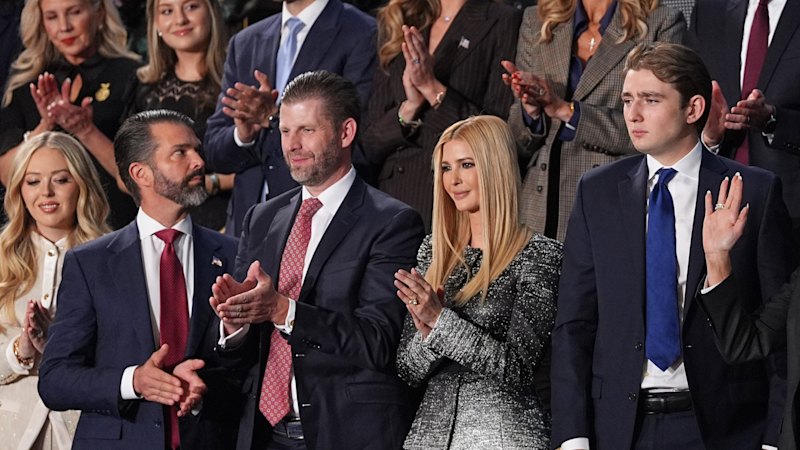
Trump's Sons Expand Business Into Drones, Crypto & Minerals | Race To Power
This video examines how the Trump family has expanded its business ventures into emerging sectors like cryptocurrency, drones, and global trade.
http://googleusercontent.com/youtube_content/1


..jpg)