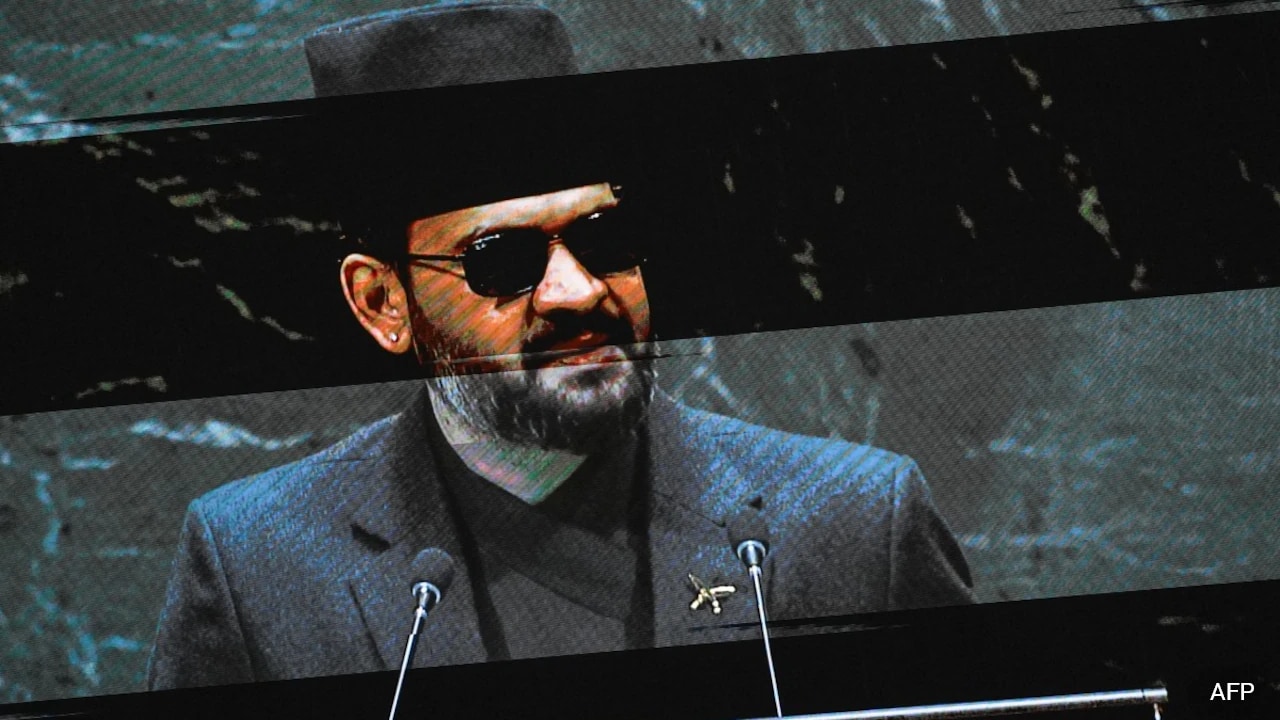
Security guarantees between major industrial powers and regional security providers are frequently misdiagnosed as unilateral shields. In practice, formalizing a bilateral defence pact functions as an automated circuit breaker for regional conflict, distributing systemic shockwaves through global energy corridors, sovereign balance sheets, and proxy networks. When examining the prospective security architecture between Riyadh and Washington, analysts routinely lean on alarmist tropes regarding direct superpower entanglements. This superficial diagnosis obscures the structural mechanics at play. The true risk profile is not a sudden, uncalculated stumble into total war, but a structural hardening of regional fault lines that narrows the diplomatic margin of error for all participants.
The Tripartite Risk Vector
To understand how a formal bilateral defence agreement alters the calculus of deterrence, we must deconstruct the regional security complex into three distinct operational domains: the primary deterrence threshold, the proxy asymmetry trap, and the economic feedback loop. Also making waves in related news: Inside the Secret Blueprint to Freeze Ukraine This Winter.
The primary deterrence threshold governs how conventional adversaries calculate risk. A formal security treaty alters the credibility matrix of conventional military retaliation. Without an explicit mutual defence clause, regional actors operating below the threshold of total war—such as state-sponsored militias or asymmetric maritime disruptors—calculate that their provocations will trigger isolated, localized counter-responses. A formalized pact elevates the perceived cost of these provocations by introducing the deterrent weight of a global superpower's military-industrial apparatus.
However, this elevation creates a perverse operational incentive known as the proxy asymmetry trap. State actors seeking to counter a reinforced Saudi-US alliance cannot engage in symmetric conventional warfare without inviting disproportionate destruction. Consequently, they migrate further down the spectrum of hybrid warfare. Cyber operations, clandestine maritime sabotage against critical infrastructure, and long-range precision strikes via non-state proxies become the primary instruments of friction. The defence pact, designed to deter aggression, inadvertently accelerates the institutionalization of grey-zone warfare, where the lines of attribution are systematically blurred to prevent the treaty's activation criteria from being legally met. More details regarding the matter are covered by The Washington Post.
The economic feedback loop completes the tri-vector model. Energy markets operate on forward-looking risk premiums rather than current supply metrics alone. When a security pact ties the structural stability of the world's leading crude exporter to the broader geopolitical posture of Washington, any localized escalation immediately reprices global capital. Insurance rates for maritime transit through the Persian Gulf and the Bab el-Mandeb Strait react instantaneously to shifts in diplomatic signaling. The cost is thus paid not merely in ordnance, but in structural inflation and capital flight across emerging regional markets.
The Asymmetric Cost Function
Evaluating the efficacy of mutual security frameworks requires moving past binary notions of peace versus war. We must examine the continuous cost function borne by each participant.
For Riyadh, the core objective of pursuing a formal security pact is risk transfer. Decades of asymmetric threats—exemplified by the 2019 drone and cruise missile strikes on critical processing facilities at Abqaiq and Khurais—demonstrated the limitations of indigenous air defence umbrellas against sophisticated, low-cost aerial vectors. By anchoring its national security to a superpower guarantor, the Kingdom seeks to impose prohibitive political and military costs on any adversary contemplating strategic sabotage.
Yet, this strategy introduces a severe moral hazard problem. A guarantee backed by external military power can inadvertently encourage a more assertive or independent regional foreign policy, operating under the assumption that the guarantor will underwrite the downstream consequences of tactical friction. This divergence of strategic interests between the regional partner and the global superpower creates chronic friction. Washington must balance its commitment to regional stability with its broader global grand strategy, which increasingly prioritizes great power competition in other theaters, such as the Indo-Pacific.
For regional adversaries, particularly Iran and its network of aligned militias, a formal US-Saudi pact forces a strict recalculation of their offensive doctrine. Direct confrontation remains structurally prohibitive. Therefore, the strategic response focuses on exploiting the seams of the alliance. By maintaining a constant state of controlled escalation—kept deliberately below the threshold that would compel Washington to execute a massive retaliatory campaign—adversaries can impose a continuous bleeding strategy on the economic diversification plans of the Kingdom, such as Vision 2030. Foreign direct investment requires sovereign predictability; sustained regional volatility directly disrupts this variable.
Strategic Interdependence and Systemic Bottlenecks
The structural flaw in viewing defence pacts as mere tripwires lies in ignoring the logistics of global supply chains and critical infrastructure nodes. The security of the Arabian Peninsula is inextricably linked to maritime chokepoints.
When regional tensions rise under the umbrella of a formalized security arrangement, the probability of maritime interdiction increases. The economic anatomy of the region rests on continuous flow: crude oil, liquefied natural gas, telecommunication cables, and containerized consumer goods. A security architecture that deters total war but fails to suppress grey-zone harassment results in chronic supply chain friction.
Insurance underwriters respond to this friction by introducing war-risk surcharges. These surcharges cascade through international trade networks, raising input costs for manufacturing economies globally. The security pact, conceived as a regional stabilizer, thus acts as a transmission belt for localized instability into the global macroeconomy.
Furthermore, the integration of advanced military hardware mandates long-term technical dependency. A modern defence architecture is not a static document signed by diplomats; it is a continuous software, maintenance, and intelligence-sharing ecosystem. This deep technological entanglement means that a security pact binds the signatories' defense procurement, intelligence architectures, and operational doctrines together for decades. This locks out alternative suppliers and creates rigid geopolitical alignments that resist rapid diplomatic realignment.
Strategic Execution and Downstream Trajectories
The path forward for regional stability does not rely on the illusion of absolute security through bilateral tripwires, nor does it rest on precarious strategic ambiguity. The structural reality demands the establishment of functional de-escalation channels that operate independently of superpower guarantees.
To mitigate the inherent volatility of a reinforced defence pact, regional policy must prioritize minilateral diplomatic frameworks that directly engage competing regional powers on maritime security, freedom of navigation, and infrastructure protection. Relying exclusively on external military deterrence without addressing the underlying political drivers of regional friction ensures a permanent state of high-stakes equilibrium.
The primary operational imperative for decision-makers is to decouple economic transformation agendas from security dependencies. By hardening critical infrastructure against asymmetric disruptions and diversifying energy export routes away from vulnerable maritime corridors, regional powers can insulate their domestic development goals from the inevitable shocks of great power competition. The ultimate metric of success for any modern security architecture is not whether it deters total war, but whether it prevents grey-zone attrition from hollowing out the economic future of the state it seeks to protect.