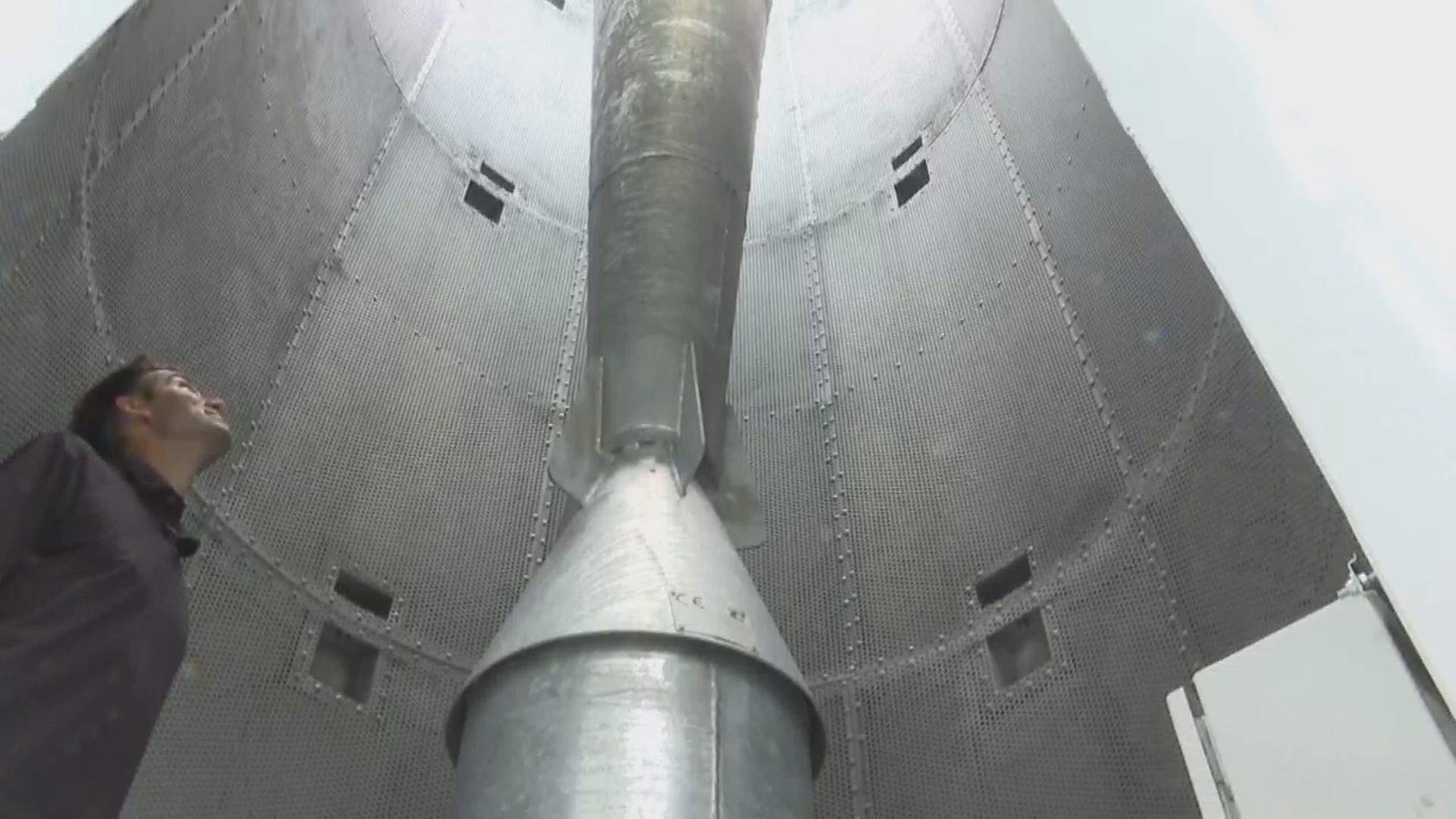
Every summer, rural orchards echo with a booming sound reminiscent of a poorly managed war zone. Across Quebec and parts of Europe, fruit growers scramble to defend their precious apple crops from icy projectiles falling from the sky. They point massive, megaphone-shaped metal tubes toward the clouds, blast acetylene gas into the combustion chamber, and cross their fingers.
They call this modern agricultural defense. I call it an expensive acoustic superstition that belongs in the Middle Ages.
For decades, the media has run the same romanticized piece of fluff about the plucky farmer battling the elements with sonic booms. The narrative goes that shockwaves disrupt the formation of ice crystals, turning destructive hailstones into harmless rain or slush before they hit the ground. It sounds brilliant. It makes for great television. It even gives tourists something weird to talk about over local cider.
There is just one slight problem. It is complete nonsense.
Physicists, meteorologists, and anyone who has ever cracked open a basic thermodynamics textbook have known the truth for years. The energy required to disrupt a developing thunderstorm via ground-level sound waves is astronomical—orders of magnitude greater than what a single propane- or acetylene-powered cannon sitting in a mud patch could ever produce. You are essentially trying to stop a freight train by yelling really loudly at it.
Yet, growers keep buying them. Why? Because hope is a powerful commodity, and looking at a smoking metal horn makes people feel like they are fighting back against Mother Nature, rather than quietly losing to her.
Let us dismantle the illusion piece by piece.
The Physics of Failure
To understand why anti-hail cannons fail, you first have to understand what is actually happening thousands of feet above the orchard. A hailstone does not form because a cloud casually decides to drop frozen water. It is born inside a severe convective updraft—a raging pillar of warm, moist air rushing upward at speeds that can exceed fifty miles per hour.
Inside this atmospheric elevator, supercooled water droplets collide with ice particles, freezing on contact and circulating multiple times until gravity finally drags the heavy stone down to earth.
Now, look back down at the ground. Look at that shiny metal cannon worth tens of thousands of dollars.
When the device fires, it generates a sharp acoustic wave that travels upward through the troposphere. Proponents of these systems claim the shockwave shatters the ice embryo before it grows. But sound waves lose energy rapidly as they travel through the atmosphere due to spherical divergence and atmospheric attenuation. By the time that shockwave reaches the freezing level of a cumulonimbus cloud—often two to three miles up—its pressure amplitude has degraded to next to nothing. It lacks the force to crack an egg, let alone a dense pellet of rime ice.
If sound waves could disrupt hail, jet aircraft breaking the sound barrier overhead would clear the skies instantly. Instead, commercial airplanes regularly encounter severe hail damage precisely because shockwaves do not disintegrate ice.
Controlled scientific studies have repeatedly failed to find any statistically significant reduction in hail damage resulting from the use of sonic cannons. In countries like France and Italy, where these devices have faced rigorous evaluation by agricultural research institutes, researchers have classified them as ineffective placebos. Yet the marketing machine rolls on, preying on the very real anxiety of growers watching their entire annual yield hang unprotected from brittle branches.
The Cost of Psychological Comfort
Agriculture is a high-stakes gamble. You invest months of labor, fertilizer, water, and capital into a crop that can be wiped out in four minutes by a localized weather event. That vulnerability drives rational business operators to make deeply irrational purchasing decisions.
An anti-hail cannon setup easily runs anywhere from thirty to sixty thousand dollars, plus ongoing maintenance and fuel costs. Multiply that across thousands of acres, and you are looking at millions of dollars diverted away from actual risk mitigation strategies.
This is where the business case falls completely apart. When you sink capital into a technology that relies on magical thinking, you miss out on proven capital allocation. You are not just wasting money on the cannon itself; you are suffering opportunity costs. That cash could have funded high-grade physical protection, diversified crop varieties, or advanced localized risk transfer mechanisms.
Imagine a scenario where a mid-sized orchard owner decides to skip the acoustic theater and look at the actual balance sheet. They realize that spending fifty grand on a noise-maker is a desperate tax on anxiety. They realize that their neighbors are not protecting their apples either; they are just participating in a collective delusion designed to help them sleep better at night.
That sleep comes at a steep price. When the severe storm finally rolls through and reduces the orchard to bruised pulp, the cannon owner loses the crop anyway. Now they are out the value of the harvest and the cost of the useless machinery sitting in the grass, annoying the local township with incessant booming noises every time a dark cloud appears.
What Actually Works
If sonic booms are useless, what is the alternative? How do you protect millions of dollars of fruit from falling ice without resorting to folklore?
The answer is brutally unglamorous: physical exclusion.
Anti-hail netting is the gold standard of modern fruit production, and it has been for years. While nets require an upfront structural investment for poles, cables, and high-density polyethylene mesh, they offer a tangible, physics-based solution. They create a physical barrier between the fruit and the ice. When hail falls, it bounces off the net and rolls safely into the alleyways between the tree rows.
Critics of netting always point to the initial capital expenditure and the labor required to roll and unroll the systems seasonally. It is true. Netting is expensive. It changes the microclimate of the orchard slightly, requiring adjustments to pruning and pest management.
But netting works. It operates on the simple, undeniable law of solid mechanics: physical objects cannot occupy the same space at the same time. A piece of ice cannot smash an apple if a woven polymer barrier is blocking its path.
Compare that to the cannon salesman who promises that vibrations will save your harvest. One is engineering; the other is salesmanship disguised as agronomy.
Beyond netting, smart growers are looking at geographic diversification and crop insurance restructuring. Instead of concentrating all assets in a single micro-region vulnerable to specific storm corridors, progressive agricultural enterprises spread their risk across multiple parcels. They utilize parametric insurance products that pay out automatically based on radar data rather than protracted claims adjusters inspecting bruised fruit weeks after the fact.
The Noise Complaint Epidemic
There is another dimension to the anti-hail cannon debate that rarely gets discussed in glowing profiles of rural innovation: the neighbors.
Orchards do not exist in a vacuum. They are increasingly bordered by residential developments, rural subdivisions, and tourism infrastructure. When a farmer fires an acetylene cannon every six seconds for two hours straight during a summer squall, the entire countryside vibrates.
These devices are loud. They produce sharp, concussive blasts that rattle windows, terrify livestock, and drive local residents insane. Municipalities across agricultural belts are growing increasingly hostile toward the practice. Lawsuits, noise ordinances, and bitter community feuds are frequently the only tangible output of these installations.
You have a technology that does not stop hail, costs a fortune, and turns the local community against the farming operation. It is hard to imagine a worse value proposition in modern business.
The Hard Truth About Risk
The fundamental issue in contemporary farming is not a lack of gadgets; it is a cultural aversion to accepting uncontrollable risk.
We live in an era that demands software solutions, automated alerts, and mechanical interventions for every natural variable. When nature refuses to cooperate, we want to push a button or light a fuse to force compliance.
Some things cannot be bullied. You cannot intimidate a thunderstorm with loud noises.
Growers need to stop looking for shortcuts that massage their psychological need for control and start investing in boring, heavy-duty infrastructure that actually handles the physics of the problem. Tear down the metal horns. Stop waking up the county at midnight to blast propane into the atmosphere. Accept that weather is a physical force, not a psychological negotiation.
Cover the trees. Insure the rest.
Stop listening to the vendors selling acoustic snake oil, and start looking at the balance sheet. If your primary defense against nature is making a lot of noise, you have already lost the harvest.