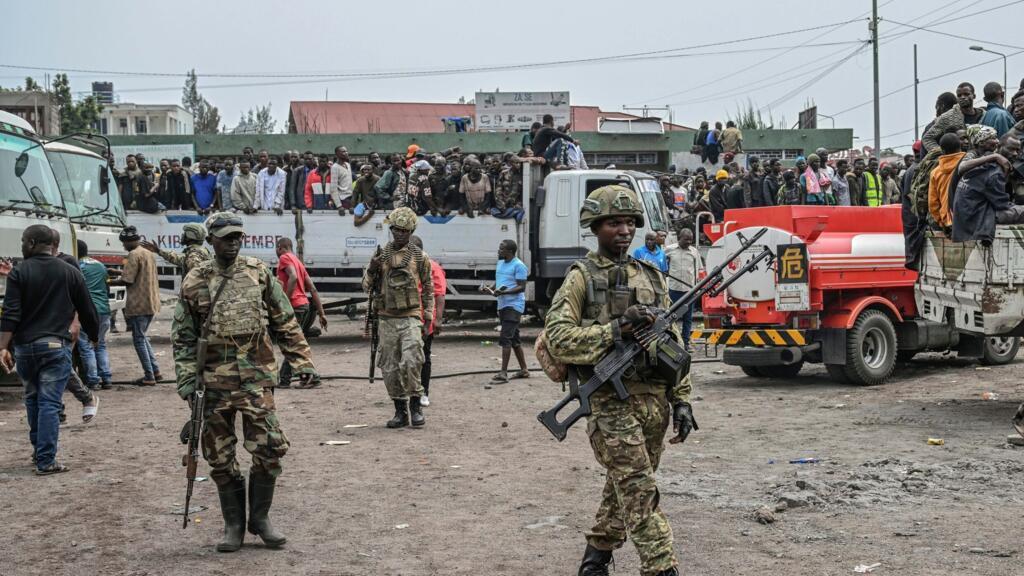
International diplomats love a good ceasefire verification mission. Give them a patch, a convoy of white land cruisers, and a clipboard, and they will proudly march into eastern Democratic Republic of Congo as if bureaucratic optimism can halt mortar fire.
The consensus narrative tells you that monitoring groups, observer teams, and international oversight are the missing puzzle pieces. If we just count the violations, write enough stern reports, and station enough mediators in Goma, the warlords will suddenly rediscover their civic conscience.
It is a comforting delusion. It is also completely wrong.
Every single verification mechanism deployed across the Kivus over the past two decades has shared a fatal flaw: they treat symptoms as root causes. They monitor ceasefires that exist only on paper while ignoring the entrenched political economies of extraction, land control, and regional proxy warfare that make violence entirely rational for the actors involved.
The Logistics of Impotence
Let us look at how these missions operate on the ground. You place foreign military observers in luxury hotels in regional hubs, task them with investigating breaches in areas controlled by heavily armed non-state actors, and expect transparency.
When a clash occurs, the verification team requests clearance. The clearance takes forty-eight hours. By the time they arrive at the site, the bodies are buried, the frontlines have shifted three kilometers, and local commanders have rehearsed their alibis.
I have watched organizations spend millions of dollars on satellite imagery and monitoring protocols while local populations continue to bear the brunt of militia taxation and displacement. The monitoring apparatus does not deter violence; it merely documents it with high-resolution footnotes.
To understand why these missions fail, you have to stop looking at the Kivu conflict as a localized security breakdown. It is a mature, resilient market.
+-------------------------------------------------------+
|              THE CONFLICT MARKET CYCLE                |
+-------------------------------------------------------+
|  Militia Mobilization -> Smuggling Networks Active    |
|           |                                           |
|           v                                           |
|  International Outcry -> Ceasefire Agreement Signed   |
|           |                                           |
|           v                                           |
|  Verification Mission Deploys -> Extraction Continues |
+-------------------------------------------------------+
The Economics of Continuous Chaos
minerales like coltan, cassiterite, and gold do not mine themselves, nor do they find their way to international supply chains through accidental friction. They move through intricate transnational networks connecting rural extraction sites to regional trading hubs and global markets.
When a ceasefire verification mission focuses purely on troop movements and buffer zones, it completely ignores the ledger books.
Militias and elite military units alike do not fight primarily out of ancient ethnic hatreds, though those hatreds are expertly stoked for recruitment. They fight because the war economy generates immense short-term cash flow. Controlling a mining pit, a tax roadblock, or a border crossing yields daily dividends that no diplomatic reprimand can compete with.
When an observer team arrives to verify a troop pullback, the economic operators simply shift their supply routes or rebrand their uniforms. The guns stay hot because the financial incentives for cooling them down remain close to zero.
Dismantling the Neutrality Myth
Another persistent myth is that external monitors can remain neutral arbiters in a theater where neutrality is an illusion.
In eastern Congo, every institutional actor, whether state military, regional force, or international body, is viewed with deep suspicion by local communities. When a verification mission relies on the logistics and security cooperation of the Congolese state army (FARDC) or foreign allied forces, its perceived impartiality evaporates instantly.
Local populations know that state security forces are often implicated in the very abuses, protection rackets, and supply chains the monitors are supposed to be investigating. By partnering with compromised domestic institutions for protection and transport, international missions compromise their own data integrity before the first patrol even rolls out.
If you want real accountability, you do not ask the fox to sign off on the census of the henhouse. Yet that is precisely what diplomatic protocols mandate year after year.
The Alternative Nobody Wants to Fund
If monitoring missions are useless theater, what actually works? The answer is brutally unglamorous and entirely unpalatable to foreign ministries looking for quick photo ops.
First, choke the laundering networks. Until international consumer countries aggressively enforce due diligence on mineral supply chains at the refinery and export levels, smuggling remains profitable. As long as raw materials from conflict zones can be laundered through neighboring countries with forged paperwork, warlords will have the cash to buy bullets.
Second, stop subsidizing impunity through diplomatic hand-wringing. True deterrence requires targeted, merciless financial penalties against the transnational facilitators—bankers, brokers, and corrupt officials—who turn war loot into legitimate capital in foreign capitals.
Until the international community shifts its focus from counting shell casings to tracking bank accounts, every new verification mission is just an expensive exercise in rearranging deck chairs on a sinking ship.
Stop funding the clipboard brigade. Go after the money.


.png?width=1200&auto=webp&trim=0%2C0%2C0%2C0)