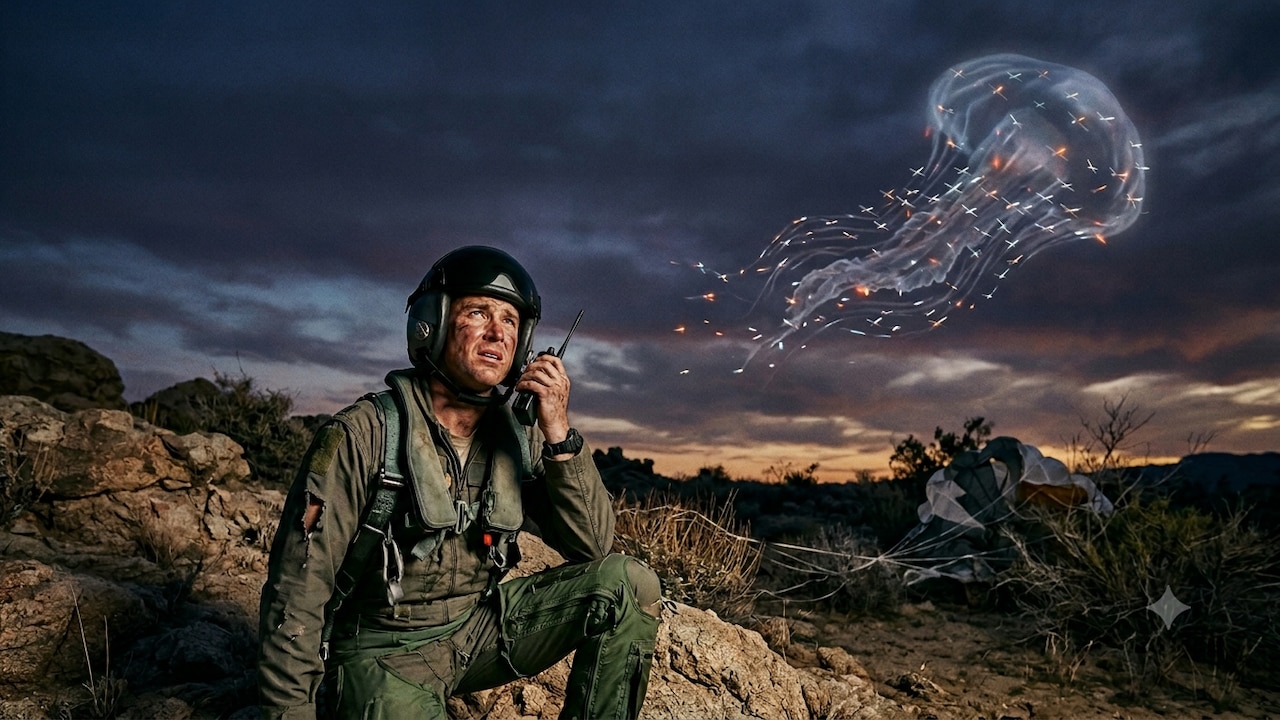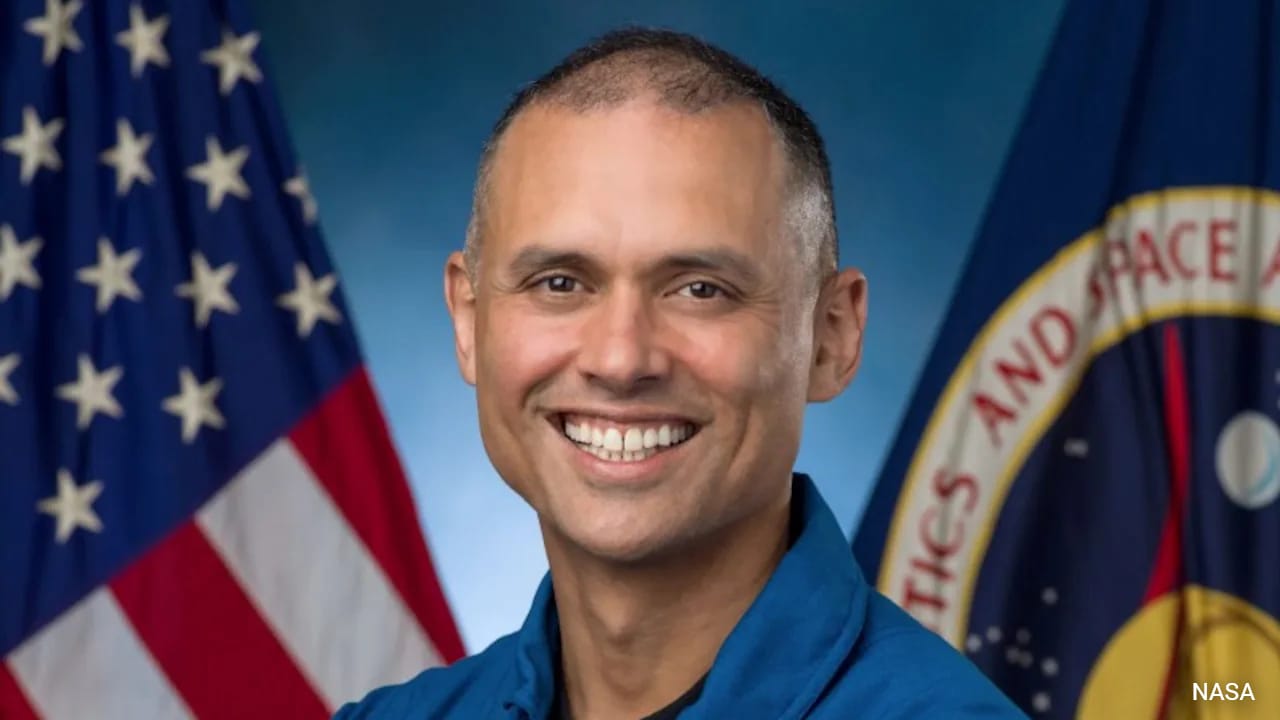
You don't get selected by NASA to ride a rocket into orbit by accident. Most people think astronauts spend their lives locked in simulators or military cockpits, slowly checking off boxes until their names get called. But look closely at the career of Anil Menon and you will find something entirely different. It isn't just about a guy who went from studying polio in India to sitting on top of a SpaceX rocket booster. It is a roadmap for how medical care is changing under the absolute worst conditions imaginable.
With Menon scheduled to launch toward the International Space Station as a flight engineer for Expedition 75, the conversation shouldn't just be about his childhood or his roots. It needs to be about why NASA picked an emergency and wilderness doctor to manage the terrifying logistics of long-duration spaceflight. If you want to understand what it takes to keep humans alive on the Moon or Mars, you have to look at the exact intersections of medicine and engineering that Menon spent decades mapping out.
The Myth of the Straight Line to Space
A common misconception about Indian-origin astronauts is that they all follow the exact same pipeline of high-pressure engineering degrees straight into a space agency dashboard. It makes for a clean narrative, but it misses the point completely. Menon wasn't even born in India; his parents were Indian and Ukrainian immigrants who settled in Minneapolis, Minnesota. The real turning point in his life wasn't a sudden epiphany about spacesuits. It was a messy, boots-on-the-ground year spent in India as a Rotary Ambassadorial Scholar, working directly on polio vaccination campaigns.
That experience taught him how to fix broken systems under massive logistical strain. When you are trying to deliver temperature-sensitive vaccines to remote areas, you learn to think like an engineer while acting like a doctor.
Instead of picking just one path, he chose both. He went to Harvard for neurobiology, then hit Stanford for a master's degree in mechanical engineering before finishing his medical degree there. Most people would look at that track and call it chaotic. In reality, it was the ultimate training ground for aerospace medicine. He was literally coding soft tissue models at NASA Ames Research Center while learning how to stitch wounds in an emergency room.
When Wilderness Medicine Meets Rocket Launches
If your heart stops on Earth, an ambulance might get you to a level-one trauma center in ten minutes. If your appendix bursts on the International Space Station, you are hours away from help, assuming a capsule is even docked and ready for an emergency re-entry. That is why NASA shifted its focus toward doctors who specialize in wilderness and tactical medicine.
Menon didn't just study this stuff in clean university libraries. He lived it as a first responder during the devastating 2010 earthquake in Haiti and the 2015 earthquake in Nepal. He was on the tarmac caring for victims during the horrific 2011 Reno Air Show crash. He spent time with the Himalayan Rescue Association taking care of climbers struggling to breathe on Mount Everest.
When you look at those environments, they share the exact same challenges as a leaking space capsule:
- Total isolation from major hospital networks.
- Severe limitation on available medical equipment.
- Zero room for hesitation when a critical patient is crashing.
The U.S. Air Force noticed this early on, putting him in the cockpit of F-15 fighter jets for over 100 sorties and putting him in charge of critical care air transport teams moving wounded soldiers out of combat zones. By the time he transitioned to working as a NASA flight surgeon in 2014, he already understood exactly how the human body falls apart when it is pushed to its physical limits.
Building the SpaceX Medical Playbook from Scratch
You cannot talk about modern space travel without talking about commercial industry, and Menon was right at the center of that shift. In 2018, SpaceX hired him as their very first flight surgeon. Think about what that actually means. There was no manual for how a private company should handle the medical risks of putting everyday people into orbit. He had to build that framework from the ground up.
He was the guy standing on the recovery boat during the historic Demo-2 mission, waiting to pull Doug Hurley and Bob Behnken out of the water after their capsule splashed down. He did the exact same thing for the civilian crew of the Inspiration4 mission. He spent his days designing medical kits that could fit into commercial capsules and figuring out how to keep human systems stable inside the upcoming Starship vehicle.
What makes his story even wilder is the family dynamic. His wife, Anna Menon, isn't just watching from the sidelines. She is a space operations engineer who flew on the high-altitude Polaris Dawn mission, performing a commercial spacewalk. They are literally a two-astronaut household defining the medical safety parameters of the next space race.
How Extreme Flight Medicine Changes Healthcare on Earth
People love to ask why we spend billions of dollars sending doctors into space when there are plenty of sick people right here on Earth. It is a fair question, but it misses how medical breakthroughs actually happen. The technology required to monitor an astronaut's vitals on a deep-space mission to the Moon directly translates to better tools for rural clinics, disaster zones, and emergency rooms.
When a physician-astronaut like Menon works on a health maintenance system for a space station, they are forced to make medical tools smaller, faster, and smarter. We are talking about hand-held ultrasound devices that can diagnose an internal bleed in seconds, or automated triage algorithms that help a non-doctor perform a complex medical procedure under high stress.
The practical next step for anyone interested in the future of healthcare isn't to look at standard hospital management. It is to study how organizations like the Aerospace Medical Association or institutions like the University of Texas Medical Branch at Galveston are training the next generation of physicians to operate outside the walls of a traditional clinic. If you want to build a career that survives the massive technological shifts ahead, you need to stop thinking in silos. Blend your technical skills with real-world, high-stakes problem solving, because that is exactly what the future demands.
For a deeper dive into his direct insights on space healthcare, you can check out this Anil Menon ACEP Keynote Video which breaks down his upcoming journey to the International Space Station and his dual role as a physician and flight engineer.