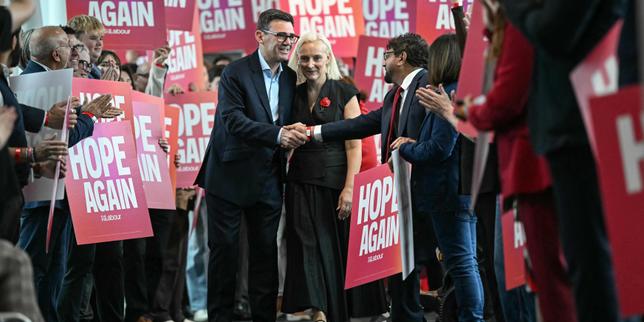
Westminster political editors are dusting off their best adjectives. They see Andy Burnham making noises about 2029, and they instantly reach for the tired playbook of leadership intrigue. They frame it as a long-range coup, a slow-motion march back to SW1, a coronation deferred.
They are missing the entire plot.
To view Burnham through the lens of traditional parliamentary ambition is to misunderstand how political power actually operates in the twenty-first century. The Westminster bubble assumes everyone wants to sit on the front bench, hold the dispatch box, and kiss the ring of party orthodoxy. But Burnham already has something better than a cabinet post in a decaying national structure. He has an independent fiefdom.
If he trades that for a parliamentary seat and a run at the top job, he is not upgrading his station. He is surrendering his strongest weapon.
The Myth of the Westminster Center
For decades, the political commentariat has operated under a single rigid assumption: national power flows from the Commons. If you are not an MP, you are a footnote. If you are not standing at the despatch box, your voice is a localized echo.
This model is broken. Parliament is no longer the engine room of British life; it is a chronically gridlocked theater. The whips control the script, the party apparatus crushes dissent, and any leader who enters that building is immediately swallowed by an institutional black hole designed to neutralize independent thought.
When commentators look at Greater Manchester, they see a stepping stone. They look at the metro mayoralty as a nice resume builder before the real work begins in London. That is the lazy consensus talking. The reality is precisely inverted. Running a major city-region with real executive authority gives a politician tools that backbench MPs can only dream of. Burnham can negotiate direct transport funding, build local housing partnerships, and shape regional industrial policy without waiting for permission from a Treasury mandarin who has never set foot north of Watford.
Why would anyone swap executive muscle for parliamentary impotence?
The Trap of the 2029 Timeline
Let us dismantle the narrative that 2029 is Burnham's target date. The media loves a clean timeline. They need a narrative arc with a neat climax. They want us to believe that Burnham is carefully calibrating every public speech, every clash with central government, and every policy announcement as part of a five-year recruitment drive for the Labour leadership.
This assumes the Labour Party as it currently stands is worth taking over.
Any leader stepping into Downing Street under current fiscal and structural constraints inherits a poisoned chalice. The machinery of the British state is brittle, public services are buckling under structural debt, and the public has developed an allergic reaction to institutional politics. To win the keys to Number Ten is to sign up for immediate blame when impossible promises collide with harsh fiscal reality.
If Burnham allows himself to be dragged back into the parliamentary party machine, he subjects himself to the exact same pressures that devour every national leader. He trades his brand of Northern pragmatism for the tribal straightjacket of Westminster factionalism.
The Downside of Regional Feudalism
To be entirely fair to the conventional view, staying put carries its own brutal risks. Regional power is fragile. It relies heavily on central government goodwill for funding settlements, and a hostile administration in London can quietly starve a metro mayor of resources, turning local triumphs into exercises in managed decline.
Furthermore, the regional executive routine has a shelf life. If you spend a decade fighting Whitehall, voters eventually ask why things on the ground are not fixed, regardless of where the blame lies. Staying outside the tent means you never actually control the national levers required to enact structural systemic reform. You are reduced to an agitator with an official badge.
That trade-off is precisely why the conventional Westminster narrative is so seductive to careerists. It offers the illusion of ultimate control. But illusion is all it is.
The Real Game
Burnham does not need to become Prime Minister to wield immense national influence. In fact, his power is maximized precisely because he is not bound by collective cabinet responsibility. He can speak uncomfortable truths about housing, transport, and devolution that sitting ministers must swallow in silence.
When he challenges national orthodoxy, he does so from a position of electoral safety that no Westminster MP possesses. He was elected directly by millions of citizens, not parachuted into a safe seat by a central party committee. That mandate is heavier and harder to break than any whip's office threat.
If he abandons that mandate to chase a crown in a dying institution, he proves the commentators right. He becomes just another ambitious politician desperate for the London spotlight.
The smartest move is the one Westminster fears the most. Stop running for national office. Make the office come to you.