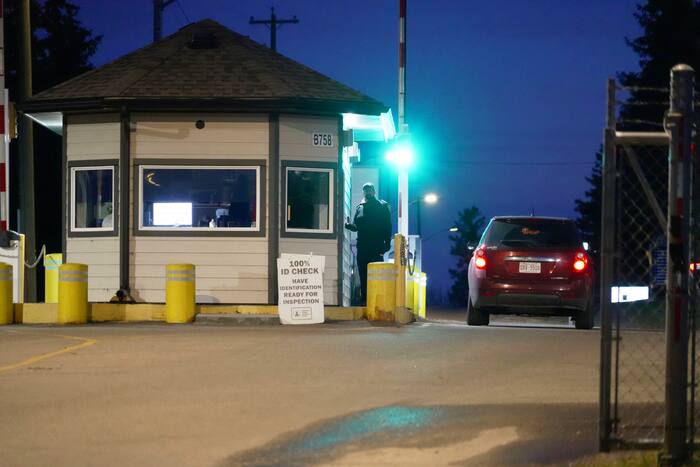
Deploying fifty investigators to a fatal military training blaze signals institutional urgency, yet headcount alone does not produce accountability or structural reform. When a fast-moving fire overtook soldiers during Exercise APOLLO SHOOTER at Canadian Forces Base Wainwright in Alberta on October 17, 2026, initial coverage centered on immediate shock: four deaths confirmed on site, dozens injured, and a large contingent of investigators assigned to reconstruct the sequence of events. Subsequent reporting through mid-November 2026 documented a grim progression as a fifth soldier, Pte. William Douglas Dal Bianco, died from his injuries, leaving dozens more in hospitals and requiring specialized burn care and military nursing support across provincial health systems.
A rigorous operational analysis separates the visible response from the underlying system failure. Standard reporting often treats a major investigation as a synonym for answers, obscuring how parallel inquiries divide authority, how environmental dynamics interact with live-fire training risk, and how downstream medical capacity determines the true toll of a single tactical event. To understand what happened and how similar failures can be prevented, the incident must be examined through four distinct analytical lenses: the illusion of investigative volume, the four-factor fire propagation mechanism, the three-track inquiry architecture and its accountability gap, and the multi-month healthcare cost function.
Deconstructing Conventional Coverage: Headcount Versus System Logic
Conventional news reporting on military accidents typically follows a predictable narrative arc. It opens with the casualty count, cites official statements from political and military leaders, notes the number of investigators dispatched, and lists the names and hometowns of the fallen. While essential for public record and honoring service members, that framing leaves three critical analytical gaps.
First, it treats investigative scale as a proxy for investigative independence. Assigning fifty personnel signals resource commitment, yet volume does not resolve structural conflicts when the investigating institution is also the operator of the training range and the author of the safety doctrine.
Second, it flattens cause and effect into a single dramatic image—such as a fire jumping roughly a kilometer in under a minute—without unpacking the preconditions that made a rapid jump lethal. In wildland and range fire dynamics, extreme rate-of-spread events rarely occur in isolation; they emerge when fuel continuity, wind shifts, terrain, and human decision thresholds align.
Third, it treats casualty numbers as static snapshots rather than evolving clinical trajectories. In severe thermal trauma, initial fatality counts understate the total loss of life when patients suffer extensive burns and inhalation injuries requiring weeks or months of intensive care.
The Four Pillars of Range Fire Escalation
Known facts established by Canadian officials indicate that personnel from the 3rd Battalion, Princess Patricia's Canadian Light Infantry—alongside reserve soldiers and members of the Loyal Edmonton Regiment—were conducting live-fire and tactical training at CFB Wainwright when a brush or grass fire escalated rapidly in high winds, sweeping over troops and into unit areas. Official briefings also noted that military officials were aware of a fire in the training area prior to the worst escalation, believed it was contained, and allowed training to proceed before wind conditions shifted sharply. Exact ignition sources, precise wind telemetry at the exact moment of the shift, and granular tactical movement logs remain subject to ongoing investigation.
Rather than guessing at unverified details, an operational safety analyst models how a controlled or seemingly contained brush fire transitions into a catastrophic entrapment using four structural pillars:
- Fuel Continuity and Curing State: Dry grass and brush act as fine fuels with high surface-area-to-volume ratios. When cured vegetation forms an unbroken path across training sectors, flame fronts can advance rapidly without needing heavy timber canopy.
- Wind Velocity and Directional Shifts: Wind drives convective preheating of unburned fuel ahead of the flame front and lofted embers across gaps. A sudden shift in wind speed or direction converts a flank or contained perimeter into a head fire aimed directly at personnel or administrative zones.
- Continued Operational Tempo Under Ambiguous Containment: Training doctrine frequently balances combat realism against safety margins. Continuing exercises near an active brush fire creates a containment bias—the assumption that existing firebreaks or suppression assets will hold until proven otherwise.
- Egress Geometry and Situational Awareness: Live-fire exercises, noise, protective equipment, and dispersed unit formations compress reaction windows. When flames move across open terrain at high speed, troops operating down-wind or in low-visibility pockets face steep evacuation constraints.
A common mistake in post-incident commentary is treating live-fire training and wildland fire risk as separate domains. In practice, munitions, pyrotechnics, vehicle exhaust, and dry range vegetation form a coupled risk system. Even if a specific ignition source is traced to training activity or an external spark, the lethal mechanism is the interaction between uncontrolled fire behavior and human exposure timing.
Parallel Inquiries and the Accountability Bottleneck
Following the CFB Wainwright tragedy, officials pointed to multiple investigative tracks—including military police, a military board of inquiry, and fire marshal or safety reviews—while senior leaders pledged that findings from the board of inquiry would be made public once completed and noted that investigations could take up to a year. Military legal observers have noted a recurring tension in defense inquiries: administrative boards and safety reviews are designed to establish facts and preventive recommendations rather than assign criminal or disciplinary fault, raising questions about perceived accountability.
In high-reliability organizations, multi-track investigations solve a real technical problem, yet they also create a structural bottleneck:
- Evidentiary Sequencing: Criminal or police investigations prioritize chain of custody, privilege, and potential prosecution, which can delay or restrict how quickly operational lessons are shared across units.
- Mandate Mismatch: A board of inquiry focused on systemic prevention may document flawed assumptions—such as overconfidence in fire containment—without satisfying public demand for individual command accountability.
- Latency of Reform: If comprehensive findings take months or a full year, interim risk controls must carry the burden of protection in the meantime. Waiting for a final report before revising go/no-go thresholds leaves exposed units vulnerable during intervening training cycles.
This creates a clear operational trade-off. Centralized, exhaustive investigations maximize forensic rigor and legal soundness, while slow synthesis delays organizational learning. Effective command governance bridges that gap by separating immediate hazard containment (hard stop rules for wind and fire proximity) from long-form root-cause reconstruction.
The Medical Cost Function: Why Burn Casualties Strain Systems Long After the Fire
The human and institutional cost of a mass-burn training event extends far beyond the day of the incident. Following the Wainwright fire, dozens of soldiers required hospitalization, many with severe burns and critical injuries, prompting specialized clinical interventions—including regulatory special access to advanced burn therapies such as spray-on skin technology—and eventually a request for military nurses to relieve exhausted civilian burn unit teams in Alberta through early 2027.
From a health-systems perspective, severe thermal trauma imposes a non-linear resource burden:
- High Nursing-to-Patient Ratios: Critical burn and ventilator-dependent patients require continuous monitoring, wound care, infection control, and pain and fluid management. A single cluster of severe burn admissions can saturate specialized regional units.
- Duration of Care: Unlike acute trauma with rapid stabilization, major burns involve staged excision, grafting, rehabilitation, and psychological recovery spanning months or years.
- Civil-Military Spillover: When a military training accident occurs on domestic soil, civilian hospitals absorb the initial surge. Deploying military medical personnel back into civilian facilities helps relieve staff burnout, illustrating how defense readiness and provincial healthcare capacity are operationally linked.
Tactical Protocol for Range Fire Risk Governance
Preventing a repeat of a wind-driven range entrapment requires hard decision gates rather than relying solely on local judgment during dynamic weather. Defense range managers and commanders can apply a five-step operational control sequence before and during live-fire or field maneuvers:
- Enforce Quantitative Wind and Curing Triggers: Establish non-negotiable pause or termination thresholds tied to forecasted and measured wind gusts, gust shifts, and live fuel moisture—not merely subjective impressions of whether a nearby fire looks manageable.
- Treat "Contained" Brush Fires as Active Escalation Hazards: Require formal reassessment whenever any fire burns inside or adjacent to a training sector, accounting for sudden wind reversals and rapid flame acceleration across continuous grass.
- Audit Pre-Planned Escape Routes and Buffer Zones: Verify that every assembly area, administrative location, and tactical lane has upwind or crosswind egress corridors clear of fuel traps and bottlenecks before live rounds or pyrotechnics are authorized.
- Decouple Suppression Readiness from Training Continuation: Never treat on-site firefighting assets as a guarantee against wind-driven crown or grass runs; if fire behavior exceeds suppression capacity, halt maneuver training immediately.
- Publish Interim Safety Directives Ahead of Final Reports: Issue binding interim orders based on preliminary hazard patterns within weeks rather than waiting a year for final inquiry conclusions.
Limitations of These Controls
No procedural checklist eliminates environmental volatility or human error. Weather forecasts in rolling terrain have spatial blind spots, local wind gusts can spike faster than spot measurements update, and strict safety rules can create friction with realistic combat preparation. Furthermore, institutional reforms—including calls by external commentators for more independent oversight or public inquiry mechanisms—face legal, security, and bureaucratic constraints that cannot be solved by range orders alone.
The Strategic Play
The decisive strategic move for defense leadership is to publish an interim, binding Range Fire and Weather Abort Standard within 30 days—without waiting for the final board of inquiry report—while establishing a permanent joint civil-military burn surge protocol. Treating interim hazard controls as an immediate operational deliverable separates fast risk reduction from slow forensic inquiry, protects soldiers during upcoming training cycles, and aligns military readiness with the real-world clinical limits of national healthcare systems.
Aftermath of deadly fire at Canada's Wainwright military base
This video provides on-the-ground aftermath footage and official remarks from the initial days following the CFB Wainwright fire, illustrating the physical setting and immediate response context analyzed above.