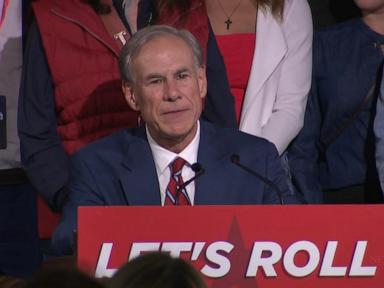
When Texas Governor Greg Abbott stepped up to the podium to concede the governor's race, the immediate media focus zeroed in on the speech itself—the cadence of his voice, the reaction of the crowd in the ballroom, and the boilerplate calls for unity. That misses the actual story. A concession speech in Austin is merely the final, ceremonial punctuation mark on a structural failure that took years to build and months to detonate.
To understand how an entrenched incumbent with a massive war chest and the backing of a dominant state party machine ends up delivering a concession speech, you have to look past the podium. You have to examine the mechanics of Texas political geography, the friction between primary orthodoxy and general election math, and the quiet demographic shifts that turned reliable red counties into battlegrounds.
The Illusion of the Unassailable Incumbent
For over a decade, the conventional wisdom in Austin operated on a simple premise: statewide Republicans in Texas do not lose general elections. They survive grueling primaries, outspend their opponents by wide margins, and rely on a structural turnout advantage in rural and exurban counties to carry them across the finish line.
That formula worked until it didn't.
When an incumbent runs for another term, the biggest threat isn't usually the challenger's message; it is the incumbent's own record. Every legislative session leaves scar tissue. Every veto alienates a constituency. Over multiple terms, a governor accumulates a ledger of grievances from both ends of the political spectrum. In Texas, where the executive branch shares power with a forceful lieutenant governor and an assertive legislature, the governor still takes the blame when property taxes remain stubbornly high, when the power grid faces scrutiny, or when local school districts clash with state mandates.
Political operatives often mistake fundraising totals for voter enthusiasm. A nine-figure campaign account can buy every television ad slot from El Paso to Beaumont, and it can fund an army of field organizers. What money cannot buy is immunity from fatigue. Voters eventually stop listening to warnings about what the challenger might do and start grading the incumbent on what actually happened during their tenure.
Where the Precinct Math Broke Down
Elections in Texas are won and lost in the suburban ring counties surrounding Houston, Dallas-Fort Worth, Austin, and San Antonio. For years, the strategy was straightforward: run up massive margins in the 200-plus rural counties to offset the urban core, then split the suburbs.
A closer look at how modern Texas coalitions function reveals why that math became unsustainable.
- Suburban Drift: Counties like Collin, Denton, Williamson, and Fort Bend have undergone rapid economic transformation. The influx of corporate relocations brought hundreds of thousands of college-educated professionals into districts that used to vote reliably conservative. These voters tend to be fiscally cautious but socially moderate, and they react poorly to culture-war legislation that dominates primary cycles.
- The Rural Ceiling: There is a mathematical limit to how many votes can be squeezed out of low-population counties. Even when turnout in rural Texas hits historic highs, the raw vote totals are dwarfed by a modest two- or three-point shift in Harris or Tarrant County. You cannot win a statewide race by winning 80 percent of a county with 10,000 people if you lose 55 percent of a county with four million.
- Primary vs. General Friction: To survive a Texas Republican primary, a candidate must tack hard to the right on social issues, border enforcement, and state sovereignty. Yet the very rhetoric and policy commitments required to win in March become liabilities in November. When the governor's office prioritizes issues that animate the base over bread-and-butter infrastructure and education concerns, independent voters in the suburbs take notice.
Consider a hypothetical example of how this plays out in a typical suburban precinct. Imagine a neighborhood in northern Tarrant County where median household incomes sit comfortably above six figures. In 2014, that precinct might have voted 62 percent Republican. By 2022, it narrowed to 52 percent. When state leadership pushes policies that local parents perceive as destabilizing to their neighborhood public schools—such as aggressive school voucher mandates—a mere four-point defection among married suburban women flips that precinct blue. Multiply that across three hundred suburban precincts, and the statewide firewall collapses.
The Media Spectacle Versus the Ground Reality
Cable news networks love a concession speech because it provides clean, dramatic television. The cameras pan across somber supporters, pundits dissect the candidate's body language, and anchors declare the end of an era.
Veteran reporters know the race was decided long before the speechwriters opened their laptops.
By the time a campaign reaches the final stretch, the fundamental dynamics are locked in. Early voting data in Texas offers a transparent window into turnout trends weeks before Election Day. When early vote totals in urban and inner-ring suburban counties outpace historical benchmarks while rural turnout lags behind projections, campaign managers already know the outcome. The concession speech is just the formal acknowledgment of numbers that have been sitting on spreadsheets for days.
Furthermore, media coverage often overstates the impact of late-stage campaign blunders or viral moments. Voters rarely change their minds in October over a single soundbite. Instead, the outcome reflects a slow, cumulative erosion of trust. It is the result of local business leaders quietly withholding endorsements, school board trustees mobilizing parents against state overreach, and younger voters finally showing up in midterm cycles at rates previously reserved for presidential years.
The Structural Vulnerability of Long-Term Dominance
Single-party dominance breeds a specific kind of institutional blindness. When one party holds every statewide office for nearly three decades, the internal machinery begins to atrophy.
Campaigns stop innovating because they haven't had to fight for survival in a competitive general election environment. Messaging becomes insular, tested in echo chambers rather than swing districts. Worse, the party apparatus begins to treat general election voters as an afterthought, assuming that partisan gravity will inevitably pull disaffected conservatives back into the fold by November.
There is also the problem of legislative overreach. Without the check of a viable opposition party in Austin, factions within the ruling coalition push increasingly aggressive agendas. The governor is then forced into an impossible trap: sign bills that alienate the political center, or veto them and invite a primary challenge from the right. Abbott spent years walking that tightrope, using the veto pen selectively while championing hardline border policies and conservative social bills. Eventually, the rope snaps.
What the Concession Actually Signals for Texas Governance
A change in the governor's mansion in Texas does not mean an overnight transformation of state law. Anyone who understands the Texas Constitution knows that the governorship is structurally weak compared to other large states.
The real power in Austin resides with the Lieutenant Governor, who controls the Senate calendar, and the Speaker of the House, who appoints committee chairs. The legislature meets for only 140 days every two years. A newly elected governor stepping into office faces a deeply entrenched conservative legislature, a conservative state Supreme Court, and a sprawling network of state agencies stocked with appointees from the previous administration.
This creates an immediate clash of mandates:
- The Veto Pen as a Shield: While a new governor may struggle to pass progressive legislation through a hostile House and Senate, the veto power remains absolute. Overrides require a two-thirds vote in both chambers, a threshold rarely met in modern Texas history. This effectively halts the passage of controversial social legislation, voucher programs, and restrictive voting bills.
- Executive Appointments: Over a four-year term, the governor appoints hundreds of officials to state boards and commissions, including the Public Utility Commission, the Texas Education Agency, and university boards of regents. Shifting the ideological makeup of these regulatory bodies alters how existing laws are enforced without requiring a single vote from the legislature.
- Budgetary Leverage: Through the line-item veto on appropriations bills, the governor holds significant sway over state spending priorities, forcing legislative leaders to negotiate on public education funding, healthcare access, and infrastructure investments.
The National Ripple Effect
Political analysts in Washington immediately view any seismic shift in Texas through the lens of the Electoral College. With its massive trove of electoral votes, Texas has served as the ultimate firewall for national Republicans. If the state becomes genuinely competitive—or worse, tilts out of reach—the math for winning the White House changes overnight.
Yet treating a Texas gubernatorial race purely as a bellwether for presidential politics is a mistake. Texans have a long history of ticket-splitting and prioritizing state-level identity over national party labels. A candidate can win statewide in Texas by running a hyper-localized campaign focused on property taxes, public schools, and energy reliability while still leaving the state competitive for a Republican presidential nominee two years later.
The real lesson for national strategists isn't that Texas has suddenly turned blue. It is that no state is permanently immune to demographic gravity and governance fatigue. When a political coalition prioritizes ideological purity over practical problem-solving, voters eventually look for an exit ramp.
The End of an Era in Austin
As the ballroom cleared out after Abbott finished speaking, the immediate task for Texas Republicans began: assigning blame. The populist wing of the party will argue the campaign wasn't conservative enough, while the business establishment will point to alienating suburban moderates as the fatal flaw. Both sides will commission autopsies, leak memos to the press, and position themselves for the next cycle.
Meanwhile, the machinery of state government keeps grinding forward. The property tax bills are still due, the power grid still has to survive the next summer heatwave, and the border remains a complex, multi-billion-dollar operational challenge that defies simple campaign slogans. Winning the election was the easy part; governing a divided state of thirty million people is where the real fight begins.


