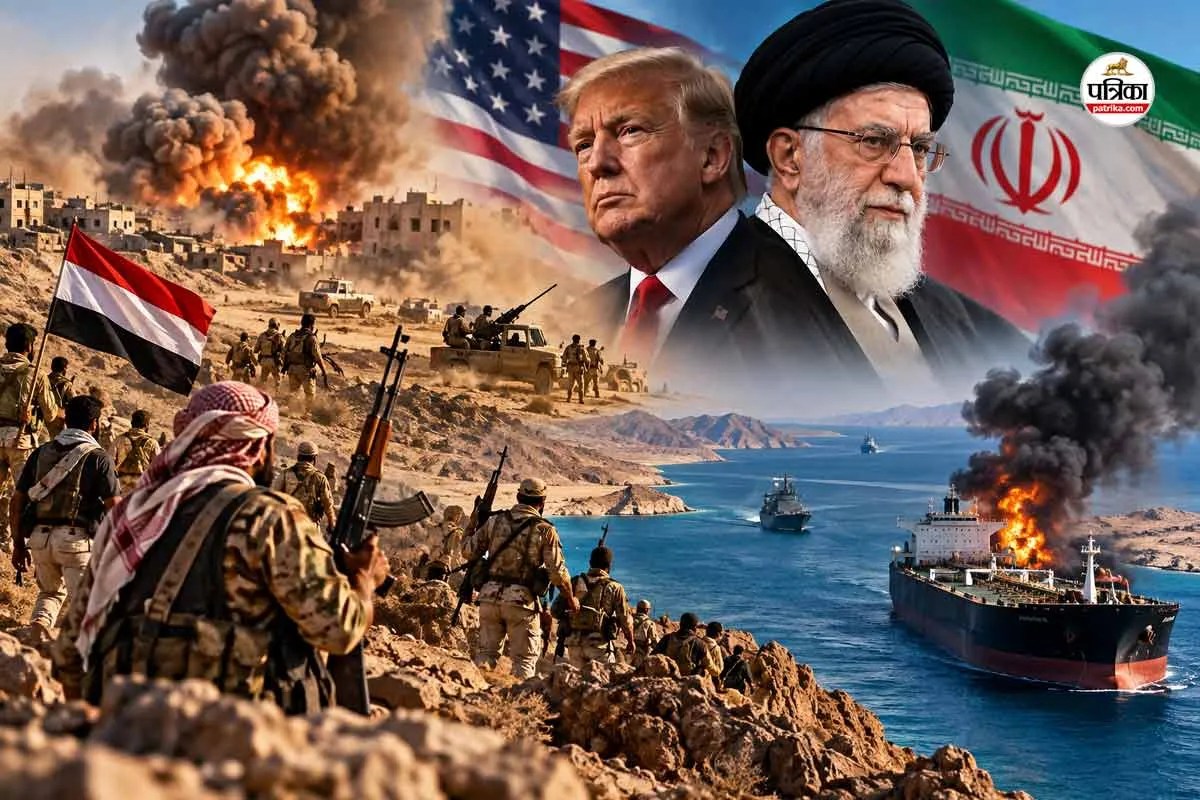
Iranian Foreign Minister Abbas Araghchi's assertion that Tehran will stay its course regardless of whether war resumes exposes a central trap of coercive diplomacy: unilateral declarations of resolve do not alter an adversary's calculation when physical chokepoints, domestic economic attrition, and nuclear red lines collide. Standard wire reports treat a statement like "war or no war, we will stay on our path" as a self-contained headline of defiance. That framing misses the operational mechanics behind the rhetoric. In late 2026, after months of direct and indirect military friction, naval blockades, strikes on Qeshm Island, and Qatar-mediated negotiations in Doha, Araghchi's message operates on two distinct tracks at once: signaling immovability to domestic hardliners and regional partners while keeping a conditional diplomatic door ajar toward Washington.
To understand whether Tehran's posture holds strategic weight or merely buys time, analysts must separate verified operational facts from analytical hypotheses. Known facts include Araghchi's public insistence on keeping enriched uranium inside Iran, his defense of a compressed two-day or 48-hour sequence linking maritime transit through the Strait of Hormuz to sanctions relief and unfreezing assets, ongoing indirect mediation involving Qatar, and persistent U.S. warnings paired with military pressure. Educated hypotheses include how much domestic economic strain Tehran can absorb before elite consensus fractures, whether Washington views Doha's indirect track as a genuine off-ramp or a stalling tactic, and how shifting political pressures in Washington and Jerusalem alter escalation thresholds. For a closer look into similar topics, we suggest: this related article.
Deconstructing the Competitor's Logic
Conventional headlines built around a single defiant quote rely on a linear cause-and-effect model: Threat or conflict occurs -> Leader declares steadfastness -> Policy remains static. In real-world crisis bargaining, policy rarely stays static under kinetic and economic stress. Instead, states adjust tactical sequencing and bargaining buffers to protect a small set of core interests while trading peripheral concessions.
Basic coverage tends to flatten three separate dimensions of Araghchi's messaging into one emotional stance: For further background on this development, comprehensive analysis is available on NPR.
- Declarative Stance: Publicly refusing to bend under military pressure or external ultimatums.
- Negotiation Mechanics: Proposing short-fuse reciprocity, such as a two-day timeline where Washington acts first on commitments and Tehran moves on the Strait of Hormuz.
- Audience Targeting: Reassuring domestic constituencies and regional capitals that diplomacy is not surrender, while telling Washington that force alone will not yield concessions.
A headline that stops at defiance misses the tension between those three tracks. If Tehran claims its path is fixed regardless of war, yet actively negotiates confidence-building measures and compressed timetables through mediators, its "path" is not a frozen line. It is a bounded corridor defined by non-negotiable red lines on one side and survival constraints on the other.
The Four Pillars of Tehran's Bargaining Architecture
Rather than treating Araghchi's remarks as pure bluster or pure conviction, we can map Tehran's position across four structural pillars.
1. The Sovereignty and Nuclear Red Line
Araghchi has repeatedly ruled out shipping enriched uranium abroad and framed domestic enrichment capability and territorial sovereignty as non-negotiable. In bargaining theory, a party stakes out an indivisible or high-salience red line to raise the perceived cost of demanding total capitulation. Keeping material inside national borders preserves optionality and prevents the optics of unilateral disarmament under duress. The operational trade-off is severe: refusing external transfer or deep limits increases the probability of renewed strikes or prolonged containment if Washington treats retention as an existential security risk.
2. The Chokepoint-for-Liquidity Trade
Maritime transit through the Strait of Hormuz gives Tehran asymmetric leverage over global energy and shipping costs, even when its own seaborne crude exports face severe blockades and financial bottlenecks. Proposals tying a rapid reopening or adjustment in the strait to sanctions relief, naval de-escalation, and access to frozen funds attempt to convert geographic leverage into immediate financial breathing room. The mechanism is transactional: liquidity in exchange for transit predictability. Its fragility lies in timing. Because trust is near zero, neither side wants to execute irreversible steps first.
3. Factional Signaling Inside and Outside
Statements about staying the course are never aimed solely at the opposing capital. Inside Iran, political factions debate whether diplomatic engagement preserves the system or invites further pressure. Outside Iran, regional states such as Qatar, Oman, the UAE, Turkey, and Egypt—alongside major powers like China and Russia—watch closely for signs of either reckless escalation or pragmatic off-ramps. Meanwhile, Araghchi has publicly pointed to competing impulses inside Washington, contrasting voices favoring military force or maximum economic pressure against those open to a negotiated settlement. Highlighting perceived divisions in the adversary's camp is a classic move to encourage engagement from the more conciliatory faction while warning hawks that escalation will backfire.
4. Asymmetric Endurance Over Symmetric Attrition
Conventional military balance favors Washington in high-end firepower and power projection, while Tehran relies on asymmetric costs: maritime disruption, regional reach, cyber and drone capabilities, and diplomatic endurance. Claiming readiness regardless of whether war resumes is an effort to shift the contest from a short military clash to a test of political stamina. If Tehran convinces decision-makers that bombing or blockading will not produce quick political collapse, the cost-benefit calculus of a major new campaign becomes harder to justify.
Hidden Cause-and-Effect Loops the Headlines Miss
Surface-level reporting often treats military strikes, sanctions, and indirect talks as separate news items. In practice, they form tightly coupled feedback loops.
The Escalation-Leverage Paradox: When strikes or naval interdictions occur alongside talks, each side tries to improve its bargaining position by imposing pain. The unintended effect is often the opposite. Kinetic pressure hardens domestic resolve around the flag and convinces negotiators that conceding under fire signals weakness. Conversely, prolonged economic squeeze and supply shortages erode domestic resilience over time, narrowing the leadership's room to maneuver even as public rhetoric grows harder.
The Verification Bottleneck: Short proposals like a 48-hour or two-day sequence are designed to cut through months of stalemate. Yet compressed timelines collide with slow verification. Unfreezing funds, easing maritime restrictions, and verifying nuclear or security commitments involve legal, financial, and intelligence checks that rarely settle cleanly in two days. A tight clock can force urgency, or it can trigger immediate collapse on day two when expectations diverge.
The Third-Party Mediation Constraint: Mediators like Qatar can carry messages, structure confidence-building steps, and lower misunderstandings when direct talks are off the table. They cannot manufacture political will in Washington or Tehran. When core demands clash—such as Washington pressing for stricter limits or uranium concessions while Tehran insists on keeping enriched material and lifting core economic pressure—mediators act as shock absorbers rather than deal-makers.
A Tactical Framework for Evaluating Statements Like This
Analysts, executives, and policy teams tracking Middle East risk should not react to single declarations of resolve. A practical four-step method separates signal from noise:
- Audit the Red Lines vs. Variables: List what the speaker calls non-negotiable (such as uranium retention) and separate it from operational variables (such as negotiation sequencing, mediator channels, or temporary transit arrangements). Watch where flexibility appears even inside a hard speech.
- Track Material Indicators Over Rhetoric: Pair diplomatic quotes with concrete markers: shipping behavior in the Strait of Hormuz, drone or missile incidents, sanctions enforcement announcements, and official travel or mediator meetings. Words that diverge from material moves usually serve domestic or psychological aims.
- Map the Reciprocity Sequence: Whenever a short-term plan or confidence-building proposal is mentioned, identify who moves first, what is reversible, and what is irreversible. Deals fail most often over sequencing risk rather than headline principles.
- Stress-Test Against Domestic Constraints: Ask how each side explains a compromise to its own political base. If a concession cannot be framed as a win or a necessity at home, negotiators will stall even when both sides want to avoid wider war.
Limits of This Analytical Approach
No framework predicts political decisions with certainty. Leader psychology, miscalculation during a tactical clash, or a sudden domestic shock can overturn rational cost-benefit models overnight. Moreover, much of the real bargaining in indirect channels happens out of public view, meaning public statements from any capital are partly curated theater. Treating analytical frameworks as probability tools rather than crystal balls keeps assessments grounded when headlines swing wildly.
Strategic Recommendation
For decision-makers managing supply chains, energy exposure, or regional risk, the right move is conditional preparedness paired with disciplined de-escalation tracking, not betting on either total war or an immediate grand bargain. Build operational buffers for maritime delays, insurance spikes, and sudden retaliatory flare-ups while monitoring concrete diplomatic mechanics—specifically whether indirect talks move past sequencing disputes toward enforceable confidence-building steps. Until verifiable commitments replace mutual suspicion, treat defiant declarations as floor-setting moves in a high-risk negotiation, not proof that the conflict's trajectory is locked.