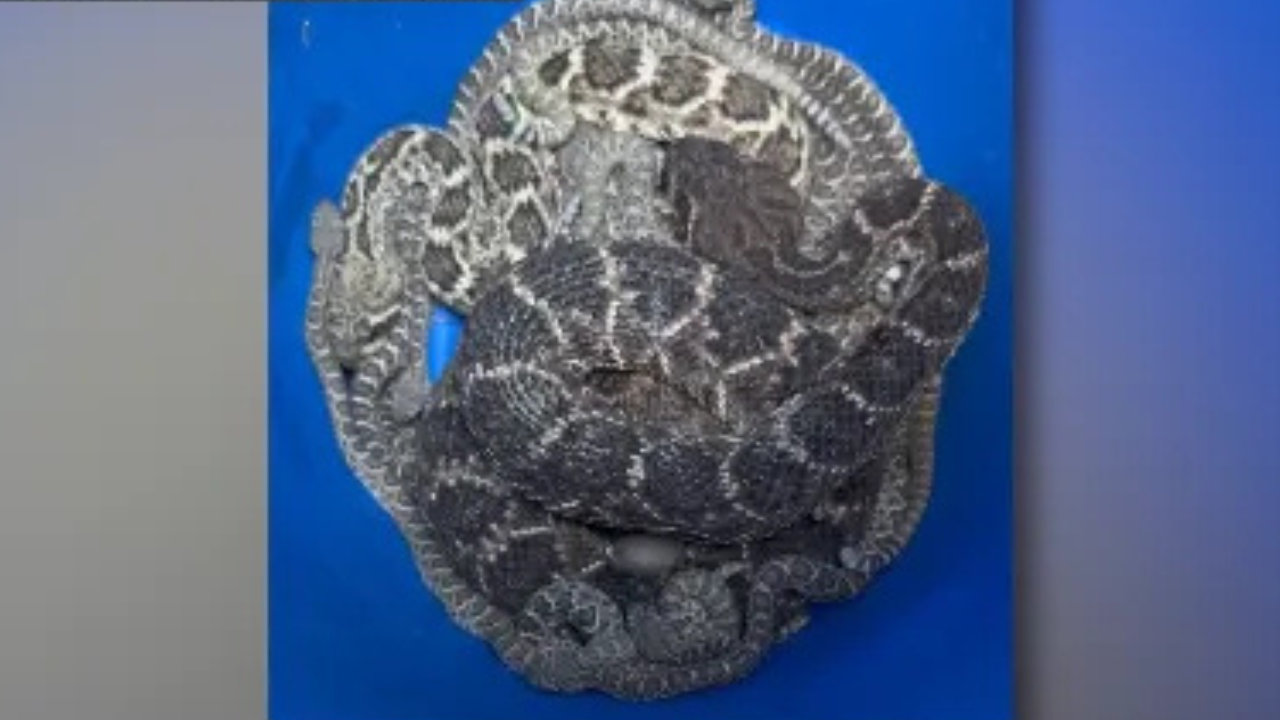
Residential real estate infrastructure routinely intersects with native wildlife habitats, yielding high-density aggregations of venomous reptiles beneath human living spaces. When a Texas homeowner discovered more than twenty western diamondback rattlesnakes (Crotalus atrox) beneath their home, public discourse focused on the shock value of the encounter. A rigorous analysis reveals this event as a predictable manifestation of behavioral ecology, thermal dynamics, and structural vulnerability.
Subfloor snake aggregations are not random occurrences. They represent a convergence of physiological requirements, environmental stressors, and architectural oversights. Understanding this phenomenon requires moving past sensationalism to examine the underlying drivers of herpetological site selection in residential environments.
The Environmental Drivers of Subfloor Aggregation
Reptilian site selection is governed by a strict cost-benefit analysis regarding thermoregulation, metabolic conservation, and security from predation. When dozens of rattlesnakes concentrate beneath a single residential structure, the subfloor microclimate satisfies specific survival criteria that surface environments fail to provide.
Thermal Inertia and Microclimate Optimization
Ectothermic organisms rely on external environmental heat sources to regulate internal body temperature. However, extreme weather conditions—such as prolonged summer heat waves or sudden winter drops characteristic of the Texas climate—force snakes to seek thermal refugia.
Residential foundations alter the local thermal landscape. Concrete slabs, crawl spaces, and pier-and-beam configurations absorb ambient heat during peak operational hours and radiate it slowly through the night. This creates a stable microclimate with minimal diurnal fluctuation.
- Subsurface Insulation: The earth beneath a foundation retains a more stable temperature profile than the surface air.
- Structural Shielding: Floor joists and subflooring block direct solar radiation while trapping ground-level warmth.
- Hydrological Retention: Plumbing leaks, condensation from HVAC condensate lines, and poor perimeter drainage create localized moisture sinks, supplying vital hydration in arid or semi-arid conditions.
Chemical Signaling and Aggregation Cues
The presence of a single rattlesnake beneath a structure often increases the probability of subsequent arrivals. Western diamondbacks utilize Jacobson organs and chemical trail-following behaviors to track conspecifics.
When a pregnant female or an overwintering cohort identifies a secure hibernaculum or gestation site, they deposit pheromones along ingress routes. Subsequent generations or migrating adults intercept these chemical markers, treating the residential foundation as a pre-validated habitat. This creates a feedback loop where initial occupancy accelerates population density beneath the floorboards.
Architectural Vulnerabilities and Ingress Mechanics
Rattlesnakes do not burrow extensively through hard-packed clay or limestone foundations. They exploit pre-existing structural flaws, utility penetrations, and perimeter gaps. The mechanical integrity of a home's exterior envelope dictates its susceptibility to wildlife intrusion.
Perimeter Gaps and Foundation Typologies
Different foundation designs present distinct risk profiles for wildlife infiltration. Pier-and-beam structures, characterized by elevated crawl spaces enclosed by lattice or brick skirting, offer high vulnerability. Gaps in mortar, warped wooden panels, or missing vent screens provide unhindered access points.
Slab-on-grade foundations appear more secure, yet they feature critical vulnerabilities along the perimeter. Expansion joints, utility conduits for plumbing and electrical lines, and weep holes in brick veneer walls serve as primary ingress vectors. A gap as small as one-half inch compressed vertically can allow a juvenile or medium-sized adult rattlesnake to pass through by flattening its ribcage against the substrate.
Vegetation Management and Structural Bridging
The interface between the natural landscape and the structural footprint of the house determines how frequently wildlife encounters ingress points. Overgrown landscaping acts as a mechanical bridge.
- Vertical Stratification: Low-hanging branches or dense shrubs touching exterior walls allow arboreal or climbing-adjacent species to bypass ground-level deterrents.
- Detritus Accumulation: Piles of landscape timbers, dense mulch beds, and stacked firewood near the foundation provide primary cover, encouraging rodents to nest. Because rodents represent the primary trophic resource for Crotalus atrox, their presence directly dictates rattlesnake distribution.
The Trophic Connection and Rodent Dynamics
A structural infestation of venomous snakes is fundamentally a symptom of a broader ecological imbalance or successional abundance at the base of the local food web. Rattlesnakes do not reside where resources are absent.
Prey Availability as a Primary Determinant
The carrying capacity of a residential parcel for rattlesnakes is directly tied to the carrying capacity for small mammals, specifically Peromyscus mice, packrats, and voles. Residential environments offer abundant artificial trophic inputs:
- Unsecured domestic animal feed.
- Compost bins and agricultural waste.
- Abundant structural nesting sites within insulation and wall cavities.
When rodent populations expand around a residential foundation, foraging rattlesnakes systematically track the scent trails of these mammals. Once a snake crosses the perimeter threshold in pursuit of prey, the protective properties of the subfloor environment induce residency rather than transient movement.
Strategic Mitigation and Structural Remediation
Mitigating a subfloor rattlesnake infestation requires a multi-phase operational framework. Surface-level removal or casual pesticide application fails to address the underlying structural and environmental attractants.
Phase One: Environmental Exclusion
The immediate priority is severing the connection between the exterior landscape and the interior subfloor environment. This requires physical hardening of the structure.
- Perimeter Trenching and Meshing: Installing heavy-gauge galvanized hardware cloth (one-quarter inch mesh) buried vertically at least twelve inches into the soil and extending outward at a ninety-degree angle prevents burrowing beneath skirting.
- Penetration Sealing: Expanding foam combined with steel wool or hydraulic cement must be applied to all utility penetrations, weep holes, and foundation cracks.
- Vegetation Clearing: Establishing a strict three-foot sterile perimeter around the entire foundation using crushed stone or gravel eliminates cover and discourages rodent transit.
Phase Two: Controlled Extraction and Population Census
When handling high-density aggregations beneath a structure, standard snake tongs and collection buckets are insufficient. Professional extraction demands systematic observation.
- Borescopic Inspection: Inserting fiber-optic cameras into crawl spaces maps the spatial distribution of the snakes without agitating them into defensive strikes.
- Temperature-Controlled Trap-Outs: Utilizing drift fences directed toward one-way funnel traps allows passive extraction of individuals over a multi-week period as ambient temperatures fluctuate.
- Habitat Deconstruction: If non-destructive extraction is impossible due to architectural constraints, controlled opening of subfloor access panels must be executed with heavy PPE and immediate medical contingencies in place.
Operational Risk Management for Property Owners
Homeowners confronting subfloor wildlife intrusions must transition from reactive panic to systematic property management. The presence of twenty or more rattlesnakes indicates that the property has functioned as an undisturbed sanctuary for multiple seasons.
Long-term security requires viewing the home not merely as a static shelter, but as an active boundary in an ecological matrix. By neutralizing the three core variables—thermal optimization, structural ingress points, and rodent-driven trophic loops—property owners transform their foundations from ideal hibernacula into hostile, uninhabitable zones for venomous wildlife.
Implement a continuous monitoring protocol utilizing motion-activated perimeter cameras focused on foundation gaps, and mandate a semi-annual structural audit of all subfloor ventilation screens and utility seals. Eliminate structural micro-habitats before seasonal temperature shifts trigger the next migration cycle.