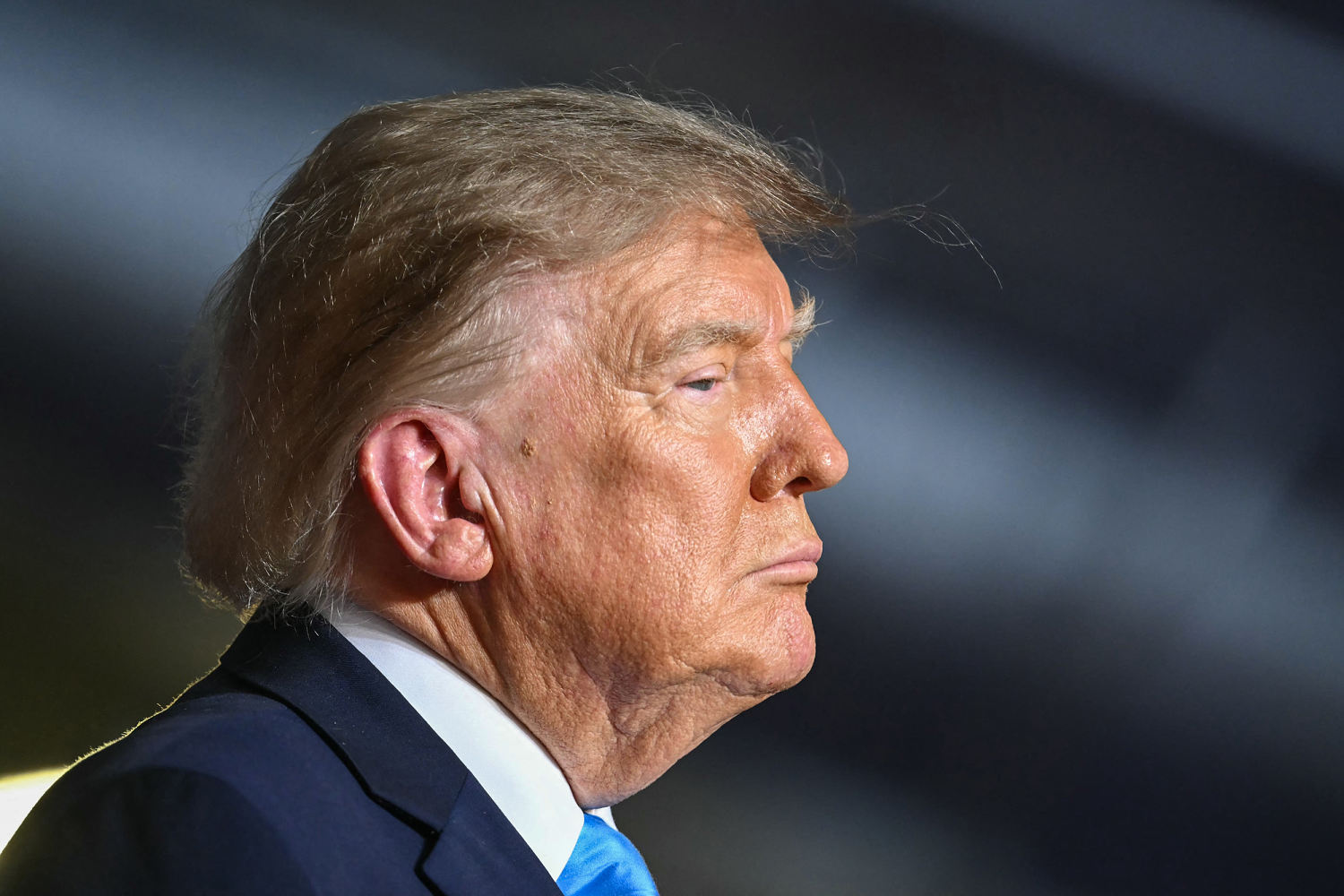
The intersection of executive branch resource allocation and electoral campaigning represents a critical fault line in modern democratic governance. When public treasuries are utilized to underwrite messaging that mirrors electoral campaign pitches, the institutional boundaries separating administrative governance from partisan electioneering dissolve. The legal challenge initiated by the Democratic National Committee against the administration regarding millions of dollars in federal funds diverted toward television advertisements featuring President Donald Trump provides a clear case study in fiscal subversion, administrative law violations, and the mechanics of modern political positioning. Deconstructing this maneuver reveals the underlying cost functions, regulatory mechanisms, and systemic risks inherent in deploying public capital for executive branding.
The Fiscal Architecture of Executive Messaging
To understand how administrative budgets convert into partisan assets, one must analyze the resource pipeline. The mechanism relies on inter-agency fund transfers and broad statutory interpretations of public awareness campaigns. In this instance, the Office of Management and Budget and the Department of Homeland Security facilitated the movement of millions of dollars—drawn from packages initially designated for immigration enforcement and operational security—into multimedia broadcasting streams. You might also find this related coverage insightful: Why Kicking Inheritance Tax is the Ultimate Wealth Trap for the Middle Class.
This process exploits a structural grey area within federal spending authorizations. Agencies possess statutory authority to communicate operational directives, public safety guidelines, and policy updates to the citizenry. However, when the output transitions from functional utility to executive glorification, the economic nature of the expenditure mutates. The cost function shifts from public welfare maximization to electoral return on investment.
The Conversion Matrix
- Capital Source: Federal appropriations intended for agency-specific execution.
- Intermediary Routing: Budgetary realignments orchestrated via executive office oversight and agency reallocation protocols.
- Terminal Output: Broadcast saturation featuring executive iconography during active electoral cycles.
By absorbing the production and distribution costs of high-frequency television spots, the administration externalizes expenses that would otherwise burden political committees or candidate war chests. This financial displacement creates an asymmetric advantage, effectively subsidizing an electoral campaign with non-partisan taxpayer revenues. As highlighted in recent articles by Al Jazeera, the implications are widespread.
The Administrative Procedure Act and Ultra Vires Doctrine
The legal counter-offensive relies heavily on administrative law frameworks, specifically targeting actions deemed ultra vires—exceeding statutory authority—and violations of the Administrative Procedure Act. Federal agencies are bounded by the explicit mandates enacted by Congress. When funds appropriated for one specific purpose are diverted to achieve an electoral outcome, the action violates the core tenets of fiscal accountability.
Furthermore, long-standing anti-propaganda riders attached to federal appropriations bills explicitly prohibit the use of taxpayer money for publicity or propaganda purposes designed to support or defeat legislation or bolster the political standing of an administration. The core legal contention centers on whether the broadcasted material serves a legitimate, objective governmental function or functions as a covert political advertisement designed to influence early voting patterns.
The intervention of judicial oversight, characterized by injunctions halting the deployment of these federal funds, highlights the friction between executive overreach and judicial enforcement. When a federal court intervenes to pause such expenditures, it acts as a structural check against the erosion of neutral administrative execution.
The Strategic Pivot and Market Adaptation
Faced with mounting bipartisan backlash, judicial scrutiny, and legal exposure, the administration's operational strategy underwent an immediate pivot. Rather than abandoning the dissemination of the messaging entirely, the defense relied on transitioning the funding mechanism from public accounts to private political entities, specifically super PACs.
This transition illustrates the elasticity of modern campaign finance ecosystems. If public coffers are legally restricted from underwriting executive promotion, private political capital steps in to fill the vacuum. However, this substitution introduces a separate set of strategic variables:
- Accountability Transfer: Moving from taxpayer funding to super PAC funding eliminates direct legal exposure under the Administrative Procedure Act, shifting the terrain back to traditional campaign finance regulation.
- Transparency Friction: Super PAC expenditure disclosure requirements operate on different timelines than immediate administrative deployments, altering the velocity of political communication.
- Message Continuity: The core creative assets—the television spots themselves—frequently retain identical thematic structures, demonstrating that the primary objective is message saturation regardless of the balance sheet origin.
Institutional Vulnerabilities and Systemic Precedents
The deployment of state resources for executive visibility exposes structural vulnerabilities in institutional design. When executive agencies operate with broad discretionary latitude over communications budgets, the temptation to merge governance with campaigning scales proportionally with the intensity of electoral competition.
The reliance on public funding to shape voter sentiment during active electoral windows degrades the integrity of institutional neutrality. If administrative agencies are perceived as instruments of personal political branding, public trust in the operational competence and neutrality of those agencies degrades. The long-term cost is not measured solely in the tens of millions of dollars diverted from operational mandates, but in the institutional capital lost when civil service functions are co-opted for electoral objectives.
To neutralize this vector of administrative expansion, regulatory frameworks require tighter statutory definitions separating public information dissemination from political promotion, alongside mandatory judicial review triggers for multi-million-dollar agency ad buys executed within defined pre-election windows. Without these structural constraints, the monetization of executive power via administrative budgets will remain a recurring tactical option in high-stakes political environments.