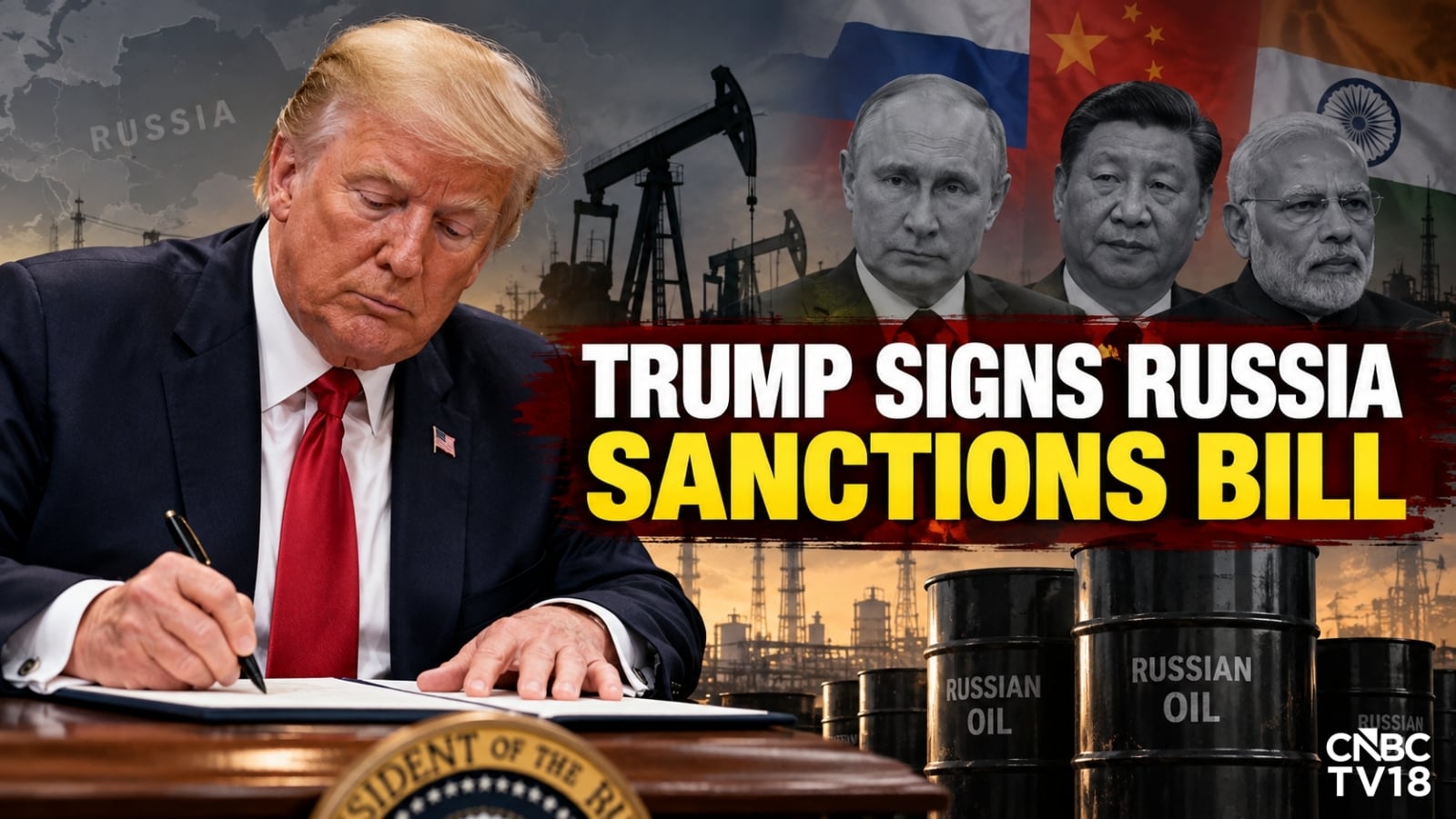
The Lindsey O. Graham Sanctioning Russia and Iran Act of 2026 converts United States trade policy into a statutory weapon of secondary financial coercion, yet its immediate operational bite was neutralized within 28 days of enactment. Signed into law on September 18, 2026, following bipartisan passage in the Senate (86–11) and the House (262–159), the statute authorizes ad valorem duties of up to 500 percent on direct Russian imports and up to 100 percent on all merchandise entering the United States from major purchasers of Russian crude oil and natural gas. Rather than triggering an immediate trade blockade against New Delhi and Beijing, the legislation established a dormant coercive mechanism: on October 16, 2026, two days before the statutory 30-day implementation deadline expired, President Donald Trump issued Executive Order 14436 to waive the new tariff tiers and primary sanctions indefinitely.
Understanding this sequence requires separating political theater from statutory architecture. Standard news coverage treats the 100 percent tariff threat as a binary switch—either applied or abandoned. In trade compliance and sovereign risk management, the Graham Act functions instead as an asymmetric option contract held by the executive branch, backed by explicit congressional authorization that shields future tariff escalations from judicial invalidation.
The Statutory Architecture of the Graham Act
Congress designed the Graham Act (H.R. 5334, codified at 22 U.S.C. 10802 et seq.) to solve two structural vulnerabilities in prior U.S. sanctions regimes: executive reversibility and judicial vulnerability under emergency powers statutes. Following Supreme Court rulings earlier in 2026 that restricted presidential tariff authority under emergency economic statutes, lawmakers embedded direct tariff mandates inside primary legislation. The statute rests on three operational pillars.
Pillar One: Direct Import Prohibition via Duty Escalation
Section 112 of the Act requires the executive branch to raise duties on all goods of Russian origin imported into the United States by up to 500 percent ad valorem, stacked on top of existing Most Favored Nation (MFN) rates, Section 301 duties, and antidumping or countervailing orders. Because U.S. imports from Russia had already contracted sharply since 2022—and Russian crude oil imports were already banned—this 500 percent tier targets residual supply chains, including intermediate industrial inputs, metals, and processed materials incorporated into third-country manufacturing.
Pillar Two: Secondary Tariffs on Energy Offtakers and Evasion Facilitators
Section 113 introduces the statute's primary geopolitical lever. It mandates an ad valorem duty increase of up to 100 percent on all goods imported into the United States from two distinct categories of third countries:
- The five largest foreign purchasers of Russian-origin crude oil or natural gas that knowingly execute new purchases on or after October 18, 2026.
- The top five foreign facilitators of Russian oil sanctions evasion, as defined under Section 113(i).
Critically, the statutory text omits specific country names. Instead, it delegates continuous surveillance to the Office of the United States Trade Representative (USTR), which must refresh the roster of covered nations every 180 days. Based on trade volume disclosures cited during legislative drafting, China, India, Slovakia, Hungary, and Azerbaijan represent the primary exposure cohort for crude oil purchases, while China, France, Japan, Hungary, and Belgium constitute the top natural gas importers. Congress included a narrow statutory carve-out in Section 114 exempting natural gas importers whose Russian purchases represent less than 15 percent of Russia's total gas exports, provided those nations demonstrate verifiable reductions in intake. No equivalent de minimis safe harbor exists for crude oil buyers.
Pillar Three: Maritime Logistics and Financial Codification
Beyond customs duties, the Act codifies existing executive orders under the Russian Harmful Foreign Activities Sanctions Regulations (31 C.F.R. Part 587) into permanent statutory law through September 18, 2031, while extending the Iran Sanctions Act of 1996 over the same five-year horizon. To disrupt the estimated 1,100 to 1,400 vessels operating within Russia's shadow tanker fleet, the statute authorizes asset freezes and visa bans against vessel owners, operators, captains, senior officers, maritime insurers, and foreign port operators that allow sanctioned tankers to dock. It further bars U.S. depository institutions and broker-dealers from processing transfers involving Russian state-controlled entities and prohibits U.S. securities exchanges from listing Russian state-affiliated equities.
The Transmission Mechanism: How 100% Tariffs Distort Bilateral Trade
Evaluating the credibility of a 100 percent secondary tariff requires modeling how customs duties transmit through global supply chains. Unlike targeted sanctions that freeze specific corporate entities, an across-the-board ad valorem tariff penalizes every exporter in a targeted jurisdiction regardless of whether that firm has any operational link to Russian hydrocarbons.
- Non-Linear Landed Cost Escalation: Under Section 113, the 100 percent duty does not replace existing U.S. tariff schedules; it stacks cumulatively atop Section 301 tariffs, Section 232 steel and aluminum duties, and standard MFN rates. For Chinese industrial and consumer goods already subject to 25 percent to 100 percent Section 301 duties, an additional 100 percent Graham Act levy pushes effective border taxation to between 125 percent and 200 percent, functioning as an immediate commercial embargo.
- Asymmetric Exposure Between China and India: While both nations anchor Russia's seaborne crude exports, their macroeconomic sensitivity to U.S. border taxes differs sharply. China's export machine has spent eight years building transshipment hubs across Southeast Asia and Mexico to dilute direct U.S. tariff incidence. India lacks comparable third-country assembly infrastructure at scale. A 100 percent duty on Indian merchandise—spanning pharmaceuticals, textiles, refined petroleum products, IT hardware, and precision engineering—would sever access to India's largest single-country export destination overnight.
- The Energy Price Feedback Loop: Economic statecraft fails when the domestic cost of enforcement exceeds the geopolitical benefit. Global crude and middle-distillate markets in late 2026 remain constrained by supply disruptions stemming from the U.S.-Iran conflict. If a 100 percent U.S. tariff forced Indian and Chinese refiners to abruptly abandon Russian Urals and ESPO crude grades, roughly 3 to 4 million barrels per day of seaborne supply would be stranded or forced into deeper shadow-market discounts, driving benchmark Brent crude prices sharply higher. For Washington, triggering an energy price shock weeks before the November 2026 midterm elections carried unacceptable domestic inflationary risk.
The Executive Waiver Paradox and Executive Order 14436
The defining tension of the Graham Act lies between congressional intent and executive execution. Senate sponsors drafted the bill to box in the White House, codifying Biden-era sanctions so a president could not dismantle them unilaterally. Yet to secure passage and avoid a veto, lawmakers retained Section 115(a), which empowers the president to waive the tariffs and new sanctions by certifying to Congress that suspension serves the U.S. national interest.
On October 16, 2026—48 hours prior to the statutory deadline—President Trump signed Executive Order 14436. The order formally implemented the Act's administrative architecture while immediately invoking Section 115(a) to suspend all 500 percent Russian tariffs, all 100 percent secondary tariffs on oil and gas buyers, and the new mandatory sanctions designations.
This maneuver exposed three operational realities:
- Strategic Ambiguity as Leverage: By signing the bill into law and then waiving its enforcement without an expiration date, the administration transformed a rigid statutory mandate into a discretionary bargaining chip. Washington retained the threat of instant tariff activation during bilateral negotiations—such as President Trump's late-September summit with Chinese President Xi Jinping and ongoing trilateral diplomacy involving Russian President Vladimir Putin and Ukrainian President Volodymyr Zelenskyy—without absorbing immediate domestic inflation.
- Supply-Side Pragmatism: The waiver coincided with acute global diesel shortages triggered by Middle Eastern hostilities. Suspending secondary penalties prevented immediate physical bottlenecks in refined fuel markets while preserving existing Office of Foreign Assets Control (OFAC) blocking sanctions and general licenses.
- Congressional Constraint Erosion: Former Treasury officials and trade practitioners noted that Section 115(a) effectively handed the White House an open-ended suspension valve. While the Graham Act prevents the president from permanently terminating underlying sanctions without congressional review, indefinite waivers achieve an identical practical result for new tariff measures.
Limitations of Secondary Tariff Statecraft
Relying on sweeping secondary tariffs to alter great-power energy flows encounters hard structural limits that no statutory drafting can eliminate.
First, the substitution elasticity of global crude is low in the short run. Refineries in Gujarat, India, and Shandong, China, are configured to process specific medium-sour crude grades like Russian Urals. Replacing those barrels requires competing directly with European and Asian buyers for Middle Eastern sour grades already tightened by Persian Gulf security risks. When physical alternatives are scarce, refiners absorb compliance risk rather than shut down distillation units.
Second, country-level tariffs create severe collateral damage. Section 113 punishes an entire national economy for the purchasing decisions of state-owned or independent refiners. Imposing a 100 percent tariff on Indian generic pharmaceuticals or Chinese electronics to punish state energy companies inflicts direct supply-chain costs on U.S. hospitals, manufacturers, and consumers, generating intense domestic lobbying pressure for carve-outs.
Third, shadow logistics adapt faster than statutory reviews. The USTR review cycle operates on a 180-day clock. Maritime evasion networks—utilizing ship-to-ship transfers in international waters, Automated Identification System (AIS) spoofing, shell registries in jurisdictions like Gabon and Panama, and non-dollar clearing—reconfigure trade routes in weeks. By the time USTR compiles evidentiary records to designate a "top facilitator of sanctions evasion," cargo ownership has already shifted across multiple intermediaries.
Operational Playbook for Cross-Border Supply Chains
For corporate trade compliance teams, procurement officers, and institutional investors, treating Executive Order 14436 as a permanent repeal of the Graham Act is a critical risk-management error. The waivers are revocable by executive stroke at any moment, and USTR's statutory monitoring mandate remains active through September 2031. Organizations with supply-chain exposure to China, India, Hungary, Slovakia, or global maritime logistics must execute four concrete defensive adjustments:
- Re-Price Landed Cost Models with Stacked Duty Contingencies: Financial models for goods imported from China and India must incorporate a stress-test tier modeling an immediate 100 percent ad valorem surcharge stacked atop existing Section 301 and MFN tariffs. Because Section 113 grants zero grace period once a waiver is revoked, goods on the water at the moment of an executive policy reversal face immediate customs reassessment.
- Audit Force Majeure and Change-in-Law Clauses: Standard commercial supply agreements frequently exclude tariff increases from force majeure protections, leaving the importer of record solely liable for sudden duty spikes. Procurement teams must renegotiate Incoterms—shifting away from Delivered Duty Paid (DDP) structures where suppliers default under 100 percent margin compression—and insert explicit tariff-sharing or price-reopener triggers tied to U.S. Code Title 22 designations.
- Trace Tier-Two and Tier-Three Russian Input Exposure: Even with Section 112 waived, the statutory 500 percent tariff threat signals permanent legislative hostility toward Russian-origin materials. Manufacturers sourcing aluminum, titanium, nickel, petrochemicals, or uranium derivatives through third-country processors in Asia or Europe must obtain mill test certificates and country-of-origin affidavits proving non-Russian smelting or refining, insulating inventory from future customs detention.
- Screen Maritime Counterparties Against Shadow-Fleet Criteria: Companies chartering bulk carriers or tankers must expand compliance screening beyond existing OFAC Specially Designated Nationals (SDN) lists. Because the Graham Act establishes statutory criteria targeting vessels, insurers, and port operators linked to Russian energy transport, charterparty agreements require strict warranties prohibiting prior port calls at sanctioned Russian terminals or STS transfers with vessels exhibiting AIS gaps.
The Graham Act will remain dormant only so long as Washington prioritizes domestic fuel price stability and diplomatic leverage over punitive enforcement. Once post-election political constraints recede or diplomatic negotiations stall, the White House holds a fully enacted, court-tested statutory trigger capable of imposing 100 percent tariffs on the world's two most populous nations without returning to Congress for a single vote.


