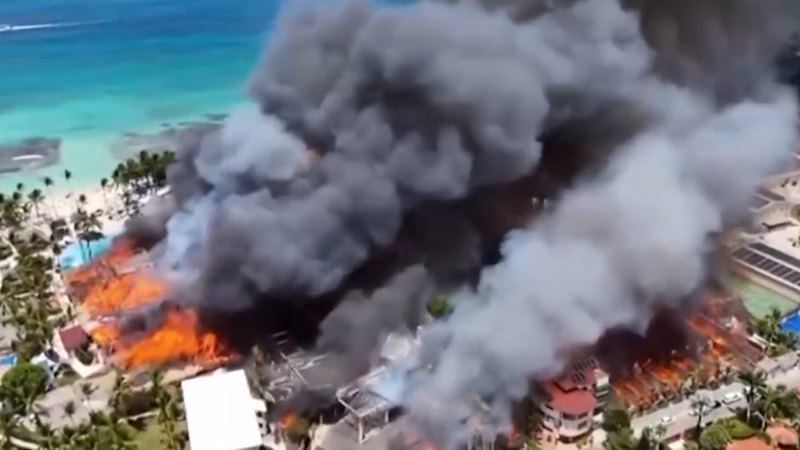
High-end hospitality assets represent a concentrated convergence of capital expenditure, structural complexity, and variable human occupancy. When a catastrophic fire breaches a luxury resort, standard news media outlets report the event through a lens of visual drama and surface-level chaos. A rigorous operational assessment reveals that these incidents are rarely the result of isolated accidents. Instead, they are the predictable output of systemic failures across three distinct vectors: structural thermal containment, automated suppression system latency, and organizational crisis protocols. Understanding the mechanics of these failures requires moving beyond sensationalism to analyze the hard physics and economic realities governing asset protection.
The Triad of Thermal Containment Failure
Structural vulnerability in luxury resort properties is frequently exacerbated by architectural choices that prioritize aesthetic appeal over compartmentation. Large open-air atriums, exposed timber beams, and continuous thatched or synthetic roofing materials create uninterrupted thermal pathways.
To quantify the risk, asset managers must evaluate the building envelope using three specific structural metrics:
- Flame Spread Index (FSI): Measures the relative rate at which flame progresses along the surface of a material. Luxury properties utilizing exotic hardwoods or specialized polymers often introduce materials with high FSI values into common areas unless treated with fire-retardant polymers.
- Thermal Resistance Valuation (R-Value Degradation): The rate at which structural barriers lose their capacity to impede heat transfer during a localized thermal event.
- Compartmentation Boundary Integrity: The mechanical capability of fire rated walls and assemblies to prevent the horizontal and vertical migration of smoke and superheated gases.
When an ignition occurs, the absence of rigid compartmentation allows for rapid flashover—the near-simultaneous ignition of all combustible material in an enclosed area. In large-scale resorts, this transition is accelerated by high-volume HVAC systems. If dampers fail to actuate automatically upon smoke detection, the ventilation network transitions from a climate control mechanism into a forced-draft oxygen supply system, driving thermal energy deep into structural voids.
Economic Cascade and Operational Interruption Quantified
The immediate destruction of physical property represents only the baseline layer of financial loss. For a luxury resort asset, the true fiscal impact is dictated by the duration and velocity of operational interruption.
Total Financial Loss = Direct Asset Damaged + (Daily RevPAR * Total Days Inoperable) + Contractual Liability Penalties + Supply Chain Re-establishment Capital
Revenue Per Available Room (RevPAR) drops to zero instantly across affected keys, but fixed operational overhead persists. The fiscal fallout distributes across specific economic vectors.
Direct Asset Depreciation
This encompasses the immediate write-down of real estate value and the destruction of high-value interior capital assets. Replacement costs for luxury finishes, custom furniture, and specialized commercial kitchen installations scale non-linearly compared to standard commercial real estate.
Supply Chain Shock
Rebuilding a specialized luxury property requires sourcing specific, often imported materials. Disruptions in global logistics extend the reconstruction timeline, compounding the period of zero revenue generation.
Business Interruption Indemnity Latency
While insurance policies frequently feature business interruption clauses, payouts are subject to forensic investigation delays. Insurers analyze maintenance logs, system inspection records, and employee compliance histories to identify potential policy exclusions. A single lapsed certification on a back-of-house suppression system can jeopardize the entire recovery claim.
Automated Suppression Latency and Mechanical Bottlenecks
The primary line of defense against catastrophic thermal escalation is the automated fire protection infrastructure. In luxury resorts, these systems face unique operational constraints due to layout complexity and aesthetic integration requirements.
Standard wet-pipe sprinkler systems rely on thermal bulbs that burst at predefined temperature thresholds. In vaulted ceilings or open-concept pavilions common in luxury designs, rising heat plumes disperse horizontally before reaching the activation threshold. This delay allows the fire base to expand beyond the design capacity of the localized sprinkler hydraulic system.
Required Fire Flow (Q) = (Volume of Compartment / Factor of Combustibility) * Thermal Dissipation Constant
If the actual flow rate delivered by the system falls below this calculated threshold due to pressure drops or delayed activation, the suppression system becomes mathematically incapable of extinguishing the fire, shifting the burden entirely to municipal response teams.
Water mist systems, frequently deployed in high-value asset environments to minimize water damage, introduce another variable. These systems require precise environmental sealing to maintain the concentration of micro-droplets necessary to suffocate a fire. Open architectural layouts or active HVAC currents disrupt this concentration, rendering the mist ineffective against rapid-growth fires.
Brand Equity Erosion and Liability Architecture
The reputational damage resulting from an infrastructure failure at a luxury property follows a distinct trajectory. Wealthy clienteles prioritize exclusivity, comfort, and above all, personal security. A high-profile evacuation or injury event shatters the implicit safety premium built into luxury pricing models.
Post-incident brand equity erosion manifests through specific behavioral shifts:
- Immediate Booking Cancellations: A cascade effect traveling through individual reservations, corporate retreats, and high-value event bookings across the entire corporate portfolio, not just the affected property.
- Long-Term Yield Compression: To attract patrons back post-reconstruction, properties are frequently forced to slash average daily rates (ADR), destroying the premium positioning that justifies the asset’s original capital valuation.
- Surging Insurance Premiums: Following a major loss, the asset's risk profile is reassessed globally. Future property and casualty insurance premiums experience permanent upward adjustments, permanently altering the property's net operating income (NOI) calculations.
Legal liability introduces a separate matrix of financial exposure. Resort operators face intense scrutiny regarding duty of care. If discovery processes reveal that safety drills were neglected, or that alarm systems were silenced due to history of false alarms—a common issue in resort environments—punitive damages can quickly surpass standard liability policy ceilings.
Systemic Risk Mitigation Protocol
Reversing this vulnerability requires a fundamental shift from reactive compliance to proactive engineering risk management. Resort operators must implement a continuous audit framework that treats fire safety as a core component of asset lifecycle management.
Properties should install multi-criteria detectors that analyze both ionization changes and carbon monoxide concentrations simultaneously, reducing false alarms while accelerating true detection speeds. HVAC systems must be reconfigured with fail-safe pneumatic dampers that seal individual zones instantly upon any alarm verification, isolating the thermal event.
Asset management teams must establish redundant water storage infrastructures. Relying exclusively on municipal water pressure is a high-risk operational strategy, particularly in remote or island resort destinations. Dedicated on-site reservoirs coupled with diesel-driven backup pumps guarantee that system hydraulic pressure remains constant, even during a total grid failure.
The final operational imperative involves implementing mandatory, unannounced crisis simulation drills for all shifts. Staff must be completely proficient in manual override procedures, guest evacuation zoning, and emergency services integration. Hardware solutions are entirely dependent on the human infrastructure tasked with overseeing them during a crisis.