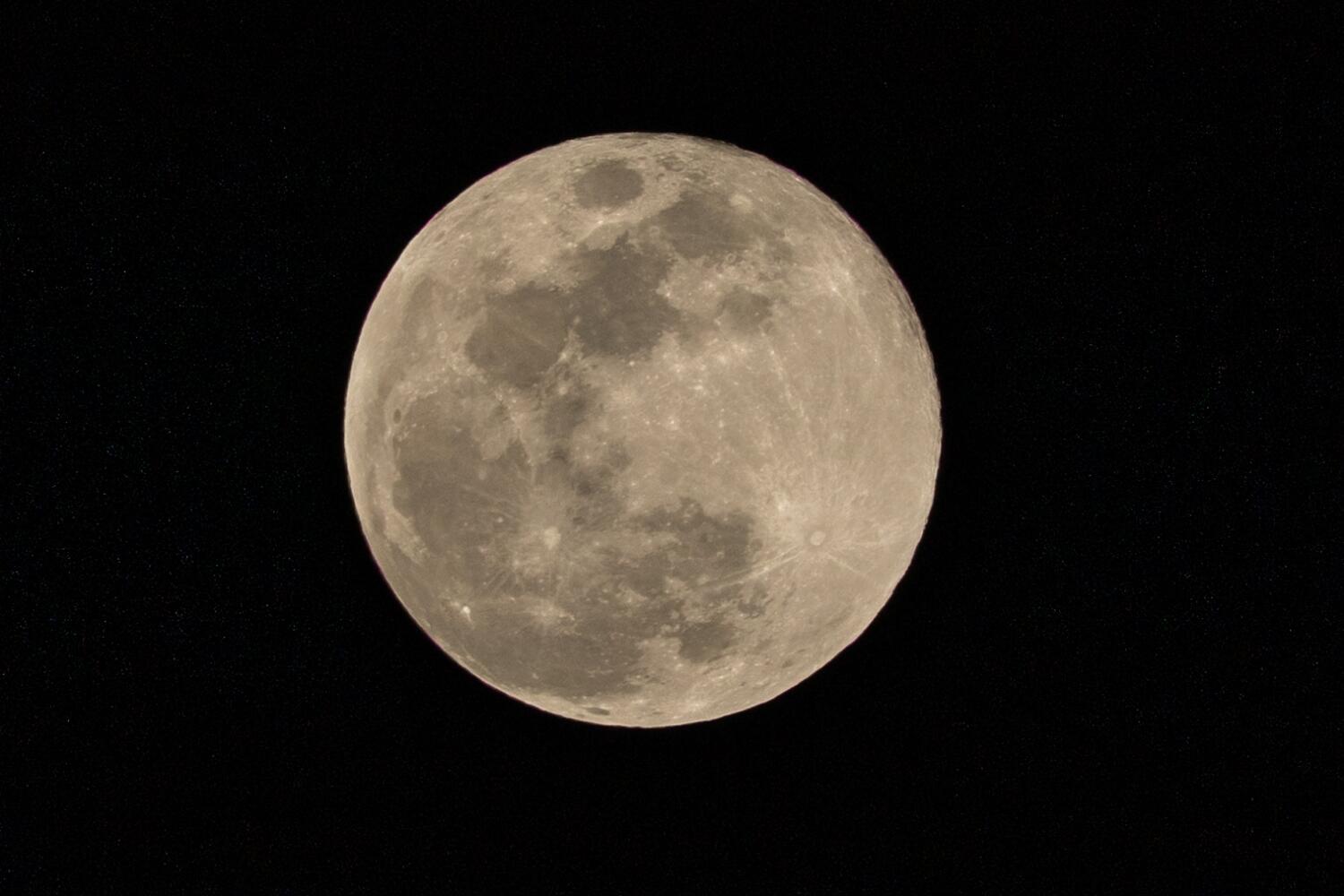
The intersection of orbital mechanics and cislunar space junk presents a unique tracking challenge. When an abandoned upper stage from a historic deep-space launch path intersects the lunar surface, the event offers a rare empirical testbed for kinetic energy transfer in a vacuum environment without atmospheric buffering. Traditional media coverage often frames these occurrences as isolated anomalies, obscuring the predictable deterministic physics governing high-eccentricity solar orbit decay. Understanding why an inert piece of hardware strikes the Moon requires evaluating three distinct variables: launch vehicle architecture, chaotic gravitational perturbations in the Earth-Moon system, and the observational constraints of deep-space optical tracking.
The Mechanics of Cislunar Orbital Decay
Deep-space missions requiring high characteristic energy depart from standard low-Earth orbit disposal protocols. When a Falcon 9 second stage completes a translunar injection, the residual mass budget frequently lacks the delta-v required to execute a heliocentric disposal burn or return to Earth for a controlled atmospheric entry. Consequently, the spent booster remains in a high-apogee orbit stretching past the lunar distance.
Over extended operational timelines, the orbit becomes subject to complex gravitational forces. The primary driver of orbital instability in this regime is the third-body perturbation caused by the Sun and the Moon. Unlike low-Earth orbit satellites, which experience predictable atmospheric drag that decays their altitude uniformly, cislunar debris operates in a chaotic dynamical systems regime. Solar radiation pressure acts upon the large surface area of the empty propellant tanks and the extended nozzle, continuously modifying the eccentricity and inclination of the orbit.
This gravitational and radiative tug-of-war alters the periapsis and apoapsis over years or decades. When the orbit evolves such that the periapsis drops below the lunar altitude, an intersection course is locked in. The final collision trajectory is not a sudden accident, but the terminal mathematical outcome of cumulative orbital perturbations interacting with unstable manifolds in the Earth-Moon gravitational field.
Kinetic Energy and Surface Interaction
The mechanics of a dry rocket stage impacting the lunar regolith at orbital velocity involve extreme energy transfer rates. Without an atmosphere to decelerate or thermally fragment the incoming hardware, an empty upper stage composed primarily of aluminum-lithium alloys and steel components maintains its structural integrity until the moment of impact.
At typical cislunar return velocities, an object strikes the lunar surface at roughly 2.5 kilometers per second. The kinetic energy calculation relies on the mass of the spent stage, which for a typical Falcon 9 second stage is approximately four metric tons dry, combined with the impact velocity vector. This dynamic generates a hypervelocity impact capable of excavating a crater several meters in diameter, dependent on the impact angle and the local density of the regolith and megaregolith layers.
The energy dissipation mechanism differs fundamentally from terrestrial meteorite impacts only in the scale of volatile release. Since the stage is depleted of hypergolic propellants or significant chemical reactants by the time it reaches the end of its life, the explosion is purely kinetic. The shockwave propagates hemispherically through the lunar crust, fracturing basalts and hurling ejecta sheets across ballistic trajectories that span kilometers in the low-gravity environment.
Tracking Constraints and Observational Blind Spots
Monitoring defunct hardware in high-eccentricity orbits exposes severe limitations in global space situational awareness infrastructure. Traditional radar tracking networks, optimized for low-Earth orbit congestion and geostationary operational satellites, lack the aperture size and sensitivity to maintain continuous custody of objects millions of kilometers away.
Amateur astronomers and specialized academic researchers frequently fill the observational gap left by institutional space agencies. Because military and civil space traffic management systems prioritize active constellations and strategic orbital regimes, high-apogee debris remains largely uncatalogued unless it presents a conjunction hazard to active lunar missions. Optical astrometry remains the primary tool for detection, requiring long-exposure telescope imagery to capture faint, tumbling objects reflecting sunlight against dense star fields.
This reliance on sporadic optical data creates high uncertainty margins in ephemeris predictions. Small, unmodeled variations in solar radiation pressure—caused by outgassing, thermal flexing, or changing attitude states—compound exponentially over time. By the time orbital analysts recalculate an imminent impact trajectory, the margin for error in the predicted impact time can span several hours, though the spatial intersection point remains bound to the lunar surface.
The Regulatory and Operational Implications
The tracking of abandoned upper stages impacting natural bodies highlights a structural void in international space law and debris mitigation standards. Current guidelines mandate the passivation and disposal of spacecraft operating in low-Earth and geostationary orbits within specified timeframes, typically 25 years or immediate de-orbiting. However, cislunar space and high-Earth orbits exist in a regulatory gray area.
Spacecraft designers balance the mass cost of propellants allocated for end-of-life disposal against the revenue-generating payload capacity of the rocket. Retaining sufficient fuel to execute a heliocentric disposal maneuver from a lunar transfer trajectory demands a direct trade-off with payload mass. In a competitive commercial launch market, operators optimize for mission success and primary payload delivery, treating cislunar disposal as an externality unless constrained by international treaty.
To eliminate uncontrolled debris accumulation in the Earth-Moon system, launch providers must integrate targeted disposal architectures directly into mission design phases. This requires engineering secondary propulsion systems capable of reliable long-duration coasting and subsequent ignition after multi-day deep-space missions, or designing trajectory profiles that utilize lunar gravity assists to permanently eject spent hardware into heliocentric graveyard orbits where intersection with planetary or lunar bodies is statistically improbable over centuries.