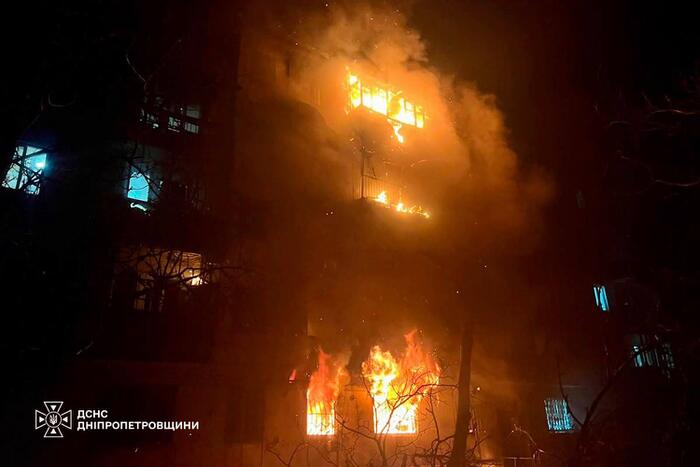
Kinetic strikes against urban centers are rarely measured accurately by immediate casualty figures alone. While the loss of three lives in Kyiv represents the human cost of an aerial assault, the simultaneous degradation of river bridges and electrical distribution nodes reveals an operational doctrine centered on compounding network disruption. Conventional news reporting treats casualties, transportation bottlenecks, and power outages as parallel events. In systems engineering and military logistics, these are interdependent variables in a single attrition equation. Severing electrical power removes the capacity to pump water, operate rail switches, and maintain industrial repair facilities, while damaging bridge spans isolates the physical supply chains required to bring replacement transformers and heavy cranes to the grid.
The Three Pillars of Urban System Paralysis
Modern metropolitan areas operate as tightly coupled systems-of-systems. When an external shock hits multiple nodes simultaneously, the resulting failure is non-linear. Analyzing the Kyiv strikes requires separating the immediate physical damage into three distinct functional pillars: human capital depletion, mobility choking, and energy starvation. Meanwhile, you can explore other developments here: Inside the Military Death Row Paralysis Nobody Is Talking About.
- Human Capital Depletion and Emergency Bandwidth: Fatalities and injuries immediately divert municipal emergency response units, medical trauma teams, and civil defense personnel away from infrastructure stabilization. Every ambulance and fire crew dispatched to a residential strike zone is unavailable to contain secondary fires at electrical substations.
- Mobility Choking via Chokepoint Denial: Kyiv is bisected by the Dnieper River. Bridges across a major waterway are classic single-point-of-failure nodes in graph theory. Damaging or closing even a fraction of these spans forces all commercial, military, and repair traffic onto the remaining crossings, creating exponential congestion.
- Energy Starvation and Cascading Sub-system Failure: Power generation and transmission form the foundational layer of urban operations. Without high-voltage transmission, municipal water pressure drops, telecommunications towers revert to limited battery backups, and electrified public transit halts entirely.
Standard reporting captures the immediate state of these three pillars—three dead, bridges crippled, power cut—but misses the feedback loops connecting them. When power fails, traffic signals go dark at the exact moment bridge closures force vehicles onto secondary surface streets. Gridlock ensues, preventing utility repair crews from reaching damaged substations. The strike achieves a multiplier effect where the total operational paralysis exceeds the sum of the individual physical impacts.
Chokepoint Economics and Bridge Degradation
To understand why bridge infrastructure is targeted alongside energy assets, apply the principles of network flow theory. A city divided by a wide river operates as two semi-autonomous sub-networks linked by a finite set of edges (bridges). In peacetime, bridge capacity is engineered to handle peak commuter loads with a modest margin for maintenance closures. To see the bigger picture, check out the recent report by Associated Press.
When kinetic strikes damage a bridge deck, structural piers, or approach ramps, the capacity reduction is rarely proportional to the physical area damaged. A single crater on a multi-lane span forces traffic to merge, triggering shockwave traffic jams that reduce throughput by 60 to 80 percent. If heavy cargo limits are imposed due to structural uncertainty, the economic and logistical impact escalates further.
- Asymmetric Repair Timelines: High-voltage transformers can sometimes be bypassed using mobile substations, and downed distribution lines can be spliced within days. Structural steel and pre-stressed concrete bridge spans require specialized heavy-lift equipment, curing times for concrete, and ultrasonic testing for micro-fractures.
- Logistics Rerouting Costs: Heavy equipment needed to repair the electrical grid—such as cranes, cable spools, and replacement switchgear—often exceeds standard axle-weight limits. If primary river crossings are compromised, heavy transport must detour dozens or hundreds of kilometers to alternative crossings, burning fuel, wearing down heavy-duty tires, and delaying grid restoration by days.
- Civilian-Military Friction: Bridges carry both civilian evacuation/commuter traffic and logistical resupply. Restricting bridge capacity forces authorities into a zero-sum allocation problem: prioritize civilian mobility to maintain economic output and morale, or close lanes exclusively for emergency and defense logistics.
The vulnerability of bridge infrastructure highlights a core limitation in urban defense. While point-defense air defense systems can protect compact, high-value targets like power plants or government buildings, bridges are long, linear structures exposed over open water. Defending every meter of a multi-kilometer span against saturation attacks is mathematically and economically prohibitive.
Thermodynamics and Grid Fragility
Electrical grids are governed by the rigid physics of supply and demand matching in real time. Unlike water or natural gas networks, which possess inherent line-pack storage, an alternating current (AC) power grid must maintain frequency—50 Hz in Ukraine and continental Europe—within fractions of a hertz at every millisecond.
When aerial strikes hit Kyiv's power infrastructure, the damage generally targets one of three layers: generation plants (thermal or hydro), high-voltage transmission substations (330 kV to 750 kV), or local distribution networks (10 kV to 110 kV). Each layer presents a distinct operational bottleneck.
- Substation Autotransformers: These massive, oil-filled units step down high-voltage transmission power for regional distribution. They are custom-built, weigh hundreds of tons, and cannot be mass-produced on short notice. Losing an autotransformer creates a localized power island that cannot easily import electricity from neighboring regions, even if overall national generation capacity remains intact.
- Protection Relay Tripping: When a missile or drone severs a major transmission line, the sudden drop in load causes a frequency spike elsewhere in the network. Automated protection relays instantaneously trip other generators offline to prevent catastrophic mechanical damage to turbines. This means a localized strike can trigger rolling blackouts across undamaged districts within seconds.
- Thermal Inertia and Cold-Start Penalties: If power cuts coincide with low ambient temperatures, thermal inertia becomes an adversary. Buildings lose heat steadily, driving residents to switch on electric space heaters the moment power is restored. This phenomenon, known as cold load pickup, creates an instantaneous demand surge up to three or four times normal consumption, frequently tripping breakers and plunging the restored sector back into darkness.
A common misconception in analyzing grid attacks is assuming that power restoration equates to system recovery. Operating a grid through emergency bypasses, overloaded secondary transformers, and unscheduled load shedding accelerates equipment degradation. Insulating oil inside surviving transformers overheats, degrading paper insulation and shortening the lifespan of components from decades to months.
The Cascading Failure Matrix
Evaluating the true impact of combined strikes requires mapping second- and third-order effects across municipal utilities. In a dense urban environment like Kyiv, infrastructure networks are physically and functionally co-located.
- Water and Sanitation: Municipal water systems rely on high-horsepower electric pumps to maintain positive pressure in mains. When power drops, pressure falls. Beyond the immediate lack of tap water, negative pressure in underground pipes allows groundwater and contaminants to infiltrate the potable water supply, creating delayed public health risks. Sewage lift stations also lose power, threatening backups in low-lying districts.
- Telecommunications: Cellular base stations rely on grid power backed by lead-acid or lithium-ion battery banks. During an outage, batteries typically sustain operations for four to eight hours. If power restoration is delayed by bridge bottlenecks or ongoing air raid alerts, cell towers go dark sequentially. Loss of mobile data degrades air raid warning dissemination, emergency dispatch coordination, and civilian situational awareness.
- District Heating: Many post-Soviet cities rely on centralized combined heat and power (CHP) plants that circulate hot water through insulated underground pipes to apartment blocks. Even if the boilers remain intact, circulating pumps require electricity. If circulation halts during freezing conditions, water inside exposed pipes risks freezing and expanding, rupturing miles of underground infrastructure that cannot be repaired until spring.
- Financial and Retail Continuity: Point-of-sale terminals, ATMs, and electronic banking networks depend on both electrical power and cellular connectivity. Extended outages force a reversion to cash transactions, creating liquidity bottlenecks at functioning bank branches and complicating supply chain payments for basic food distribution.
Operational Constraints of Air Defense and Repair Doctrine
Any rigorous assessment of urban resilience must account for the limitations of defensive countermeasures. No air defense architecture achieves a 100 percent interception rate against mixed salvos of ballistic missiles, cruise missiles, and one-way attack drones.
- The Cost-Exchange Asymmetry: Intercepting a low-cost drone or mass-produced cruise missile with a high-end surface-to-air interceptor depletes finite magazine depth at an unfavorable financial ratio. Defenders must constantly triage which assets receive active interception coverage and which must rely on passive hardening.
- Passive Hardening Trade-offs: Constructing concrete sarcophagi, gabion walls, and anti-drone netting around electrical substations protects against shrapnel and small warheads, but these structures complicate routine maintenance, restrict airflow needed for transformer cooling, and offer minimal protection against heavy ballistic penetrators.
- Workforce Attrition: Utility linemen, bridge engineers, and crane operators represent a finite pool of specialized human capital. Operating under threat of secondary strikes—where follow-on munitions target repair crews arriving at a strike site—forces strict safety protocols. Crews must remain in shelters until air defense clears the sector, stretching repair windows from hours into days.
Hypotheses regarding long-term grid survivability often overlook this human bottleneck. Equipment can be imported from allied nations, and standardized components can be stockpiled, but training a high-voltage substation engineer or a structural bridge inspector takes years.
Tactical Imperatives for Urban Infrastructure Resilience
Moving from reactive repair to proactive resilience requires restructuring how urban systems absorb shocks. Municipal authorities and infrastructure operators must execute specific architectural shifts to break the compounding failure loops demonstrated in Kyiv.
Decentralize Generation to Bypass Transmission Bottlenecks
Stop relying on centralized thermal plants and massive high-voltage substations that present high-value targets. Deploy distributed generation networks consisting of modular gas turbines, micro-grids, and hardened battery energy storage systems (BESS) at the distribution level. Situating generation capacity directly adjacent to critical loads—such as hospitals, water pumping stations, and telecommunications hubs—allows these nodes to operate in "island mode" even when the broader transmission grid collapses.
Pre-Position Modular Bridging and Heavy-Lift Assets
Eliminate the logistics bottleneck across river chokes by pre-staging modular military-grade bridging systems (such as Bailey bridges or ribbon pontoon units) and heavy-lift cranes on both sides of major waterways. Storing redundant repair equipment within each geographic sector ensures that bridge closures do not trap specialized recovery vehicles on the wrong side of the river.
Automate Load-Shedding at the Feeder Level
Replace manual, neighborhood-wide blackouts with automated, granular load-shedding protocols using smart reclosers and digital relays. By isolating non-essential residential circuits automatically during frequency drops, operators can preserve continuous power to critical municipal pumps and telecom backbones without risking a total grid collapse during cold load pickup surges.
Harden Auxiliary Backup Power for Water and Telecoms
Mandate and subsidize automated diesel or natural gas backup generators with 72-hour fuel reserves at all primary water pumping stations and core cellular macro-towers. Decoupling water pressure and mobile communications from the main electrical grid removes two of the fastest-acting cascading failures, preserving public health and command-and-control capabilities while utility crews rebuild damaged transmission lines.