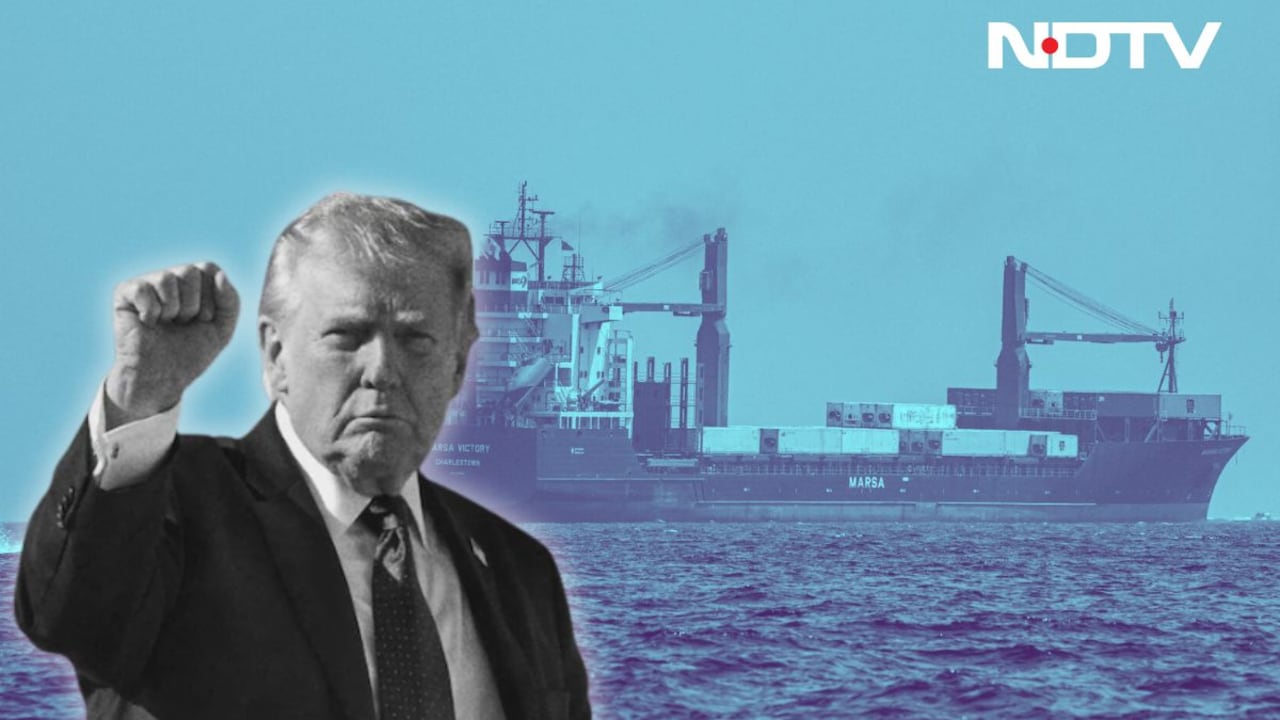
The announced diplomatic breakthrough between the United States and Iran, anchored by the Islamabad memorandum, addresses only the political layer of a deep geopolitical crisis. While the formal text guarantees an immediate theoretical opening of the Strait of Hormuz, the operational reality of global trade cannot resume by executive decree. The maritime chokepoint remains structurally compromised by naval minefields. Resolving this requires shifting from diplomatic positioning to a highly complex, multi-nation maritime clearance operation.
The Group of Seven (G7) summit in Evian, France, serves as the primary coordination node for this extraction strategy. European allies, led by the United Kingdom and France, have mobilized a 15-nation planning cell to execute a rapid-entry demining mission. However, the success of restoring a daily flow of 20 or more million barrels of oil equivalent depends entirely on aligning the political objectives of the Trump administration with the specific operational constraints of European mine countermeasures (MCM).
The Strategic Misalignment: Permission vs. Enforcement
The primary bottleneck preventing immediate deployment is a fundamental discrepancy in risk tolerance and alliance dynamics between Washington and its European counterparts. This friction operates along two distinct strategic vectors.
The Permissible Environment Threshold
European naval planners from Germany, Italy, the UK, and France have built an operational framework based strictly on a "permissible environment." This means that before specialized hulls like the British RFA Lyme Bay or the German minesweeper Fulda cross the threshold into the Persian Gulf, a verified, durable cessation of hostilities must be established. The European command structure rejects entering active combat zones to clear ordnance.
The U.S. executive branch views this stance as a lag in alliance commitment. The administration has expressed frustration that European assets are withholding operational deployment until after a diplomatic signature is secured, rather than integrating directly into the broader pressure campaign.
Strategic Valuation of the Threat Vector
A secondary friction point lies in the calculation of the threat matrix. The White House has publicly downplayed the density and technical sophistication of the Iranian mine deployment, asserting that existing U.S. naval actions have neutralized a significant portion of the threat. Conversely, the State Department and European naval intelligence bureaus maintain that large swathes of the critical shipping channel are compromised by multi-influence sea mines.
This analytical divide shapes the negotiation at Evian: the U.S. seeks a rapid, symbolic declaration of an open channel to stabilize global energy markets, while European allies demand a systematic, slow-phased clearance operation to protect high-value commercial hulls.
The Cost Function of Chokepoint Cleansing
To understand why a diplomatic signature cannot immediately lower global shipping insurance premiums, the maritime environment must be broken down into its hard physical and technical constraints. Demining the Strait of Hormuz is not a single sweeping action; it is an iterative risk-mitigation process governed by variables that cannot be accelerated by political urgency.
The Technical Matrix of Modern Sea Mines
The operational challenge is defined by the specific typography of the ordnance deployed by Iran during the conflict. Clearance forces are dealing with three distinct tiers of naval weaponry:
- Contact Mines: Moored systems that sit below the surface, triggered by direct hull contact. These are cheap, dense, and can break loose, creating drifting hazards throughout the wider Gulf of Oman.
- Influence Mines: Bottom-dwelling systems that do not float. They rely on acoustic, magnetic, and pressure sensors, requiring precise signature emulation or physical destruction to neutralize.
- Asymmetric Delivery Systems: Smart mines laid by fast-attack craft or submarines, designed to target the deep-draft channels required for Very Large Crude Carriers (VLCCs).
The Autonomous Operational Protocol
Because standard American mine-sweeping capabilities are functionally limited, European partners are leveraging a technology-dense operational model to mitigate human risk. This protocol follows a strict sequential pipeline:
[Wide-Area Sonar Mapping] -> [Anomaly Classification] -> [AUV Deployment] -> [ROV Neutralization]
- Wide-Area Mapping: Utilizing high-resolution side-scan sonar towed by autonomous surface vessels to chart the seafloor and isolate changes from historical baselines.
- Anomaly Classification: Deploying autonomous underwater vehicles (AUVs) to inspect anomalies. Systems like the VideoRay Defender-Viper utilize specialized optics and acoustic imaging to verify if an object is an influence mine.
- Target Neutralization: Once an asset is identified, remote-operated vehicles (ROVs) or autonomous disposal vehicles deploy a localized explosive charge next to the mine, triggering a sympathetic detonation.
This process is inherently slow. A single square mile of a deep-draft shipping lane can require days of systematic scanning. The narrowest point of the Strait of Hormuz spans roughly 21 nautical miles, but the actual shipping lanes consist of two two-mile-wide channels separated by a two-mile buffer zone. Clearing even a minimal transit corridor requires weeks of uninterrupted, high-precision operations.
Regional Diplomacy and the Logistics of Neutrality
Even with G7 consensus and technical readiness, the demining framework remains dependent on regional logistics networks and political access. A post-conflict environment requires immediate operational coordination with littoral states that control the territorial waters of the chokepoint.
The Sideline Diplomacy Matrix
The scheduled bilateral meetings in Evian between the U.S. executive and the leadership of Egypt, Qatar, and the United Arab Emirates represent the logistical backbone of the mission.
- Qatar and the UAE: Provide the critical geographic proximity required for staging forward logistics sites, launching drone tenders, and anchoring international MCM command ships.
- Egypt: Controls the Suez Canal transit pathway, the primary maritime artery through which European naval reinforcements must flow to sustain a prolonged clearance campaign.
The Tehran Communication Conduit
A critical structural vulnerability of the demining mission is the potential for local, unauthorized re-escalation. The recent leadership transition within Iran—following the death of the former Supreme Leader and the rise of his less compromising successor, Mojtaba—introduces deep systemic volatility.
To manage this risk, British and French diplomats are establishing direct, non-public operational communication channels with Iranian naval commands in Bandar Abbas. The goal is to ensure that localized Iranian units do not interpret the deployment of European mine-hunting vessels as a resumption of hostile operations. This operational link must remain entirely decoupled from broader political disputes, such as the future of Iran's highly enriched uranium stockpiles or the reinstatement of long-term nuclear monitoring.
Strategic Playbook for Global Energy and Maritime Leadership
The convergence of diplomatic signatures and tactical naval deployment demands an immediate reassessment of maritime risk management. Organizations operating within the global energy supply chain or maritime logistics sector must discard the assumption that a peace treaty equates to a functioning trade route.
The immediate strategic priority is to establish a verified clear-channel index. Maritime operators must refuse to route high-value assets through the Strait of Hormuz based solely on political declarations of openness. Instead, transit authorization must be tied to a rolling certification mechanism issued by the combined G7 naval command, verifying that a corridor has undergone three-pass autonomous sonar validation.
Furthermore, shipping corporations must prepare for a prolonged period of structured transit. Initial movements through the strait will likely be limited to escorted convoys following highly restricted, pre-cleared tracks. This operational constraint will permanently throttle the daily volume of global oil and LNG transport, maintaining upward pressure on freight rates and structural premiums despite the formal end of active military operations. Companies must maintain alternative logistics routing through East-West pipelines and non-Gulf ports until the multi-nation demining mission achieves total area clearance.