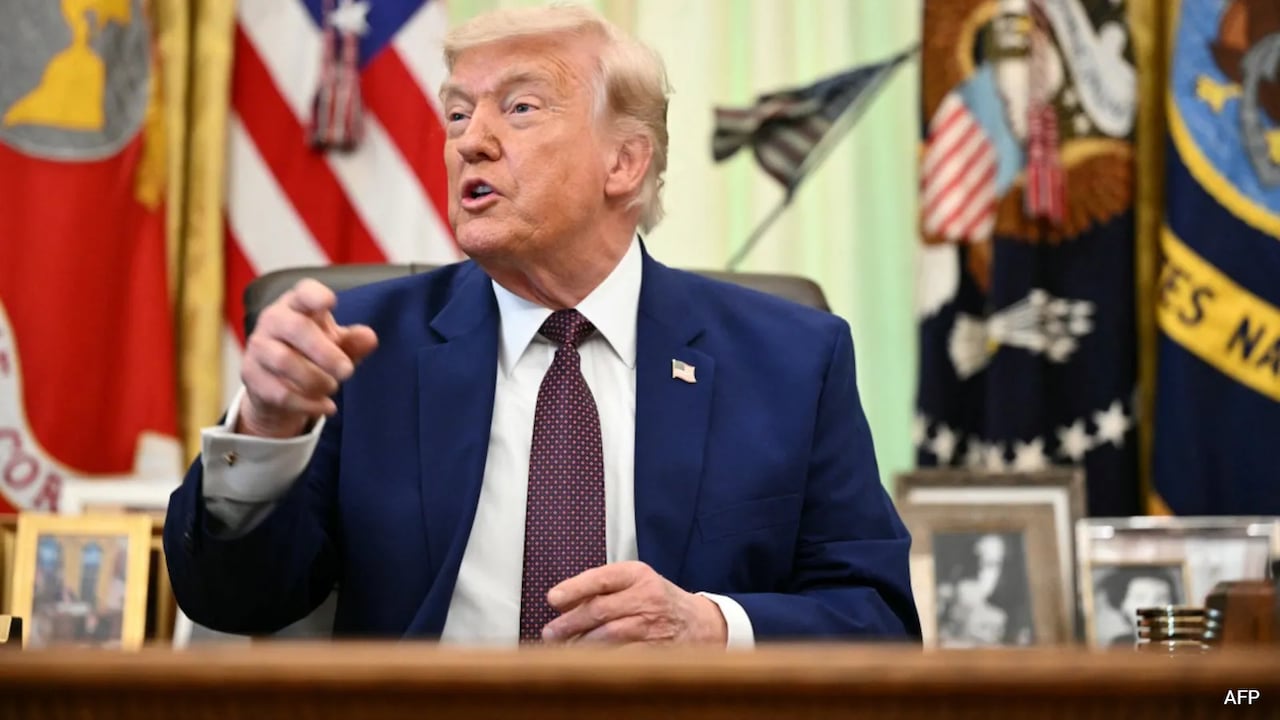
The global trade regime is undergoing a structural rewiring disguised as human rights enforcement. When the Office of the U.S. Trade Representative (USTR) announced proposed tariffs of 10% to 12.5% on 60 trading partners, it framed the policy as a moral imperative to protect domestic workers from competing against coerced foreign labor. This narrative oversimplifies the mechanics at play. The policy is a calculated structural workaround designed to bypass recent judicial constraints while systematically reconstructing a shattered global tariff wall. Understanding this shift requires looking past the political rhetoric and examining the underlying statutory mechanics, institutional workarounds, and supply chain realities.
The Statutory Pivot: Bypassing the Judiciary
To understand why the executive branch is suddenly focused on foreign labor enforcement, one must map the sequence of judicial defeats suffered by the administration. The core constraint began when the U.S. Supreme Court struck down global tariffs originally levied under the International Emergency Economic Powers Act (IEEPA) of 1977. The Court ruled that the executive overstepped its statutory boundaries by using emergency powers to enact permanent, sweeping border taxes. For a closer look into this area, we recommend: this related article.
A subsequent attempt to maintain these barriers via Section 122 of the Trade Act of 1974—which permits 10% temporary tariffs for up to 150 days to address severe balance-of-payments deficits—was similarly invalidated by the U.S. Court of International Trade.
The administration's current strategy relies on Section 301 of the Trade Act of 1974. This statutory pivot alters the legal and operational dynamics of U.S. trade policy in three distinct ways: For broader context on this topic, comprehensive reporting is available on Forbes.
- Shifting the Burden of Proof: Rather than declaring a macroeconomic emergency, the USTR leverages a 98-page investigative report to assert that 60 trading partners have "failed to impose and effectively enforce" prohibitions on forced labor imports. This turns a broad protectionist measure into a targeted regulatory enforcement action.
- Exploiting Broad Discretionary Windows: Section 301 grants the executive wide latitude to counter foreign acts, policies, or practices that are deemed "unreasonable or discriminatory and burdens or restricts U.S. commerce." By linking foreign enforcement gaps directly to domestic competitive disadvantage, the USTR creates a resilient legal shield against future domestic court challenges.
- The Administrative Delay Asset: Unlike immediate emergency actions, Section 301 requires a period for public comment and formal hearings. This built-in delay functions as tactical leverage, giving the executive months to negotiate bilateral concessions while keeping the threat of impending tariffs live over global markets.
The Two-Tiered Tariff Architecture
The USTR has bifurcated global commerce into a two-tiered penalty matrix. This division reveals that the policy operates less as a black-and-white moral stick and more as a calibrated tool for economic leverage.
Category 1: The 10% Mitigation Tier
This tier applies to 16 trading partners—including Canada, Mexico, the United Kingdom, Taiwan, and the European Union. The USTR acknowledges these economies have nominal legal frameworks prohibiting forced labor but alleges they fail in operational enforcement or timelines. For example, while the EU passed its own Forced Labour Regulation, the cross-border ban does not take full effect until December 2027. This regulatory lag is treated by Washington as an actionable enforcement gap.
Category 2: The 12.5% Deficit Tier
This tier applies to 44 trading partners, including China, Japan, India, South Korea, Brazil, and Switzerland. These nations face higher baseline duties, reflecting a blend of documented supply chain risks (such as cotton from Xinjiang, tobacco from Malawi, or rice from Myanmar) and deep, structural trade surpluses with the United States.
To prevent immediate domestic political blowback amidst shifting consumer sentiment, the administration has introduced specific safety valves into this architecture:
- Sparing Critical Inputs: Broad exemptions apply to primary commodities and industrial components where domestic substitution is impossible. Aircraft parts, rare earth elements, and essential food products (including beef and coffee) are entirely exempt.
- The Textile Equivalence Mechanism: The USTR is floating a unique structural offset for the textile sector. Foreign manufacturers may enter the U.S. market at a reduced tariff rate, provided their home country imports an equivalent, verifiable quantity of American-made textiles. This mechanism shifts the policy from a punitive ban to an aggressive export-promotion framework.
Supply Chain Realities and the Distortion of Compliance
The strategic friction of this policy lies in its structural misalignment with how modern global value chains operate. True human rights enforcement relies on micro-level interventions: entity lists, specific factory bans, and targeted asset seizures, much like the operational model of the Uyghur Forced Labor Prevention Act (UFLP).
In contrast, the proposed Section 301 tariffs apply blanket macro-level penalties. A 10% tariff on all eligible goods from a specific country penalizes compliant and non-compliant supply chains equally. This creates distinct operational distortions for multi-national corporations:
The Auditing Bottleneck
Companies cannot easily prove a negative across multi-tier supplier networks. Verifying that a tier-three raw material supplier in a targeted nation uses zero coerced labor requires forensic traceability that current corporate compliance budgets are unequipped to handle at scale.
Asymmetric Margin Absorption
Because tariffs are legally paid by the U.S. importer of record rather than the foreign exporter, the economic burden falls on domestic supply chains. Companies face a binary operational choice: absorb the 10% to 12.5% cost inside their margins or pass the premium directly to downstream consumers, risking volume destruction.
Jurisdictional Arbitrage
Rather than cleaning up labor practices within a penalized country, multi-national firms are incentivized to engage in transshipment or rapid near-shoring. Shifting final assembly lines to unpenalized nations allows firms to alter the country of origin on customs declarations without fundamentally altering the underlying labor dynamics of their raw material sourcing.
A Tactical Blueprint for Corporate Supply Chains
Corporate strategy cannot rely on the hope that these tariffs will be negotiated away or struck down by international bodies like the World Trade Organization, whose appellate mechanisms remain functionally paralyzed. The administration’s transition to Section 301 represents a legally durable mechanism that will likely dictate trade terms for the foreseeable future.
Firms operating complex cross-border supply chains must execute a clear, three-part operational playbook to mitigate exposure:
- Conduct Fractional Cost Modeling: Isolate product lines by country of origin and run sensitivity analyses on 10% and 12.5% margin compressions. Identify where product components qualify for existing USTR exemptions (such as rare earths or specific agricultural categories) and restructure bills of materials to maximize these inputs.
- Audit for the Textile Offset: For consumer goods and apparel firms, evaluate the operational feasibility of purchasing and exporting U.S. textiles to trigger the USTR’s proposed reduced-tariff rate. Calculate whether the logistics cost of shipping American raw materials abroad is lower than paying the baseline 10% or 12.5% border tax.
- Prepare for Localized Origin Shifting: Where margin absorption is impossible, begin decoupling final assembly from targeted Category 2 nations. Prioritize relocation to jurisdictions that possess robust bilateral trade agreements with the United States, ensuring that any new supply nodes are insulated from the administrative definition of enforcement failures.
The ultimate trajectory of global trade is no longer governed by a consensus toward open markets, but by the creative deployment of domestic statutes to enforce economic borders. Survival for international enterprises depends on treating trade policy not as an unpredictable political risk, but as a core structural cost function that must be actively engineered.