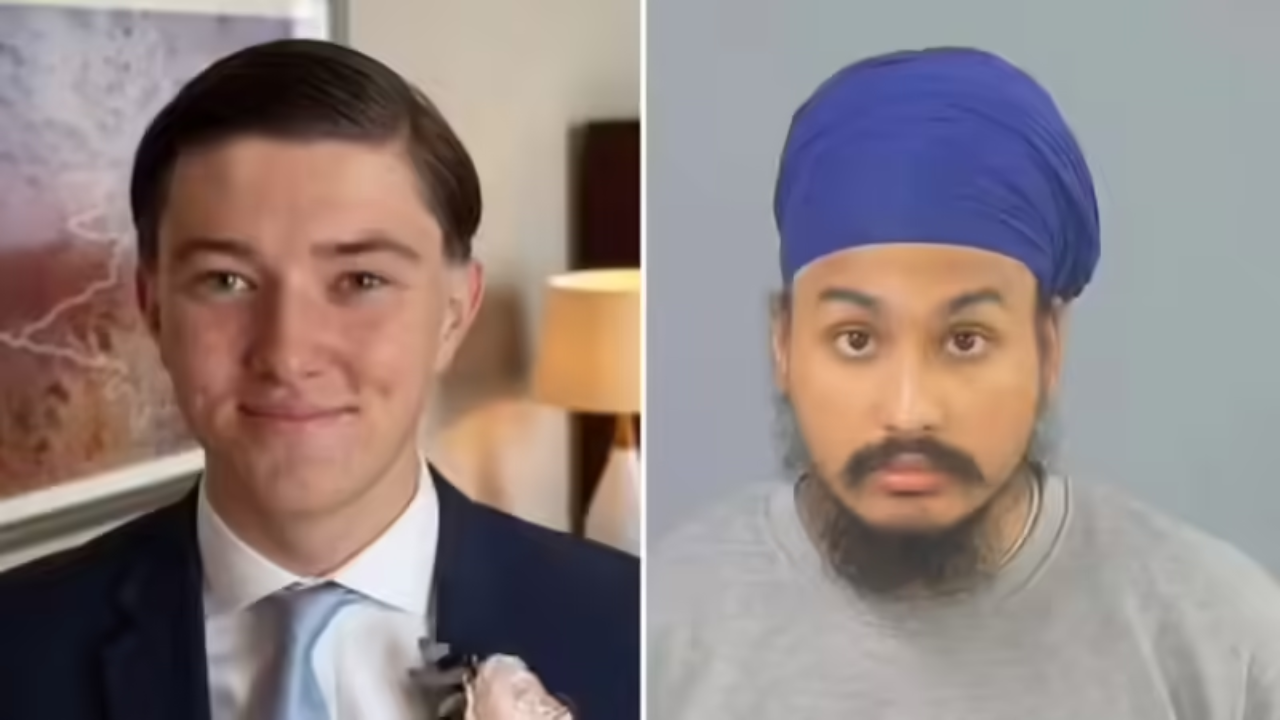
A criminal defense strategy operates as a closed system of logic designed to minimize liability, but its structural integrity depends entirely on the absence of objective contradictory evidence. When Vickrum Digwa stabbed 18-year-old finance student Henry Nowak to death in Southampton, his immediate operational objective shifted from physical conflict to narrative construction. The subsequent translation of the Punjabi conversation between Vickrum and his brother Gurpreet Digwa inside a police transport van on December 5, 2025, reveals the precise mechanisms of how this defensive narrative was manufactured, and how it ultimately collapsed under forensic scrutiny.
This analysis deconstructs the transcript to isolate the three structural contradictions that dismantled the defense: the disparity between ceremonial intent and mechanical capability, the orchestration of a self-defense narrative, and the post-incident behavioral timeline that invalidated claims of panic.
Weapon Mechanics: The Kirpan Discrepancy
A primary pillar of Digwa's initial defense rested on the cultural and religious classification of the weapon carried on the night of December 3, 2025. In the intercepted transit conversation, the brothers actively discussed how to characterize the instrument of the attack:
- The Conceptual Shield: The exchange heavily referenced terms such as "kirpan" (the ceremonial blade carried by initiated Sikhs) and "dori" (the cord used to wear a smaller kirpan around the neck). The objective was to anchor the possession of the blade in religious necessity to bypass strict UK public carry laws.
- The Material Reality: Under forensic examination, the prosecution demonstrated that while Digwa did own a small, standard ceremonial kirpan, the weapon used to inflict the five wounds was an Indo-Persian dagger featuring a 21-centimeter (8.3-inch) blade.
This material disparity represents a failure of equivalent categorization. A 21-centimeter dagger is a highly offensive tool, requiring deliberate concealment and carrying massive lethality. The scale of the blade directly correlates with the depth of the wounds. A chest wound penetrated 8 centimeters through multiple layers of clothing, splitting soft tissue and severing a major vein behind the collarbone. This depth requires significant kinetic force, a mechanical reality that contradicts any claim of a minor, panic-induced defensive flail with a symbolic religious item.
The Self-Defense Blueprint
The translated transcript provides a step-by-step record of narrative engineering. Rather than showing a spontaneous, honest recount of events, the dialogue between Gurpreet and Vickrum Digwa demonstrates an active feedback loop of legal strategy coordination before consulting formal counsel:
[Gurpreet Digwa]: "Did you do anything?"
[Vickrum Digwa]: "Yes." (Proceeds to detail the anatomical locations of the stabs: shoulder, face, chest).
[Gurpreet Digwa]: (Urges Vickrum to claim he acted in self-defense because he was frightened).
This sequence reveals a calculation of utility. Gurpreet identifies the only viable legal pathway—the claim of perceived existential threat—and instructs his brother to adopt it as his cognitive state during the event. However, the physical evidence introduces a critical logical bottleneck for this narrative:
- Symmetrical vs. Asymmetrical Force: Nowak was completely unarmed and had a blood alcohol level below the legal driving limit.
- Anatomical Distribution of Injuries: Of the five stab wounds, two were delivered to the back of Nowak’s legs. In forensic pathology, wounds to the posterior of a victim typically indicate a retreating posture or an attack delivered from a position of dominant posture, which fundamentally undermines a claim of active self-defense against an ongoing frontal assault.
- Absence of Defensive Wounds on the Assailant: Aside from a minor complaint of a swollen eye, Digwa suffered no significant injuries that would align with his claim of a prolonged, violent racist assault by Nowak.
Post-Incident Behavioral Friction
The most damaging factor to the defense was not the physical act itself, but the behavioral timeline immediately following the stabbing. A genuine self-defense scenario involving a panicked actor typically results in one of two immediate outcomes: flight, or the seeking of emergency medical/police intervention due to the shock of the outcome.
Digwa’s actions conformed to neither. Instead of calling emergency services, he filmed the dying victim on his mobile device. In the wiretap, when Gurpreet questioned why a weapon had been introduced to a physical dispute, Digwa responded: "I am a fool".
This admission, combined with his post-incident filming, indicates a state of cognitive awareness and detachment rather than defensive panic. The behavior points to a desire to document or humiliate the victim rather than a desperate attempt to survive a life-threatening altercation.
When police arrived at Belmont Road, Digwa deployed the newly minted narrative. He claimed to have been the victim of a racially motivated assault. This falsehood successfully exploited the responding officers' immediate risk-assessment protocols, leading them to handcuff and arrest the dying Nowak instead of immediately administering trauma care. The delay of eight minutes before officers discovered the catastrophic internal bleeding was a direct consequence of this narrative manipulation.
The Verdict and Systemic Legacies
The Crown Prosecution Service utilized the translated van recording to establish pre-meditation of defense, consciousness of guilt, and joint efforts to conceal evidence—supported by the conviction of Digwa's mother, Kiran Kaur, who removed the primary weapon from the crime scene.
The jury rejected the self-defense and manslaughter arguments, delivering a conviction for murder and possession of an offensive weapon in May 2026. The sentencing of June 2026 to life imprisonment with a minimum of 21 years reflects the severe compounding factors: the use of a highly lethal weapon under the guise of religious exemption, the deliberate delay of medical care through active deception, and the post-attack humiliation of the victim.
The long-term legal precedent established here will likely center on the tightening of definitions surrounding ceremonial weapon exemptions in public spaces. When symbolic cultural tokens are replaced with highly lethal, non-standard military-grade daggers, the legal protections originally intended for religious practice will inevitably face systematic restriction to prevent further exploitation.
The Sky News coverage of the bodycam footage provides direct visual evidence of the immediate post-incident scene and the deployment of the false narrative to responding officers.


