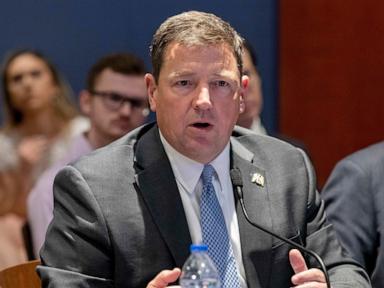
Institutional transitions within federal administrative bodies rarely occur in a vacuum; instead, they reflect shifting strategic priorities at the apex of executive power. The departure of Ed Martin from his role as the Department of Justice pardon attorney illustrates a deliberate reallocation of loyalist legal talent away from internal administrative oversight and toward external electoral litigation. Analyzing this transition requires stripping away political rhetoric to examine the structural mechanics of how an administration deploys personnel to influence upcoming legislative contests.
The Operational Lifecycle of a Loyalist Portfolio
Martin's tenure within the federal justice apparatus followed a compressed, highly volatile trajectory that highlights the friction between political appointees and career institutional structures. Appointed initially as the interim United States Attorney for the District of Columbia, his mandate involved managing fallout from the January 6 prosecutions and supervising sweeping case dismissals.
The subsequent transition into department headquarters—first as the director of internal scrutiny initiatives such as the Weaponization Working Group and later as the pardon attorney—revealed a distinct administrative pattern. When internal friction with senior leadership, including Deputy Attorney General Todd Blanche, created bureaucratic bottlenecks, the utility of maintaining an intra-agency operational footprint diminished.
The structural mechanics of this lifecycle involve three distinct phases:
- Intra-Agency Disruption: Deploying political loyalists into district-level or investigative units to rapidly execute executive directives and review legacy cases.
- Bureaucratic Friction: Encountering institutional resistance from career prosecutors, Senate confirmation hurdles, and internal leadership disagreements over investigative methods.
- External Redeployment: Shifting personnel outside the formal department structure to campaign-adjacent legal operations where procedural constraints are less restrictive.
The Cost Function of Bureaucratic Friction
The friction that characterized Martin's tenure stems from structural incompatibilities within the Department of Justice framework. Career personnel operate under strict prosecutorial manuals, internal ethics guidelines, and oversight requirements designed to insulate routine law enforcement from partisan influence. When executive appointees bypass these internal norms—such as publicly announcing investigative targets on social media or confronting state-level officials directly—the administrative cost manifests as institutional gridlock.
This friction produces a measurable opportunity cost for an administration. Time spent managing internal disputes, congressional confirmation resistance, and professional disciplinary inquiries diverts resources from broader political objectives. Moving personnel outside the formal agency structure bypasses these internal compliance mechanisms entirely, transforming a constrained civil servant into an unencumbered external litigator.
The Strategic Pivot Toward Electoral Infrastructure
The rationale driving Martin's exit centers on the upcoming midterm elections and the broader battleground for legislative control. Executive strategy ahead of a midterm cycle typically prioritizes two distinct pillars: message consolidation regarding voting integrity and defensive or offensive litigation surrounding ballot access.
By transferring operational focus from clemency reviews and historical inquiries to external electoral battles, the administration signals a shift from retrospective score-settling to prospective ballot-box positioning. This transition aligns with broader executive actions seeking to influence state-level election operations, secure detailed voter registration data, and push for federal legislative requirements regarding documentary proof of citizenship.
Operating outside the Department of Justice allows legal strategists greater tactical flexibility to challenge state electoral procedures, intervene in local voting administration disputes, and coordinate directly with external political committees without running afoul of federal restrictions on partisan political activity inside civil service agencies.
To capitalize on these shifts, monitor the filing dockets in federal district courts across key battleground states where election law challenges are concentrated, and track how external legal groups coordinate with federal legislative proposals regarding voter eligibility documentation.
Ed Martin sidelined from DOJ role
This video provides additional context regarding the internal friction and administrative maneuvering that preceded Ed Martin's departure from his central role at the Department of Justice.
http://googleusercontent.com/youtube_content/1